Get to Know J.B. Branch
Public Citizen News / March-April 2026
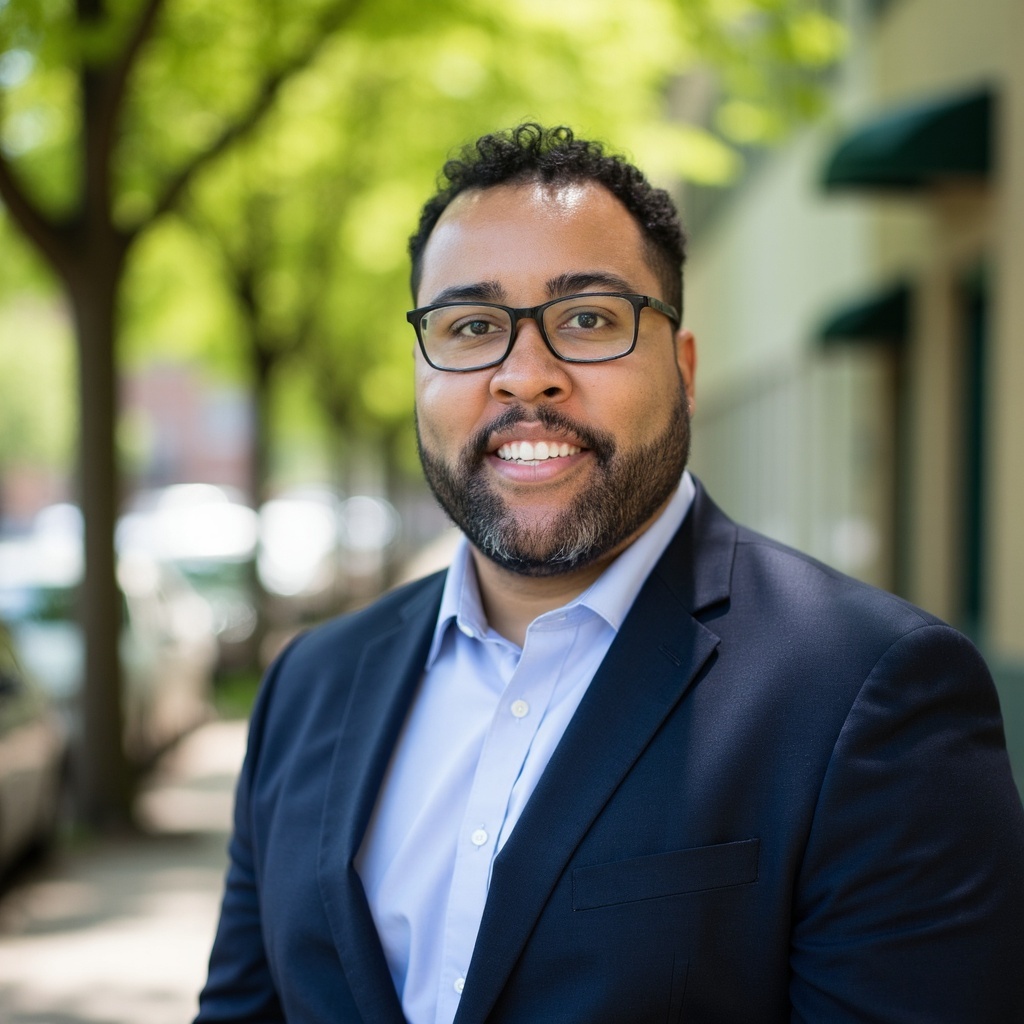
This article appeared in the March/April 2026 edition of Public Citizen News. Download the full edition here.
J.B. Branch is the AI Governance and Technology Policy Counsel for Public Citizen’s Congress Watch division, where he focuses on artificial intelligence governance, data privacy, platform oversight, and consumer protections. He grew up in Lebanon, Pa., and earned a bachelor’s degree in political science from Penn State’s Schreyer Honors College before receiving a law degree from Georgetown University Law Center and a master of public administration from Harvard Kennedy School. Despite working daily at the center of digital platforms and online power, Branch largely avoids social media in his personal life, preferring to spend his time outdoors. When he steps away from policy debates and enforcement battles, he spends his time hiking, biking, and walking with his two dogs.
Q: Can you tell readers about your path to Public Citizen?
A: I once had the chance to see Robert Weissman, co-president of Public Citizen, speak at Harvard Law School about authoritarian governments — and how the Trump administration was acting like one — in between classes and thought, “That guy might be on to something.” It turned out that Public Citizen was hiring for exactly the kind of role I was looking for, and the timing worked out.
Q: As Public Citizen’s Big Tech accountability advocate, what issue keeps you up at night right now — AI, data privacy, or platform power?
A: All of them. AI is transforming how information is produced and slanted. Consumers are being taken advantage of by large corporations that abuse personal data to manipulate the costs of groceries, flights, and hotels, to name a few. Platforms are also increasingly aligned with the Trump administration, and there is a rich history of digital platforms enabling digital authoritarianism. All of it is deeply concerning.
Q: What is one thing you would change about tech or AI policy, given a magic wand?
A: I would strengthen enforcement. I want federal and state governments to doggedly hold companies accountable when they harm people or undermine democratic institutions.
Q: You’ve advised decision makers from statehouses to the White House. What’s one thing policymakers consistently get wrong about AI governance?
A: Some lawmakers believe national security depends on “winning the AI race.” That framing is wrong. First, consumers do not have access to defense-level AI systems, which are restricted for security reasons. Secondly, they think the national economy is inseparable from AI development, which is also incorrect. We do not have to choose between strong consumer protections and AI leadership. Many global economies have enacted AI regulations and are performing just as well, if not better, than the U.S. economy.
Q: Before Public Citizen, you helped build Louisiana’s automated expungement system. What did that project teach you about the real-world stakes of automated decision-making?
A: Expungement is a very important topic for people with prior criminal records. It allows certain criminal records to be removed from public view, which provides the individual opportunities like jobs, housing, or even a driver’s license. It’s critical in the process of rehabilitation and reentry to society. It showed me that technology can be used for far more than social media or profit-driven tech platforms. If we want technology to work for everyday people, it can. The real question is whether those in power care enough to make that happen.
Q: Can you tell us more about a new or recent project?
A: I am closely monitoring the federal deployment of Elon Musk’s Grok AI system. Grok has spread conspiracy theories, produced antisemitic and racist content, and most recently generated nonconsensual images of women and children. I am working hard to ensure Congress treats these risks seriously and removes Grok from federal use.