Uprooting the Forest Service
A Trump Official With Deep Timber Industry Ties is Putting Public Lands and the Climate at Risk
By Lois Parshley
As fire seasons intensify, the federal agency overseeing much of the nation’s forests is reorganizing its long-standing structure, reducing scientific and staffing capacity, including relocating key offices and elevating officials whose priorities appear closely aligned with the interests of extractive industries.
- The Trump administration’s Forest Service Chief, Tom Schultz, is a former timber industry executive with no prior Forest Service experience.
- Schultz has quickly advanced policies he previously advocated for the industry, including expanding logging and reducing environmental review requirements.
- Three-quarters of the agency’s research stations are being closed, disrupting decades of climate and forest data.
- These changes reduce the agency’s ability to collect environmental data, weakens its capacity to track conditions, and hampers research that informs land management decisions.
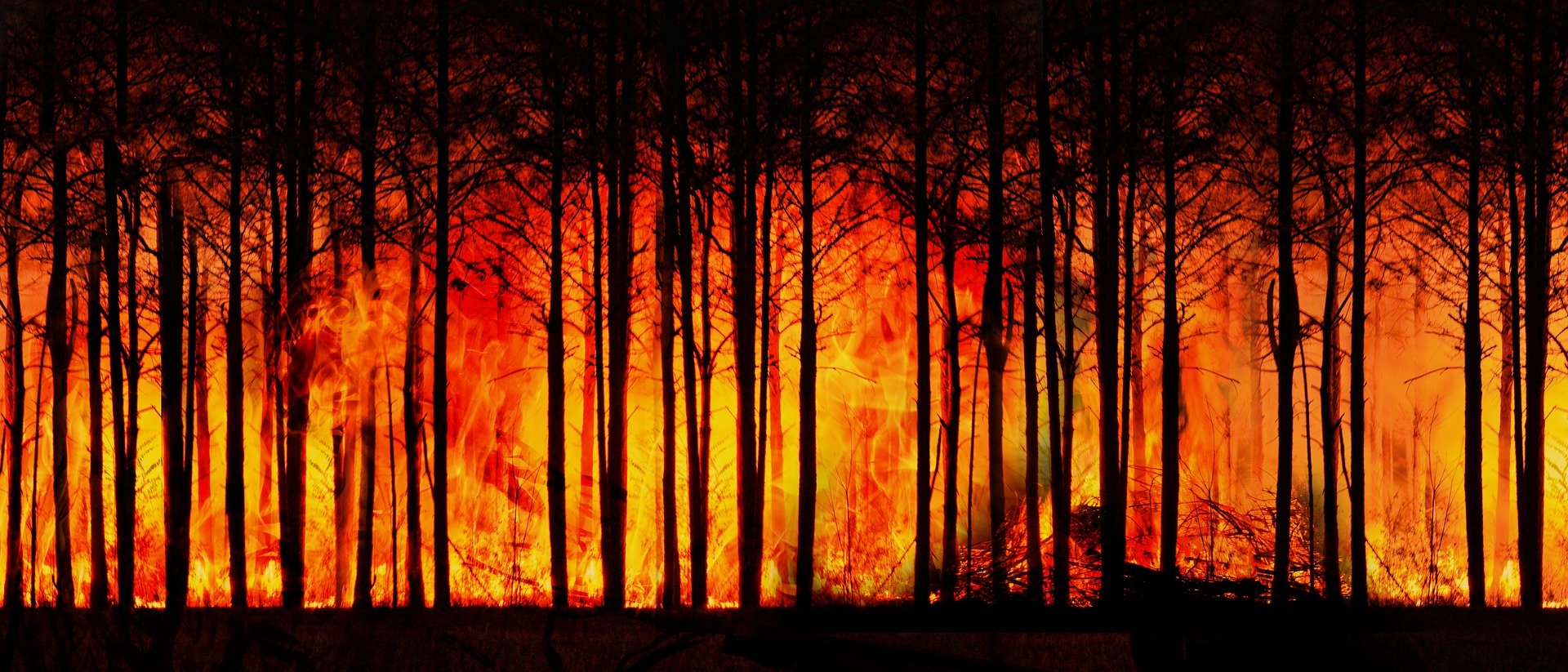
Fire season has barely started, and the United States has already burned through more than 1.6 million acres, more than twice the ten-year average for this point in the year. In Nebraska, for example, a single storm system in March sparked a conflagration that burned more than 600,000 acres in 48 hours.
The National Interagency Fire Center’s spring 2026 forecast predicts very high fire risk across much of the West and Southeast, which has seen record-low snowpack and early heat waves. But the Trump administration is trying to derail the agency most responsible for fighting wildfires—and for understanding why they keep getting worse.
On March 31, 2026, the U.S. Department of Agriculture (USDA) announced the most sweeping reorganization of the U.S. Forest Service in its 121-year history. The plan, described in USDA’s announcement as a move toward being “nimble, efficient, [and] effective,” will hollow out the agency’s scientific core while consolidating political control.
Overseeing this transition is Tom Schultz, a recent political appointee from the private timber sector and the only Chief without prior experience inside the agency. “My focus over this last year as Chief is to return to fundamentals,” he told Congress on April 16, explaining his goal was “trying to cut through regulation.” Before his appointment, he worked at the Idaho Forest Group, one of the country’s largest lumber producers. Within months of taking office, Schultz began implementing policies aligned with positions he advocated as a timber industry representative.
The agency’s headquarters, which have been located in Washington for more than a century, are being relocated to Salt Lake City, and approximately 260 employees have been told to relocate or lose their jobs—a move that echoes the first Trump administration’s relocation of the Bureau of Land Management to Grand Junction, Colorado, which was later reversed by the Biden administration.
The agency’s scientific work will change even more dramatically. Fifty-seven of the agency’s 77 research facilities will be closed in 31 states, consolidating into a single hub in Fort Collins, Colorado. No research facilities will remain in Alaska, where the agency oversees 22 million acres. Many of these have been running decades-long experiments, research that cannot be relocated.
Meanwhile, climate change is rewriting the rules of these ecosystems, making sustained research and monitoring of public lands all the more critical. “Forests are dying faster than they’re growing,” Schultz told Congress, before arguing for increasing timber production.
While Schultz’s testimony expressed the need to deregulate the federal agency and increase “active management” of national forests, his boss at the Department of Agriculture has a track record of disdain for the agency’s purpose and mission. Michael Boren, co-founder of a Boise-based financial technology firm and an Idaho rancher who is now the USDA’s current Undersecretary of Agriculture for Natural Resources and Environment, has a long history of public fights with the agency he oversees. Boren, a billionaire with no track record of public lands or forestry management, previously faced a restraining order for allegedly buzzing a U.S. Forest Service trail crew at low altitude in a helicopter. Boren ran afoul of the government by building a private airstrip on national recreation land, and by building an unauthorized cabin on national forest land. While Boren awaited confirmation at the Forest Service, he joined the Trump administration in September 2025 after being named an assistant secretary at the Interior Department, moving to the USDA in October 2025.
Shifts in temperature and rainfall are altering not only forests, but the wildlife that depend on them. Climate-driven pests and diseases are increasingly killing trees, and in some regions, reducing their ability to store carbon. In some areas, conditions have already warmed beyond what trees are adapted to, leaving so-called “zombie forests” dying off or unable to regrow after wildfire. Research by the Forest Service and its partners is critical to spotting these changes, predicting future conditions, and guiding decisions to help keep forests healthy and productive.
Forests in Flux
Climate science depends on long-term records: Distinguishing a climate signal from natural variability can require decades of consistent data collection. Relocating or dismissing the scientists who maintain those datasets effectively ends these experiments, some of which have been running for more than 60 years.
But the Trump administration didn’t consult with Congress about what research was actually needed before slashing the Forest Service’s programs. When questioned about details as basic as a new organizational chart, Schultz admitted the agency was “still working through some of the details.”
The stations being closed are disproportionately those doing long-term ecological monitoring, climate impact research, and watershed science. Among the facilities being shuttered is the Pacific Northwest Research Station in Oregon, which led key studies into how climate change is affecting wildfire patterns. In Minnesota, a laboratory leading global research into peatlands will be closed, ending studies of critical carbon storage areas that are especially vulnerable to climate change.
Besides providing valuable scientific data, this research forms the foundation for watershed and land management decisions. National forests and grasslands supply drinking water to approximately 180 million Americans. Forest Service research on subjects like how trees filter rain or how logging and roads change sediment in streams affects downstream water supplies and ecosystem health.
These changes are unlikely to stop firefighters from responding to fires tomorrow. But they degrade the system that makes those responses effective over time. The U.S. Forest Service plays a central role in wildfire management, both on its own lands and across the country. It leads fire suppression efforts, coordinates with state and local agencies, and manages prescribed burns and thinning projects to reduce fuel buildup before fires start. The agency also provides much of the scientific research that shapes how fires are understood and fought, from modeling fire behavior to studying how climate change is extending fire seasons.
Dismantling this work will feed directly into the growing insurance crisis. Wildfire risk, once considered seasonal and regional, is now increasingly a year-round threat that’s reshaped insurance markets and left homeowners exposed.
As the country heads into a potentially record-setting danger season, the Forest Service will be making decisions with less precision, and a smaller workforce. The Forest Service lost almost a fifth of its staff last year to DOGE cuts and early retirement programs. Fewer people are being asked to do more, at the same time as fire seasons are getting longer, forests are under mounting stress from climate change, and the administration increased timber harvests by 25 percent.
Who Benefits?
Moving the Forest Service’s headquarters to Salt Lake City places its leadership at the center of a state challenging federal land control. Utah sued the federal government this spring in an attempt to remove over 18 million acres from the Bureau of Land Management (BLM), and has previously attempted to expand state authority over federal lands and reduce federal oversight.
No cost-benefit analysis has been released for the restructuring, but when President Trump relocated the BLM to Colorado during his first term, it cost taxpayers $28 million. The decision was later reversed under Biden, but 87% of affected employees left rather than relocate.
The Trump administration has framed the restructuring as part of a broader push to increase timber output. USDA Secretary Rollins explicitly said the changes “would enable boosted timber production.” Rollins previously worked at the Texas Public Policy Foundation, a conservative think-tank bankrolled by Tim Dunn, the former CEO of CrownQuest Operating, an oil company based in Texas.
The Forest Service’s new chief’s public career similarly traces a tight circle between Idaho’s timber industry and the public agencies that regulate it. Before taking over the Forest Service, Schultz led the Idaho Department of Lands, which manages state endowment lands and timber. In 2018, he stepped down to become the VP of resources and government affairs at the Idaho Forest Group. In that role, he managed “strategic relationships with key local, state, and federal governmental officials and serve[d] as a key advisor to the owner and executive leadership team.” During Schultz’ tenure, the Idaho Forest Group was an active federal lobbying spender, spending a total of $955,000 since 2020 on lobbying, according to OpenSecrets. When Schultz was named Chief, the Federal Forest Resource Coalition, an industry lobbying group, celebrated, saying, “They could not have picked a better person to lead the agency.”
That work extended to Congress. In July 2022, Schultz testified before U.S. House lawmakers as president of the Federal Forest Resource Coalition, a national trade association representing purchasers of federal timber in 37 states. He proposed allowing states to manage more Forest Service timber sales, bypassing detailed environmental reviews, and updating stewardship contracting rules to support forest product operations, including logging and wood‑processing facilities. Each item on this industry wishlist has since been adopted or advanced under the administration he now serves.
Within months of taking office, Schultz began implementing policies that align with positions he advocated as a timber industry representative. In December 2025, for example, he personally signed an agreement with Idaho Governor Brad Little to double federal timber sales from Idaho’s national forests, directly benefiting his former employer.
Schultz noted the agency’s reorganization also clears the way for mining on forest service lands. Closing regional offices and slashing research capacity reduces agency staff who would otherwise have reviewed proposals like new mining roads, which may soon be allowed in nearly 60 million acres that were previously protected by the Roadless Rule, which the Trump administration began efforts to rescind in August. Several recently fast-tracked mining projects are located in or near national forests with significant roadless areas. The Forest Service already faced a $4.4 billion backlog in road and infrastructure maintenance, and these changes will further strain its capacity to adequately oversee extractive industries.
Conclusion
Eroding the Forest Service follows the same logic driving rollbacks across federal agencies: prioritizing extraction over stewardship. At a recent budget meeting, Rep. Pingree (D-ME) criticized the proposal, saying “from the elimination of state and private forestry programs and most of our forest and rangeland research, to the proposed move of the wildland fire management to the Department of Interior, it seems that political goals and arbitrary topline funding cuts have driven the creation of this budget, not the needs of our forest.”
Public Citizen has repeatedly highlighted how the Trump administration and its slate of revolving door officials are treating public lands as a source of profit rather than a public good. These changes make it harder for the government to manage its lands at a time when forests are increasingly important for addressing climate change.