Trump’s Venezuela Deals Open the Door to a California Oil Company With a Troubled Past
Previously unreported filings reveal years of disputes over well cleanup costs and whistleblower allegations over a company associated with Trump’s Venezuela oil takeover.
By Lois Parshley and Mek Belaynah, Public Citizen's Climate Program
A tiny California oil company with no track record of overseas operations is one of the first American companies moving into Venezuela after the Trump administration’s effective seizure of its oil industry.
Nine months after the U.S. invasion, the federal government unveiled an unprecedented plan to assume control of Venezuelan oil production by taking a 35 percent stake in a Venezuelan oil venture, according to a post by President Trump on TruthSocial on Friday. The deal puts Alejandro Betancourt, a man who has spent most of the last decade under investigation on three continents, among the leading beneficiaries of the United States’ invasion.
Among the American companies working closely with Betancourt is Pacific Coast Energy Company, a small, Santa Barbara-based oil producer whose entire prior business was a shrinking cluster of aging California fields. In July, Pacific Coast announced that it was close to a production-sharing agreement with Venezuela’s state oil company to develop fields in the Orinoco Belt region. The company said it had raised $800 million to fund the initial phase of operations, an unusually large amount for a private producer with no apparent operating presence outside California. Pacific Coast has not disclosed who supplied that capital, describing the backers only as “unnamed European investors.”
At the same time, previously unreported financial filings show that Pacific Coast is embroiled in a long-running dispute over the costs of abandoning its onshore California wells. The company previously created a publicly traded vehicle, Pacific Coast Oil Trust, and conveyed interests in some of its California oil properties to it. A former employee turned whistleblower has alleged to federal and state regulators that the company provided false information about its operations and the clean-up liabilities. Investors voted overwhelmingly to remove the Trust’s trustee in 2023. Three years later, it still has not been replaced.
From Caracas, With Connections
The deal is part of a broader push by the Trump administration to get U.S. companies producing Venezuelan oil after the U.S. military removed Nicolás Maduro from power in January 2026 and installed Delcy Rodríguez as acting president. It was brokered by Alejandro Betancourt, a Venezuelan businessman who made his first fortune as part of a group nicknamed the “boliburgueses.” His company, Derwick Associates, received no-bid power plant contracts from the Hugo Chávez government and has been accused of overcharging the Venezuelan state by billions of dollars. Many of the power plants went on to fail.
In 2018, a U.S. Department of Justice complaint filed in the Southern District of Florida alleged that a network of Venezuelan businessmen embezzled roughly $1.2 billion from the state oil company through a currency-exchange scheme, and laundered it into Miami real estate. It doesn’t explicitly name Betancourt, but the Miami Herald reported in 2019 that he is “Conspirator 2,” described in court filings as obtaining roughly $85 million from the scheme via his cousin, Francisco Convit Guruceaga. Convit was indicted in the same case in September 2018, and remains a fugitive.
“I’m not nominating anyone for sainthood here. What I am telling you is that this is a person that has, in the past, been helpful to the United States government.”— UNNAMED GOVERNMENT OFFICIAL
Betancourt has never been criminally charged in the United States, but he’s also faced multiple investigations in Switzerland and Spain over alleged money laundering. While he fought extradition, he decamped to an estate in the U.K. that previously hosted Princess Diana. The Washington Post recently reported that after Betancourt became the Trump administration’s fixer in Venezuela, Todd Blanche, then deputy attorney general, pressed Swiss authorities to drop charges and allow him to travel to the United States. At the same time as Rudy Giuliani was working as Donald Trump’s personal attorney in 2019, he was also representing Betancourt, meeting with senior DOJ officials to ask that charges be dropped.
In 2024, Betancourt founded North American Blue Energy Partners (NABEP) with Florida energy businessman Harry Sargeant III, a close friend of Maduro’s. Sergeant was previously accused of overbilling the U.S. military in Iraq. On August 7, Sargeant agreed to sell his stake in NABEP through an offshore company for $300 million, in a deal that transferred his interest to a buyer linked to Betancourt. The sale came after the Trump administration pressured Sargeant to divest: The Treasury Department froze assets tied to his offshore company and issued a license to make it easier to divest his interests. The deal left Betancourt in control of NABEP just before Trump announced the government’s new role in the company. Simultaneously, Trump ally and informal fixer Mauricio Claver-Carone–who originally connected Betancourt into the Trump orbit–”retired” from Venezuela, amid reports that he was ousted.
The Washington Post reported that President Trump had initially wanted to take a stake in Petróleos de Venezuela, S.A., (PDVSA) the state-owned oil company. Secretary of State Marco Rubio suggested Betancourt could serve as a consigliere for the administration instead. When Rubio’s old friend Claver-Carone reached out, the paper reported Betancourt jumped at the chance, saying, “I’m all in.” These details make Claver-Carone’s July ouster all the more striking, with his removal coming just as the Venezuela deal he helped shape was gaining momentum.
Despite years of investigation, Betancourt now holds tremendous sway in Venezuela. His growing influence has attracted a new cast of American business figures, including Fred Ehrsam, the Coinbase co-founder, who is now exploring entering the country’s oil industry, along with prominent Republic donor Alex Cranberg, who met directly with Trump at the White House in January. “This is a proven operator,” said an official speaking to the press on condition of anonymity after NABEP’s deal was announced. “I’m not nominating anyone for sainthood here. What I am telling you is that this is a person that has, in the past, been helpful to the United States government.”
Betancourt helped facilitate Pacific Coast’s entry into Venezuela, and his own company, NABEP signed a procurement agreement with the company. Pacific Coast told reporters that it has discussed potential crude-oil offtake with Trafigura and Vitol. Trafigura pleaded guilty in 2024 to a U.S. bribery charge involving Petrobras, paying more than $126 million, and separately paid another $55 million to settle Commodities Future Trading Commission charges involving insider trading market manipulation.
A Well-Timed Pivot
Pacific Coast’s path to Venezuela began in 2019, when the company was acquired by NewBridge Resources, a partnership owned by California oilman Scott Y. Wood, and K4 Oil.
Wood, an adventurous wildcatter straight out of “Landman” casting, was also a polo enthusiast. He fielded his own polo team, named after his Houston-based oil company that went bankrupt in 2015. Wood became a fixture at the Santa Barbara Polo & Racquet Club, where his parties were reportedly filled with “endless drinks.” According to allegations in bankruptcy records, Wood’s polo operation cost the company about $5 million. Another $2.5 million went to his divorce lawyer, and $800,000 to his personal landscaping.
Wood’s relationship with the sport was not always genteel. In 2014, he was suspended for a day after cussing out and striking an opposing player with his mallet. Wood returned the next day to berate the umpires, and the club banned him for a year. By then, his oil company was foundering. In one federal complaint, a company alleged that Wood backdated transfers of oil-and-gas royalty interests between entities he controlled, concealing assets from creditors, and then sold them for $17.5 million. It offers an early indication of the kind of financial and governance questions that have plagued the company Betancourt is now doing business within Venezuela.
Wood’s financial troubles did not keep Pacific Coast from attracting wealthy investors. Among them was Alshair Fiyaz, a wealthy businessman associated with a British insider-trading scandal. While Fiyaz was not charged, a convicted trader testified that Fiyaz had been one of his sources of tips, including information connected to the transactions at the center of the case. He also appeared in the Panama Papers as a shareholder of several British Virgin Islands companies.
The new ownership at Pacific Coast inherited a company whose California business contained aging oil fields in the Los Angeles and Santa Barbara areas that require injections of water or gas to maintain pressure and push out the remaining oil out of the ground. This process, called secondary recovery, extends the life of mature oil fields, but once it no longer makes economic sense to keep a well producing, the operator is supposed to fill and seal it permanently before shutting down the site.
Paying for this process can be expensive, a liability that’s ostensibly recorded on company balance sheets as asset retirement obligations. The true cost is uncertain and tends to rise over time, while bonding requirements are often insufficient. Plugging and cleaning up an orphan well can cost more than $180k. California faces an estimated $18.4 billion shortfall in funds needed to clean up its wells and associated infrastructure, meaning taxpayers could be left to pick up the tab. Slightly less than half of the 436 oil and gas wells that PCEC owns are active, the rest are either idled or abandoned.
Until 2022, Pacific Coast was unusually dependent on a single customer, Phillips 66, which bought the bulk of its production and provided the sole pipeline connection for its Orcutt crude. In 2022, the company lost its connection to the infrastructure that kept its business alive. Phillips 66 notified the company that it was canceling the pipeline agreement connecting Pacific Coast’s fields to its Santa Maria refinery. When the Phillips refinery shut down, Pacific Coast lost the route responsible for roughly 91 percent of its production. A replacement deal moved less oil at a higher cost.
As a result, Pacific Coast began downsizing. In December 2024, the company announced that it planned to terminate oil and gas production at its West Pico site in Los Angeles, and redevelop the property for housing. In June 2026, it said production at the site would end within five years as part of its application to modify a conditional-use permit so that workover rigs could plug and abandon its wells.
Pacific Coast had previously spun off some of its California royalties into a publicly traded entity called Pacific Coast Oil Trust. It paid out investors based on net profits calculated by the company, and reported to a trustee, The Bank of New York Mellon Trust Company. Shortly after the new ownership was signed, the Trust’s outside auditor quit. PricewaterhouseCoopers (PwC) told the Securities and Exchange Commission at the time that “information had come to PwC’s attention that causes PwC to be unwilling to be associated with the Trust’s financial statements in the future.” A later filing shows that the bank understood this was associated with the change of ownership, and referenced Wood’s role and his former bankruptcy. The Trust’s last completed audit by PwC covered 2018. It has not completed an annual audit since.
The next month, Pacific Coast started revising how much it thought retiring its wells might cost. By February of 2020, the company had subtracted about $11 million dollars from those liabilities. It forecast that about half of its estimated $46 million obligation would be spent within five years, but deducted the entire liability from Trust payments immediately, starting in 2020. The Trust hired its own independent reviewer, who concluded that Pacific Coast’s altered deductions “does not produce the most equitable result for the existing Trust unitholders.” Pacific Coast proceeded anyway.
In 2022, investors challenged Pacific Coast’s accounting, alleging the company was sticking the Trust with abandonment costs that company should have paid, and taking those costs out of investors’ distributions. In a letter to Bank of New York Mellon, shareholders wrote “discovery in the class action produced an alleged ‘second set of books’ showing much smaller environmental liabilities than what was represented in the Trust’s SEC filings.” They also alleged that Pacific Coast’s own expert admitted under deposition that its accounting “does not accord” with standard accounting rules.
Evergreen Capital Management sued on behalf of the Trust, but the original agreement gave the trustee, rather than individual investors, the authority to bring those claims. The trial court found that Evergreen lacked standing, and its claims were ultimately dismissed with prejudice.
Next, investors sought to remove Bank of New York Mellon as the trustee. The proposal received 95.7 percent of votes in July of 2023, but Pacific Coast wanted to appoint financial firm Province, LLC as a replacement, while the shareholders wanted investigator Barclay Leib. Three years later, Bank of New York Mellon has remained in place because no successor trustee has been appointed.
A former employee then sued for whistleblower retaliation in October 2024, alleging he had faced retaliation after filing complaints with state and federal agencies when the company “purposefully provided false data to the Trustee and to the Trust’s independent registered public accounting firm regarding Pacific Coast’s operations, including the calculation of its asset retirement obligations.” A federal judge denied Pacific Coast’s motion to dismiss his claim in April 2025, and the case is moving toward trial.
This spring, a new group of investors is suing Bank of New York Mellon for allegedly breaching its fiduciary duty and gross negligence over how the trustee handled Pacific Coast’s abandonment costs. The Trust has been technically dissolved, but is still in the process of winding up.
Its environmental record is equally checkered. After Pacific Coast took over the Orcutt field in Santa Barbara county in 2004, the company increased steam injections. Heat and pressure can create new pathways for oil to reach the surface, but it also fractured the rock above, creating numerous leaks. This resulted in what one county official described as “spill after spill after spill after spill.” Regulators ordered the company to reduce steam volumes, but dozens of contained seeps remained. Pacific Coast installed containment cisterns, an approach ProPublica found operators were using to capture leaked oil and sell what they recovered.
It’s not the company’s only violation. In 2018, the Environmental Defense Center sued Pacific Coast under the Clean Water Act, alleging that runoff from the field was carrying oil and other pollution into nearby waterways. The company settled the case two years later, agreeing to donate $115,000 to fund watershed restoration.
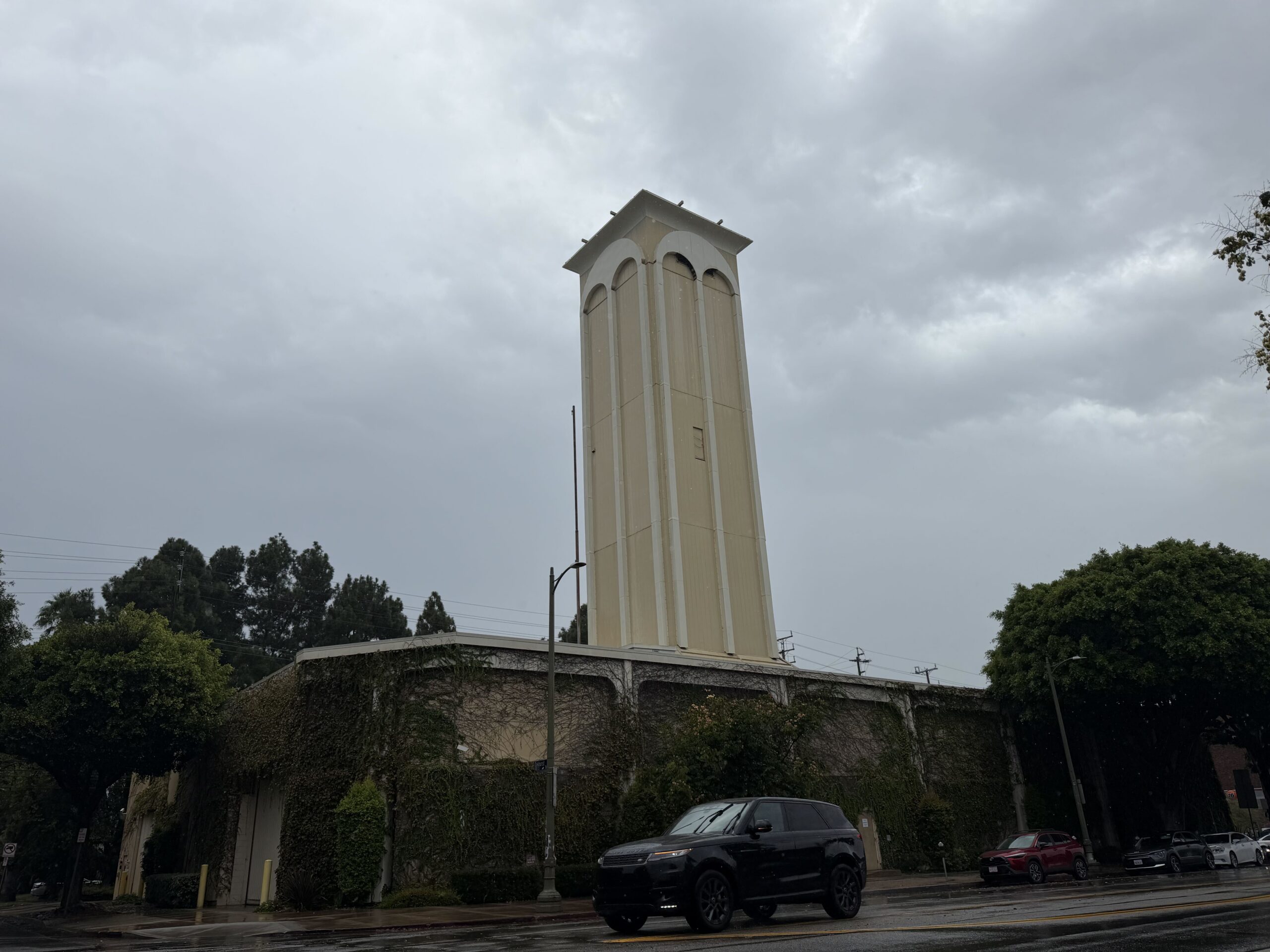
At another of the company’s properties, in the Pico-Robertson neighborhood of Los Angeles, Pacific Coast operated a drilling site and oil wells designed to resemble a synagogue. In 2021, city officials found the company in violation of multiple conditions, including rules governing fire safety, well drilling, and required environmental reviews. Later that year, a pipeline on the site leaked into a public alley. This history offers concrete examples of the concerns about the company’s conduct, and the need for oversight of the companies rushing into Venezuela.
The $100 Billion Question
The White House now says that NABEP will receive 100-year rights to 17 oil fields, containing about 65 billion barrels of proven reserves. It includes the right to buy 20 percent of NABEP’s production at cost; veto power of the board of directors, the majority of whom must be American citizens; and the right of first refusal for the remainder. In return, Betancourt’s company says it will invest up to $100 billion in rebuilding Venezuela’s infrastructure.
| $100B
PROMISED INVESTMENT |
100-year
RIGHTS TO VENEZUELA OIL FIELDS |
1/5
FIRST RIGHTS TO FIELDS HOLDING 20% OF THE COUNTRY’S RESERVES |
When asked, Pentagon spokesman Sean Parnell told Reuters that the Office of Strategic Capital “does not take equity stakes in private companies.” It is limited by law to providing loans, loan guarantees and technical assistance, including help structuring transactions. That appears to conflict with the White House’s description of the deal, which says NABEP granted OSC a 35% equity stake in its corporate parent. The Wall Street Journal had reported that the stake would be structured through “penny warrants,” which give the holder the right to acquire shares for a nominal price. The administration has not publicly explained how those warrants would be held or reconciled with OSC’s statutory limits. Senator Jack Reed (D-RI) on the Senate Armed Services Committee has requested “a full accounting of the legal authority for this transaction.”
Other legal issues arise around Venezuela’s constitution, which says that hydrocarbon deposits are government property that cannot be sold or transferred, and previously required the state to retain all shares of PDVSA. Changes after the U.S. invasion loosened those restrictions, but don’t clearly authorize the kind of 100-year long, majority-private control outlined in the NABEP deal. The company is also required to work in partnership with PDVSA, the state-owned oil company, under Venezuelan law.
Even less clear is whether NABEP will be able to raise that much capital. ExxonMobil, for example, spent about $29 billion on capital expenditures in 2025, and expects to spend about the same this year. Saudi Aramco spent $52.2 billion last year. In other words, NABEP’s promise is the equivalent of several years of an oil major’s spending—a remarkable undertaking for a much smaller, privately held producer.
Nor are those fields ready to produce. NABEP is taking over projects that were previously operated by Chinese and Russian companies, some in partnership with Venezuela’s state oil company, PDVSA. Beijing has already called for protection of Chinese interests in Venezuela.
Conclusion
Venezuela has a long history of nationalization and government intervention in the oil industry. That may contribute to why major international oil companies have been cautious about reinvesting. Rehabilitating mature oil fields can sometimes happen quickly, but Venezuela’s infrastructure has deteriorated for years, and requires substantial investment in pipelines and upgrading. On top of that massive capital commitment, equity investors are essentially paying a 35 percent tax on equity to the U.S. government on a project that can’t generate profit on at least 20 percent of its product. The administration hasn’t publicly provided enough detail to calculate what those rights are worth, or how associated costs will be allocated. None of this means Betancourt can’t make money from the venture. His company could find investors willing to bet on Venezuela, with the U.S. government’s involvement making the gamble feel a little safer. The real question is whether his wildcat network can deliver on this remarkable deal—and who gets stuck with the bill if it can’t.
# # #