State Policy Recommendations for the Climate-Driven Insurance Crisis
Proactive approaches for addressing climate change and protecting coverage
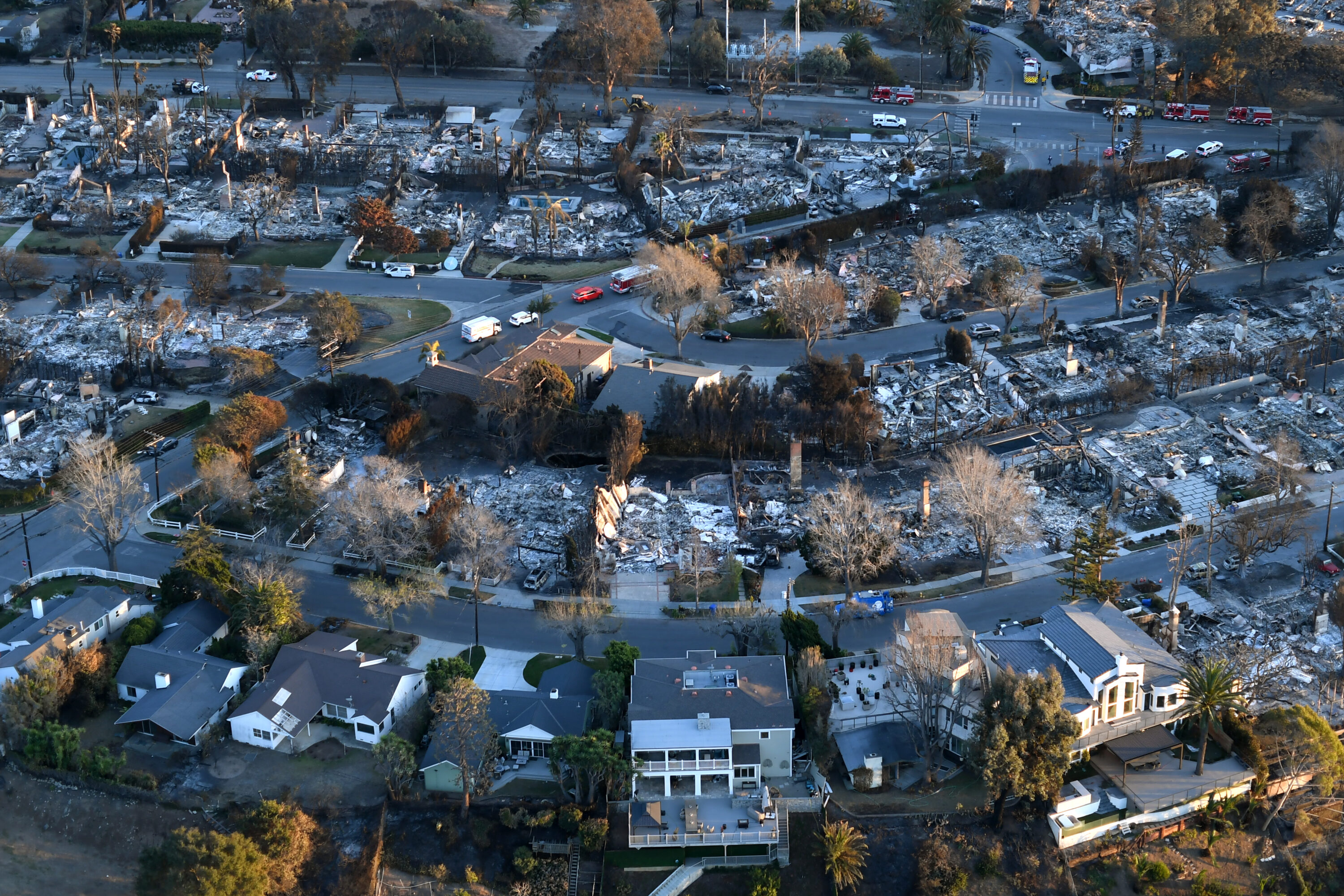
As climate-related disasters become more frequent and severe, an insurance crisis is unfolding across the country. Premiums are rising, insurers are withdrawing, and too many policyholders are finding out after a disaster that their coverage was insufficient. Without a new approach, states risk a destabilizing spiral of insurer withdrawals, skyrocketing premiums, and unprotected communities.
Addressing this crisis will require proactive, public approaches to reducing the risk and protecting consumers, while prioritizing the most vulnerable communities. The role of state insurance commissioners has never been more vital, and state legislators must consider bold and immediate action to meet the moment. A comprehensive response to the insurance crisis will require solutions across housing, financial regulation and consumer protection, and economic and environmental justice. The following list summarizes a range of complementary approaches, grounded in current and emerging models from across the country:
- Strengthen consumer protections before and after disaster hits to address the availability, affordability and adequacy of insurance.
- Reduce the risk to households and communities through proactive climate mitigation and investments in resilience.
- Require insurers and related industries to play an active role in reducing the risk through their investments and underwriting and shift the costs to the companies responsible after disasters through the use of subrogation.
- Prioritize renters, low-income households and communities of color at risk of displacement.
- Provide public insurance data and modeling, develop public intervenor programs, and collaborate with researchers and other states.
- Establish a Climate Risk Supervision Office, integrate climate change into insurance supervision and collaborate with other states and federal regulators on oversight.
- Proactively consider public alternatives to failing private insurance markets, including public reinsurance, a public option, and public insurance.
We elaborate on each of these points below.
Strengthen consumer protections before and after disaster hits to address the availability, affordability and adequacy of insurance.
When disaster strikes, strong coverage and timely and fair insurance payouts are essential to an equitable recovery. Without strong protections in place, policyholders—especially the most vulnerable—risk being retraumatized by coverage gaps or unfairly delayed, underpaid or denied claims. States must take a better path. We recommend the following steps:
- Drawing from the Equitable and Just Insurance Initiative’s national guidelines, state legislatures should establish strong post-disaster requirements, such as increasing penalties for claims violations after a disaster and requiring insurance companies to pay interest on insurance claims-related funds sitting in escrow or held by mortgage lenders.
- Enforce a standardized and simplified baseline for comprehensive policy language to ensure the adequacy of insurance well before disaster hits, and incentivize or require endorsements to bring buildings up to new codes or support resilient rebuilding.
- Extend the non-renewal notice to a minimum of six months and give the insurance commissioner the authority to establish a one-year moratorium on non-renewals and premium increases in disaster-affected areas.
- Provide consumers with both a right to know in writing why their coverage was not renewed, a right to remedy risks identified by the insurer in order to have coverage reinstated, and a right to appeal the loss of coverage, to ensure sufficient time and knowledge for adaptation.
- Improve insurance rate regulation by establishing an acceptable list of criteria for determining rates (exclusive of credit scores and other discriminatory proxies) and requiring prior approval for large rate increases.
- Establish a consumer ombudsman program to directly support consumers, and increase penalties for and strengthen a private right of action for unfair claims settlement practices by insurance companies.
- Prohibit any insurer halting coverage of new home insurance from offering auto, commercial, or other forms of insurance in that state for a period of five years.
Reduce the risk through proactive climate mitigation and resilience.
Insurance premiums will continue to rise as the risk rises. There is no long-term sustainable solution to the insurance crisis that will succeed without reducing the risk. Prioritizing both climate mitigation and adaptation are crucial. Delaying will only lead to more costly and difficult choices later on, whereas proactive investments pay off, with every $1 dollar invested in resilience estimated to save $13 dollars for communities. The legislature to do the following:
- Update the state building code to prioritize safety, resilience and long-term savings and ensure sufficient staffing for enforcement.
- Create a cross-agency housing and insurance resilience task force or agency to coordinate resilience strategies across housing, insurance, land use, building codes and investments.
- Provide grants and other investments to fund community-scale climate resilience and adaptation, prioritizing low-income households and communities of color at risk of displacement, following examples such as the Strengthen Alabama Homes program.
- For neighborhoods that have become unsafe and unsustainable to live in, the state should establish a long-term program for proactive approaches to voluntary home buyouts, with wrap-around support for participants, similar to the model of New Jersey’s Blue Acres program.
Require the insurance and broader financial industry to play an active role in climate resilience and mitigation through their investments, underwriting and approach to subrogation.
Insurance companies should be crucial early investors in clean energy and community resilience, using the tremendous investment funds at their disposal to proactively protect their own policyholders. Instead, insurers currently put their own policyholders at risk by contributing to climate change through investments and underwriting of oil and gas companies, while failing to provide urgent support for clean and renewable energy and providing only limited research support to resilience. Regulators and legislators should not only shift this approach, but also require insurers to pass the costs after disasters to those most responsible. Just as health insurance companies sued tobacco companies to recover costs, home insurance companies can do the same today against fossil fuel companies.
- Fund resilience grants and projects and home buyouts through proactive surcharges, taxes, or fees for insurers and other industries that benefit from a stable insurance system, such as mortgage lenders. Establish higher fees for the fossil fuel industry to ensure that polluters pay, following recent legislation proposed in Connecticut.
- Require insurance companies and residual market mechanisms to exercise subrogation claims against oil, gas, and coal companies after climate-driven disasters.
- Adopt legislation to require insurers to align with the energy transition and phase out investments and underwriting in fossil fuels in line with science-based climate mitigation targets, along the lines of the model of the New York Insure Our Communities Act.
- Provide or require discounts for commercial policyholders who mitigate their greenhouse gas emissions, following concepts outlined by the New York State Insurance Fund’s Climate Action Program.
- Use all financial, regulatory, legal, and institutional systems to accelerate the shift towards clean and local energy and eliminate dependence on fossil fuels.
Prioritize renters, low-income households and communities of color at risk of displacement.
Due to a legacy of discrimination, low-income households and communities of color are disproportionately at risk from physical climate risks such as wildfires and flooding. They also have fewer resources to prepare and recover, necessitating closer attention to both the cost of insurance, the payout of claims and the provision of resilience resources. Insurance played a pivotal role in producing these conditions through discriminatory practices and early withdrawal from urban neighborhoods. Legislators and regulators should now require insurers to play an active role in solving the problem, while working with these communities both to define the problem and develop solutions.
- Conduct town halls, listening tours and data calls to evaluate emerging issues among the most vulnerable communities and require insurers to collect data on race in order to support evaluation of actions that produce a disparate impact.
- Provide financial assistance for low-income policyholders to maintain coverage, as well as to adapt homes, and support community outreach programs to ensure broad awareness and reach.
- Prioritize low-income households for retrofit grants and provide grants and mandatory insurance discounts for affordable housing providers who meet Institute for Business and Home Safety’s Fortified multifamily construction standard.
- Establish incentives for insurance companies to invest or reinvest in the most vulnerable communities, by expanding existing state-level Community Reinvestment Acts or by establishing similar incentives tied with exam fees, licensure requirements and rate approvals.
- Support climate risk disclosures for renters and post-disaster right of return for renters to avoid climate gentrification and ensure that renters benefit from climate resilience investments, public risk information, and post-disaster consumer protections, as well as support following buyouts.
Provide public insurance data and modeling and collaborate with researchers, other states, and federal regulators.
The state cannot effectively respond to the insurance crisis without clear visibility into its drivers and the potential impact of proposed solutions. To bring long-overdue transparency to a secretive industry and enable evidence-based policymaking, states can take the following steps:
- Require insurers to use pricing and underwriting models that incorporate mitigation investments, at both a community-level and individual hazard level, similar to HB 1182, legislation approved by Colorado’s legislature in 2025.
- Partner with academic institutions and public risk modeling experts to create open-source catastrophe models that accurately reflect localized catastrophe risks and account for community-scale fire and flood risk reduction efforts and to communicate those risks to the public, following California’s Senate Bill 429.
- Publish a public insurance data dashboard, with requirements similar to the Home Mortgage Disclosure Act, featuring data at a census-tract level and for all residence, auto and small business policies. The data should include policy counts, premiums, non-renewals, claim denials, and deductibles.
- Establish a public intervenor program to support public engagement on insurance regulations, ratemaking, and modeling, similar to state-level utility intervenor programs and California’s public insurance intervenor program.
- Work to protect federal climate data, climate modeling and federal disaster aid.
- Support the work of federal regulators to monitor systemic risks from the national climate-driven insurance crisis.
Establish a Climate Risk Supervision Office and integrate climate change into insurance supervision.
Traditional models for regulating solvency and are increasingly out of step with current and future realities. Without intervention, an insurance market collapse could destabilize the broader economy, while threatening immediate financial ruin for households and local communities. Regulators must take immediate steps to assess the risks and shift insurance companies towards a long-term, sustainable approach to investment and underwriting.
- Hire a climate risk resilience officer within the state insurance office.
- Require the state insurance commissioner to file an annual report on climate risk supervision documenting progress within the state insurance department and at the National Association for Insurance Commissioners, following a related law in Connecticut.
- Require insurance companies reporting $50 million in annual premiums to file annual climate-related risk surveys to the state and the National Association of Insurance Commissioners, including their financed greenhouse gas emissions.
- Integrate climate risk into financial condition exams and assessments and require insurers to conduct annual climate-related scenario analysis for both physical and transition risks, building on guidance issued in Connecticut and New York.
- Publish an annual scenario analysis of insurance companies’ investment portfolios incorporating climate risk, similar to the 2024 findings of the state insurance commissioners of California, Oregon, and Washington.
- Require any insurer operating in the state to file ambitious long-term net-zero energy transition plans and document annual progress to shift both their underwriting and investments away from fossil fuel and towards clean energy.
Proactively consider public alternatives to failing private insurance markets, including the development of public reinsurance, a public option, and public insurance.
If insurers withdraw or threaten to withdraw, states should not attempt to recruit weakly capitalized startup companies to stay by neglecting proper oversight or cutting consumer protections. Florida’s and Louisiana’s experiences show that this approach will merely lead to unpaid or delayed claims, a wave of bankruptcies, and increasing reliance on lawsuits. States also cannot continue to allow insurers to profit from offering minimal coverage in select areas while cutting off the perils and people they do not find perfectly or sufficiently profitable. Instead, if insurers threaten to withdraw, states should proactively consider public alternatives.
- Start by establishing a task-force to consider options for long-term solutions for stabilizing the property insurance market, with representation from housing and consumer advocates, and experts in climate science, resilience modeling and mitigation.
- Conduct a feasibility study of the development of state-run public reinsurance programs, requiring insurers to meet certain requirements in exchange for reinsurance that applies after a high loss threshold is met. States should also consider coordinating regional approaches to provide greater distribution of losses.
- Conduct a feasibility study on the development of a public insurance option, similar to North Dakota’s public bank and state-level health insurance public options. While last-resort programs like the Fair Access to Insurance Requirements plans provide expensive, limited coverage for the once private insurers drop coverage, states can offer alternatives with lower-cost coverage for a wider section of the population.
- States should also study the development of entirely public disaster insurance that would provide affordable, comprehensive coverage, along with targeted support for resilience.
Conclusion
In the context of climate change, time is money. The longer regulators and legislators wait to recognize and respond to this crisis, the more expensive it will become. If left unaddressed, the insurance crisis will compound climate inequality and leave our most vulnerable residents exposed. If tackled boldly, states can set examples of innovative, just, and climate-smart solutions for the nation.
While the growing insurance crisis may be the “canary in the coal mine” of a broader climate crisis, it can be addressed with reforms that meet long-neglected needs and build a stronger, more resilient society. State and local advocates should push their regulators and legislators to take bold approaches. If insurers do not support state efforts to aggressively pursue climate mitigation and resilience, then advocates should encourage their states to proactively pursue public alternatives to the private market.