Resilient States Start with Resilient Homes
A legislative guide to bolstering resilience and promoting affordability through state resilient home retrofit grant programs.
By Carly Fabian (Public Citizen), Jessica Garcia (Climate and Housing Policy Consultant), Jordan Haedtler (Climate Cabinet Education), Elyse Schupak (Public Citizen).
Executive Summary
Climate change is threatening the affordability and availability of property insurance throughout the United States. Growing losses from wildfires, hurricanes, severe convective storms, and other disasters are causing widespread insurance market disruptions. State policymakers are increasingly facing pressure to dedicate a larger share of state budgets toward disaster preparedness, while also intervening to stabilize insurance markets.
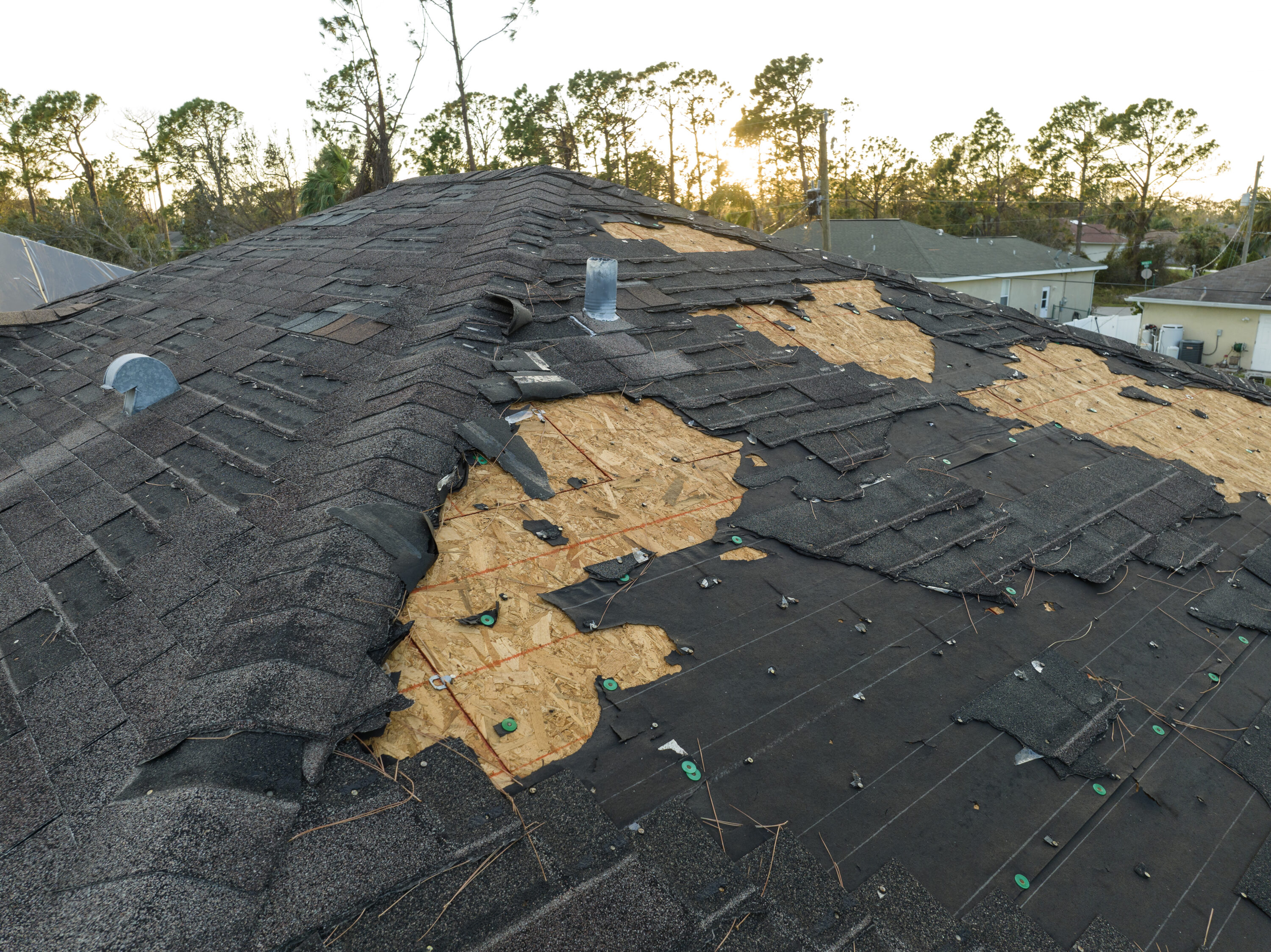
As state policymakers work to address these challenges, one popular intervention has been the establishment of resilient home retrofit programs, which offer grants to homeowners for property-level resilience upgrades. These programs typically fund roof fortification, but in some cases also fund home hardening against wildfires and, less frequently, property-level flood mitigation projects. They are designed to reduce losses and insurance claims in the event of a disaster and are frequently funded in whole or in part by fees or taxes paid by the insurance industry.
This report focuses on these property-level resilience retrofit programs, making recommendations to improve existing programs and expand programs to other states. It does not make recommendations for other state climate resilience efforts nor suggest that property-level resilience retrofit programs are the only solution to the wide range of resilience needs states face. Instead, this report will frame property-level resilience retrofits as a critical tool within the broader toolkit of policies needed to bolster climate resilience.
Well-designed resilience retrofit programs will help confront rising insurance costs—one of the major ways that climate change is threatening household affordability. When implemented alongside state investments in energy efficiency and climate pollution reduction, these programs can meaningfully reduce climate-driven cost increases for households.
The growth of roof fortification programs in particular is based largely on the proven success of the Strengthen Alabama Homes program, which provides $10,000 grants to homeowners for wind and hurricane resilient roof upgrades. That program has relied on research insights from the Insurance Institute for Business & Home Safety (IBHS), an insurance industry funded nonprofit focused on demonstrating and quantifying the impacts of different mitigation actions on reducing insured losses. States seeking to emulate Alabama’s approach have usually named their programs “Strengthen [State] Homes” or “Fortify [State] Homes” programs.
Alabama’s successful roof fortification program, built on research from IBHS, has prompted a host of state governmental roof fortification efforts, as well as more recent incentives for wildfire home hardening. At the Spring 2026 meeting of the National Association of Insurance Commissioners (NAIC), numerous insurance commissioners celebrated the spread of Alabama’s model to other states.
Encouraging though it is to see more states promoting resilience, several of the existing programs lack dedicated funding, data-driven objectives, and equitable design features. These shortcomings create the real possibility that programs will fail to meaningfully improve the affordability and availability of insurance and could end up excluding the very communities most in need of assistance. As more states look to create these programs, it’s critical to design them for success. To do so, states should consider key lessons and best practices emerging across other states.
This report puts forth priorities for program design for home resilience retrofit grant programs. The majority of these recommendations are applicable to roof fortification and wildfire home hardening programs, with some recommendations applicable to similar property-level flood mitigation programs as well. The report also outlines recommendations for how resilience retrofit programs can be integrated with other elements of state policy to stabilize insurance markets and promote climate resilience.
States with existing programs should apply these best practices and lessons learned from other states to ensure they effectively and equitably tackle the full scale of resilience needed across the state. Policymakers in states that have not set up a program yet should use the principles that follow to establish robust programs that achieve the scale of property-level risk reduction needed in response to growing climate damages.
Effective programs will address the following priorities. The underlying program design principles can help states achieve these priorities.
Establish robust retrofit grant programs that meet local needs with adequate funding from the insurers that benefit from resilience retrofit investments.
- Inform grant program design through research on the type and scale of property-level resilience retrofit investments needed throughout the state.
- Require insurers to contribute to grant programs through fees or premium taxes.
- Revenue should be deposited in a nonlapsing fund, with grants available on an ongoing basis.
Target grants toward the communities in greatest need of financial assistance for physical risk mitigation.
- Evaluate the full range of risk mitigation needs for each program applicant, providing upfront costs associated with resilience upgrades as grant-eligible.
- Offer larger grant sizes for low- and moderate-income homeowners.
- Enable nonprofit organizations to receive and disburse grant funding.
- Extend grant program eligibility and insurance discounts across property types, including to multifamily properties, mobile homes, modular homes, and manufactured homes.
- Use granular insurance department data to target grant programs rather than rely on insurance companies to provide this information.
- Include low-income uninsured homeowners as eligible for resilience retrofit grants.
Ensure that resilience retrofit investments result in cost savings and other benefits for policyholders.
- Require insurers to reward resilience upgrades through discounts based on avoided losses and by incorporating broader resilience investments into risk modeling.
- Extend notice periods for insurance non-renewals to provide homeowners additional time to make resilience upgrades.
- Require insurers to offer no- or low-cost endorsements for cost-effective resilience retrofit upgrades to encourage rebuilding to resilient standards in the event of a disaster.
- Integrate resilience retrofit grant programs with the state’s residual markets, usually called the Fair Access to Insurance Requirements (FAIR) Plan, and direct them to provide additional insurance resilience benefits.
Build towards whole-home retrofit programs inclusive of energy efficiency and climate pollution reduction projects.
- Fund home retrofits that advance both resilience and climate pollution reduction.
- Establish an interagency council to coordinate across multiple state grant programs (spanning climate resilience, disaster preparedness, climate pollution reduction, and energy efficiency) and build toward a central hub for administering climate-related grant programs.
- Create workforce recruitment and training programs to respond to the scale of statewide fortification needs.
Target long-term success through comprehensive resilience and climate pollution reduction strategies.
- Build new homes to resilient standards.
- Expand investments in community-wide resilience and climate risk reduction.
- Bolster resilience investments with state climate pollution reduction strategies.
Read full report here.