Public Citizen Testimony on Trump’s Critical Minerals Deals
Updated October 21, 2026
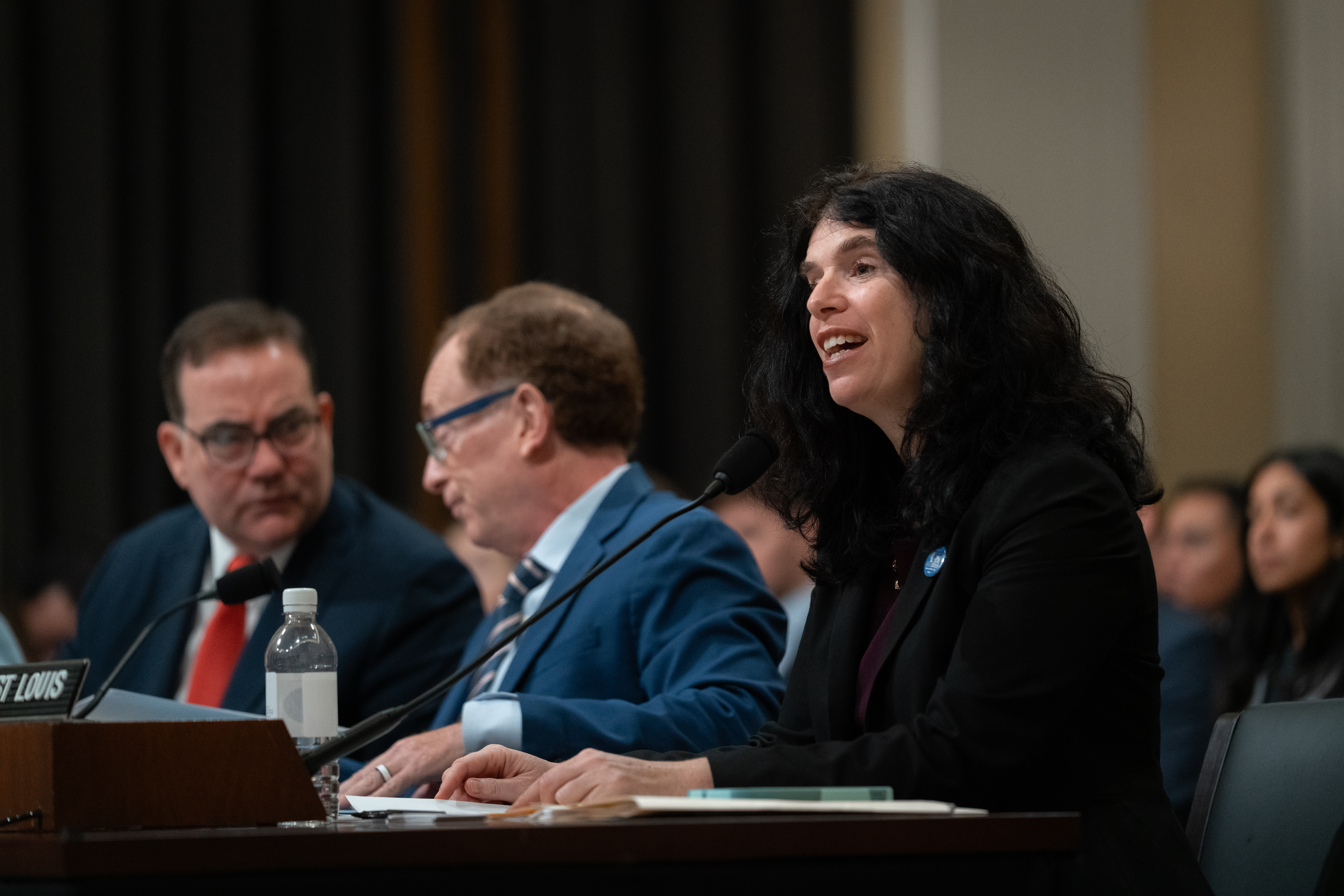
On September 2, 2026, Global Trade Watch Director Melinda St. Louis testified before the full House Ways and Means Committee at a hearing on “Strategic Partnerships to Secure Critical Resources and Supply Chains.”
She was the only witness to testify to the profound lack of transparency, harmful terms in the text made available for review, and risks of corruption and misuse of taxpayer financing in the web of critical minerals deals, frameworks, and memoranda of understanding (MOUs) the Trump administration has negotiated.
In her opening statement, she summarized the contents of a detailed written testimony and a recent Public Citizen report on the secretive web of Trump’s minerals deals.
St. Louis explained that it is a reasonable goal to seek diverse and reliable supply chains for minerals. But the way we do so matters. When we talk about “supply chains,” we are talking about real people: people who work in dangerous mines; Indigenous and other frontline communities whose land might be seized or polluted; children whose health may be harmed. These people are put even more at risk by trade and investment deals that don’t require transparency, that lack strong and enforceable protections, and that fail to respect the sovereignty and development goals of partner countries.
Her testimony focused on three areas:
- The lack of transparency in the Trump administration’s critical minerals deals,
- Harmful terms in the text we’ve seen, and
- Risks of corruption and misuse of taxpayer financing.
Several members of the committee asked questions of St. Louis and raised similar concerns. In opening the hearing, Trade Subcommittee Ranking Member Linda Sánchez (D-Calif.) emphasized many of the same points. She also mentioned two letters that she led, along with 50+ colleagues, letters that Public Citizen has also endorsed.
Rep. Sánchez asked St. Louis to elaborate on her testimony that the number of critical mineral deals that the Trump administration claims to have entered doesn’t match up with their public announcements about concluded deals. St. Louis explained that, instead of the 38 touted deals, a Public Citizen review of publicly available information could only confirm the existence of 27 minerals-specific frameworks or MOUs: 15 MOUs and 12 frameworks. Only two MOUs and three frameworks have been released by the U.S. government. A few others have been made public by the partner government.
Rep. Sánchez also asked about the concerning trend of the Trump administration inking “minerals for security” deals, in which the U.S. offers military support or security guarantees to a country experiencing conflict in exchange for privileged access to the country’s mineral wealth. St. Louis explained that, for example, the deal with the Democratic Republic of the Congo has no meaningful labor or environmental standards, despite the documented child labor and other human rights abuses.
Rep. Lloyd Doggett (D-Texas) highlighted the harmful pollution that poorly regulated mining causes, noting that in Trump’s agreements on reciprocal trade, the word “environment” appears only twice, in reference to the “business environment.” He asked St. Louis about corrupt practices both in mining activities abroad and in potential self-dealing by the Trump administration.
She explained that a firm linked to Eric and Donald Trump Jr. increased its stake in a company just days before it acquired a major stake in a Kazakhstan mine. That mine had been offered up to $1.6 billion in potential financing from the U.S. Development Finance Corporation and Export-Import Bank. The project deal was reportedly ushered through by Secretary Lutnick, including direct outreach between President Trump and Kazakhstan’s president. Secretary Lutnick signed a minerals MOU with the Kazakh government that same month, but it hasn’t been released.
Rep. Danny Davis (D-Ill.) asked how Trump’s adversarial approach to allies like Canada undermines efforts to build resilient critical minerals supply chains. St. Louis explained that once trust is broken, it may not be easy to repair, and countries will find other more reliable partners to do business with. She called for mutually beneficial agreements with high-road standards, unlike what we have seen so far in Trump’s coercive trade agreements or in his hostility to Canada.
Rep. Terri Sewell (D-Ala.) asked about the impacts of Trump’s international agenda on workers and the ability to enforce labor standards abroad. St. Louis emphasized that minerals deals should include a rapid response enforcement mechanism that builds off of the model that congressional Democrats forced Trump to insert into the USMCA. Such a model would hold individual facilities accountable to resolve abusive conditions swiftly.
Rep. Judy Chu (D-Calif.) asked for more detail on potential conflicts of interest within minerals deals and the impacts of this possible misuse of taxpayer money on everyday Americans. St. Louis explained that, in the midst of an affordability crisis and while claiming to be using trade policy to benefit regular Americans, Trump is instead signing secretive deals full of giveaways to the billionaire class.
Rep. Don Beyer (D-Va.) asked if President Trump’s trade agenda is actually supporting long-term partnerships to guarantee mineral supply chains. St. Louis explained that by coercing countries into secretive deals that lack congressional or civil society involvement by either country, U.S. credibility is undermined on the global stage. A more strategic minerals plan would start with a focus on demand reduction so less mining is needed overall and require high standards for labor and the environment.
Public Citizen will be submitting responses to Questions for the Record regarding this hearing in the coming weeks and looks forward to continued engagement with Congress to hold the administration accountable to the goal of securing reliable critical supply chains without sacrificing democratic principles of transparency, equity, and justice.
Update
On October 19, 2026 St. Louis responded to Questions for the Record from the Committee. The response can be found here.