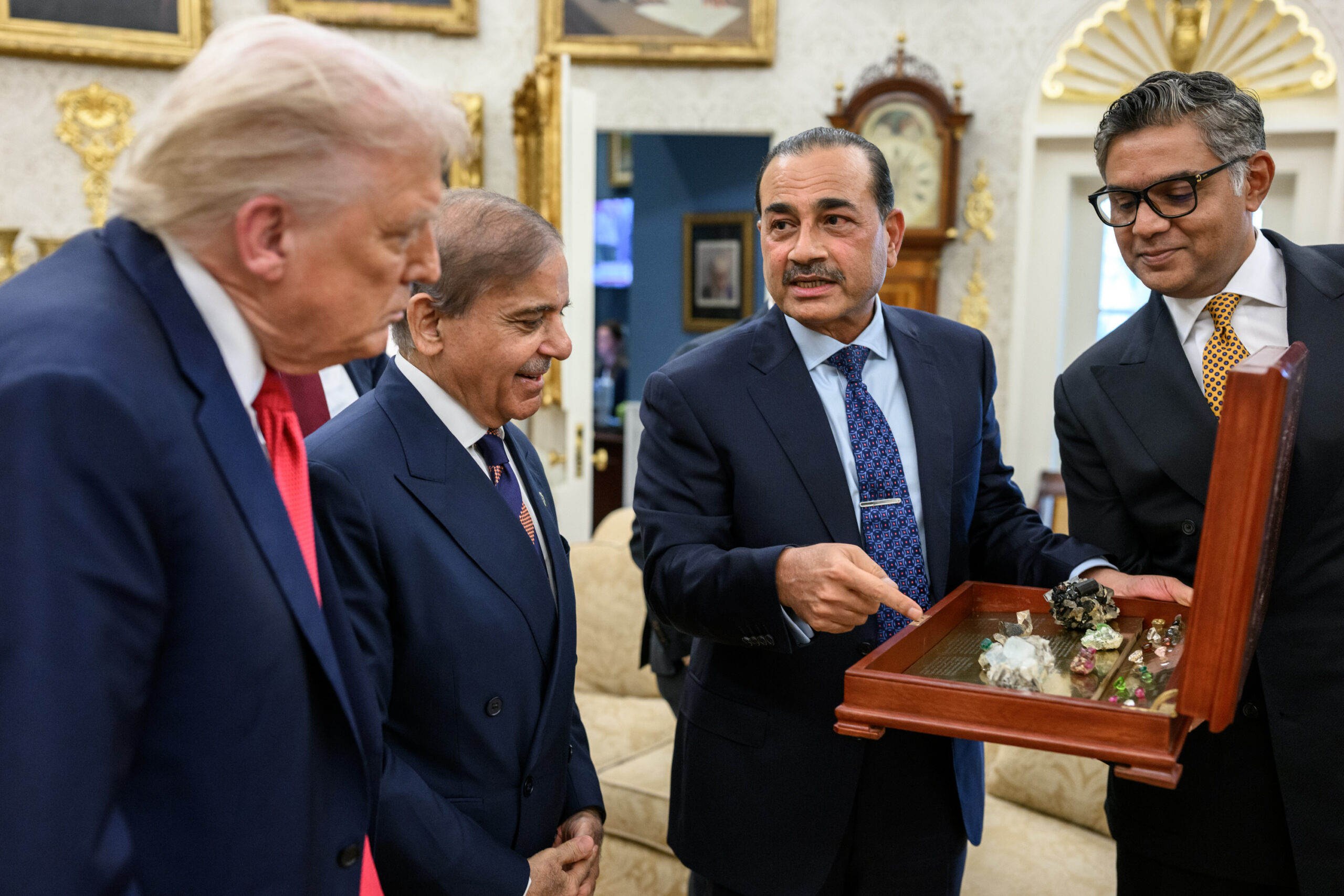
The Trump Administration’s Many Tools for Seizing Critical Minerals Abroad
Introduction
Minerals are deemed “critical” by the U.S. government if they are considered both essential to the nation’s economy or national security and vulnerable to supply chain disruption. Critical minerals are needed for the batteries and magnets that electrify cars and industry, for data centers that power artificial intelligence, and for the advanced weapons and targeting systems the military relies on. Because China dominates much of the global supply chain, gaining access to alternative supply routes and building domestic production capacity have become national priorities.
Under the Biden administration, discussions surrounding critical minerals were primarily focused on advancing climate goals, clean energy technologies, and the global transition to renewable energy. The climate-hostile Trump administration has intensified the push to secure critical mineral supply chains, but rather than the green transition as its rationale, Trump’s drive for critical minerals is in the name of national security and military dominance.
The current administration has hardwired access to critical minerals into a new generation of (mostly) bilateral trade and investment agreements. Unfortunately, many have been “negotiated” in secrecy under conditions of duress, tariff threats, and legal ambiguity. Though a number of these have been named “Agreements on Reciprocal Trade” (ART), these instruments are in fact defined by their lack of reciprocity and a near-total asymmetry with the other country shouldering all the obligations.
This report examines the various pieces that make up the Trump administration’s global critical minerals strategy to date and how it entrenches patterns of exploitation and extractivism that lock resource‑rich countries into raw‑material supplier roles under a banner of “supply chain resilience.”
Trump 2.0 and the Global Scramble for Minerals
Both the 2025 and 2026 President’s Trade Policy Agendas (TPAs) treat critical minerals as one of six core areas of the America First Trade Policy. The 2026 TPA describes the strategy for “Secure Supply Chains for Critical Minerals and Sectors” as “pursu[ing] resilience of its critical supply chains by reshoring industry and diversifying trade across the entire value chain of … critical mineral production.” The agenda pledged the government to take “strong action through a whole-of-government approach to secure critical supply chains.”
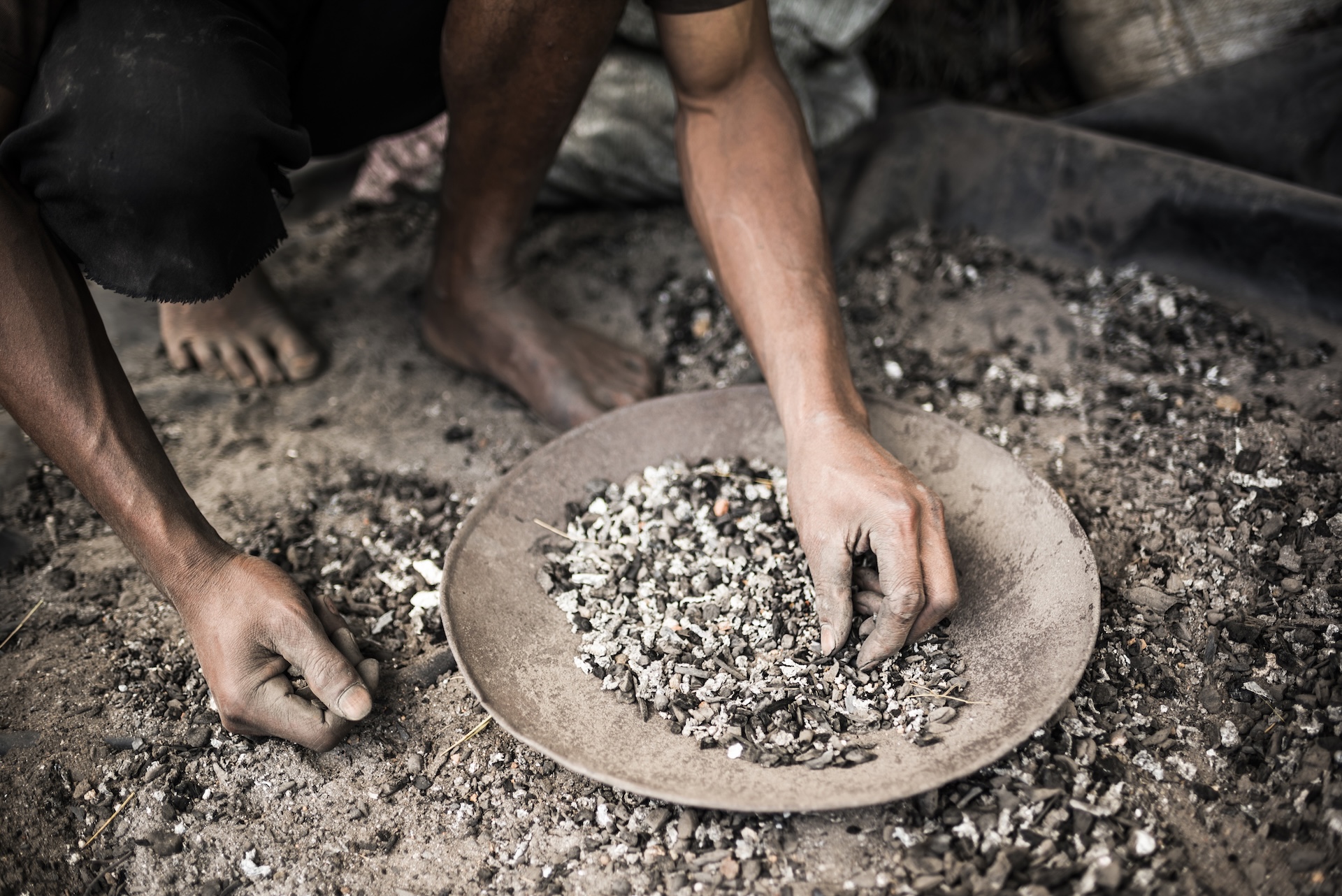 Aluminum mining. (Matthew Williams-Ellis)
This rush to conclude minerals agreements raises concern, as widespread labor, environmental, and human rights abuses are widely documented throughout minerals mining, recovery, and processing supply chains. Trade and investment deals that do not require transparency and accountability by mining and processing firms, lack strong and enforceable protections, and fail to respect the sovereignty and development goals of partner countries will likely exacerbate harms to vulnerable communities in resource-rich areas.
Unfortunately, deals like the U.S.-Indonesia ART, U.S.-Malaysia ART, and U.S.-Democratic Republic of the Congo (DRC) Strategic Partnership Agreement (SPA) tie minimal tariff relief or other nonbinding investment commitments to expansive commitments on how partners can regulate, export, and allocate their mineral wealth. These arrangements undermine partners’ sovereignty and development goals. They hobble domestic industrial strategies (similar to ones employed by the U.S. to protect developing industries and increase value-added), constrain their policy space and governments’ ability to manage their own resources, and grant foreign actors (the U.S. or U.S. investors) power over domestic resource governance.
These secretive deals were concluded without meaningful congressional input or public scrutiny. For example, the administration ignored congressional demands for transparency during the negotiation of the DRC SPA, announcing a final deal without any democratic oversight. The Indonesia deal, like other ARTs, was also negotiated in secret and without input from either country’s civil society. In general, these trade agreements have been formulated and implemented wholly by the executive branch without the normal (already inadequate) congressional trade agreement procedures and without opportunities for Congress to review or approve the text.
Beyond these bilateral agreements, the Trump administration’s emerging critical minerals strategy uses Executive Order-created processes, such as establishing the National Energy Dominance Council, to coordinate action across federal agencies. The result is a layered system in which different agencies play specialized roles: The Department of State and U.S. Trade Representative (USTR) build the international architecture; the Export-Import Bank (EXIM) and International Development Finance Corporation (DFC) supply capital; the Department of Defense (DOD) shapes stockpiling and industrial‑base priorities; the Department of Energy backs technology and commercialization; and the Departments of Interior and Commerce surface domestic projects and (de)regulatory pathways. (See Appendix 1 for Executive Orders related to critical minerals.)
The Web of Critical Minerals Instruments
There is no central source of information where the Trump administration makes clear how its various minerals-related instruments are intended to interact or what precisely the end goal is. Based on information available to date, the various agreements generally fall into one of five categories, described below. (See Appendix 2 for the current list of known and agreed-upon critical minerals instruments since 2025.)
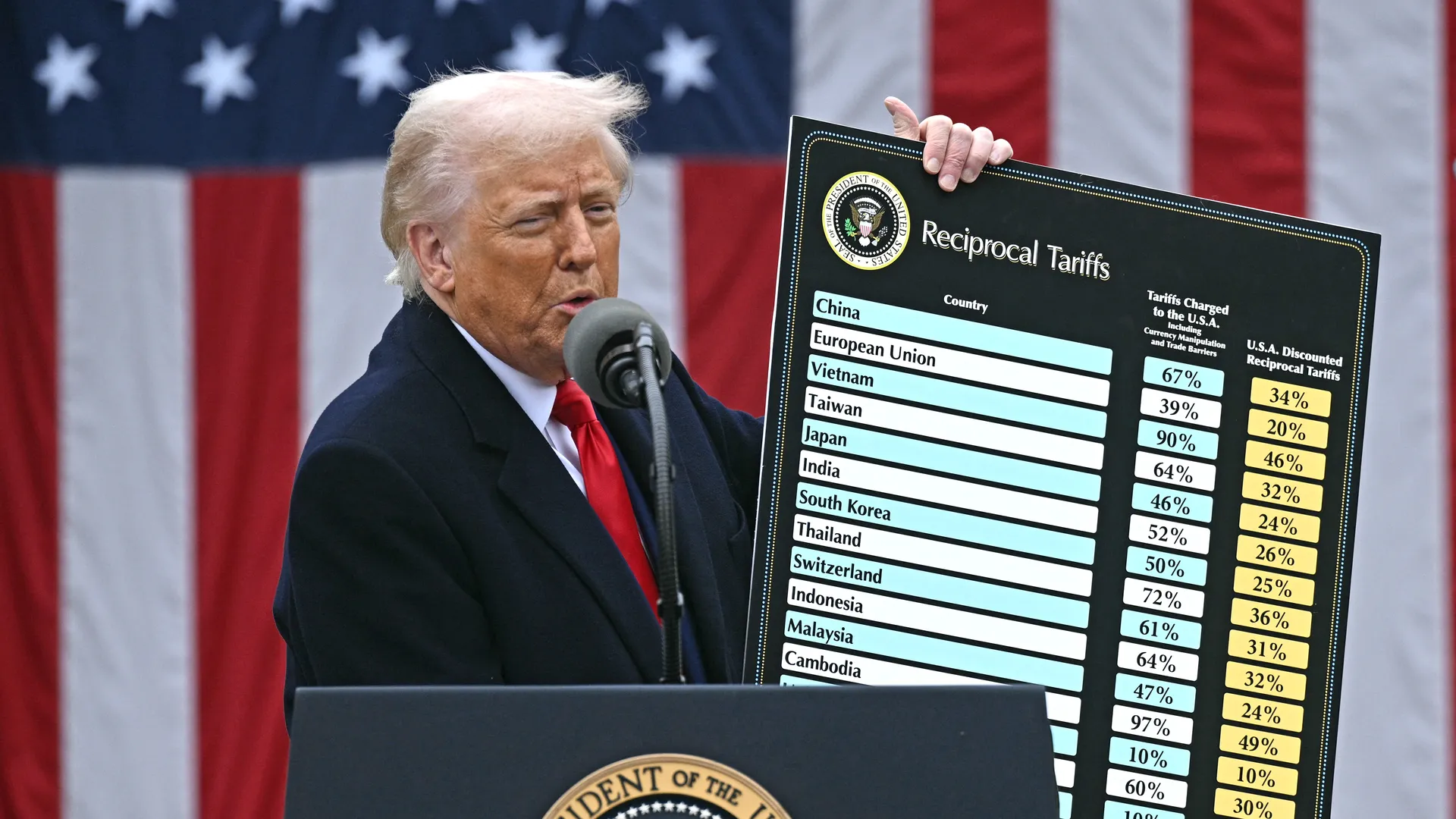 Trump announcing reciprocal tariffs. (Brendan Smialowski/AFP via Getty Images)
1. Agreements on Reciprocal Trade
ARTs are presented in the President’s 2026 Trade Policy Agenda as a major pillar of the administration’s America First trade strategy, with USTR negotiating binding, enforceable bilateral deals that require partners to cut tariffs and non-tariff barriers while maintaining U.S. leverage. Countries negotiated ARTs in order to reduce the sweeping “reciprocal” tariffs President Trump invoked using authority under the International Emergency Economic Powers Act (IEEPA).
While ARTs, by themselves, are not written as critical‑minerals agreements, they create the vertical, country‑by‑country scaffolding into which the other categories of minerals-specific deals plug. The ART for Guatemala contains no mention of critical minerals. In other ARTs, critical minerals are a significant focus, and binding commitments seek to ensure predictable upstream access for U.S. companies while constraining the trading partner’s sovereign decision-making over its mineral resources. (See Appendix 3 for the relevant provisions in these agreements.)
For example, the ART with Ecuador has several minerals-related provisions. It provides that “Ecuador shall work with the United States to facilitate investment in critical mineral projects,” and requires Ecuador to “allow and facilitate” U.S. investment to explore, mine, refine, process, and export critical minerals. Ecuador must also “develop and implement a system to track precious metals from extraction through transport, processing, and export,” beginning with copper, “strengthen the institutions” enforcing mining laws in cooperation with the United States to monitor production and marketing “in real time,” and “issue open public tenders for… critical mineral extraction and processing.” Taken together, these obligations align Ecuador’s mining and critical minerals sector with U.S. investment and security interests and give the U.S. more control over how those minerals are tracked and monitored across the supply chain, from mine to export.
Implementation of the ARTs is currently uneven. Some agreements are signed but not yet in force; others are being partially implemented; and still others are facing political or legal pushback, especially in response to the Supreme Court decision invalidating the IEEPA‑based tariffs that underpinned the ART system. Since that ruling, only Ecuador and Jordan have become new ART signatories, while Malaysia announced its ART was now “null and void.” Vietnam and Thailand have yet to ratify their framework deals negotiated earlier.
Frameworks for an ART
USTR has announced several bilateral agreements that it describes as “Frameworks for an Agreement on Reciprocal Trade.” In cases where it will take longer to negotiate the binding terms of an ART, the administration has touted these framework agreements as an “early harvest” and show of progress toward a potential future ART. The 2026 Trade Policy Agenda notes that USTR signed ARTs with multiple partners and announced framework deals with others, and the “USTR is actively negotiating to upgrade each framework deal into an ART or equivalent.”
Generally, the U.S. and the relevant partner country will release a joint statement announcing the framework agreements and describing its general goals, though often no formal text is made public. While the frameworks and related joint statements are themselves non-binding, they can provide a glimpse into what provisions may be included in a final ART or other binding agreement. Even when a framework’s joint statement does not explicitly mention minerals, the final ART very well may. Indeed, some ARTs, for example those with Ecuador and El Salvador, do have terms on minerals, even though their framework statement did not.
2. USTR’s Proposed Plurilateral Agreement on Trade in Critical Minerals
The 2026 Trade Policy Agenda states the “President directed, pursuant to Section 232 of the Trade Expansion Act of 1962, USTR and Commerce to…negotiate a plurilateral agreement — the Agreement on Trade in Critical Minerals (ATCM) — with like-minded partners to establish common border-adjusted price mechanisms for specific minerals and downstream products.” The goal of such a mechanism would ostensibly be to “re-shore critical minerals mining and processing by establishing a preferential trade zone free from non-market distortions, and will create a reliable supply for critical minerals that we cannot extract domestically.” Following that directive, in February 2026, USTR announced it would pursue such negotiations and opened a comment period for input.
The ATCM is thus framed as the eventual binding framework for coordinating price mechanisms, supply‑chain rules, and security‑driven standards in critical minerals, sitting horizontally across the bilateral ARTs that the United States is signing with individual partners.
In addition to the ARTs, the administration has been building a web of instruments expected to serve as the practical scaffolding for the eventual ATCM. On February 4, the State Department convened the 2026 Critical Minerals Ministerial, with Vice President JD Vance, USTR Jamieson Greer, and three other cabinet secretaries. Fifty-four countries plus the European Union attended. The administration highlighted many major actions focused on securing the critical minerals supply chain.
Action Plans
At the conclusion of the State Department’s minerals ministerial, USTR announced the intent to “develop Action Plans for critical minerals supply chain resilience [that] will develop coordinated trade policies and mechanisms, such as border-adjusted price floors, that can mitigate critical mineral supply chain vulnerabilities.” USTR continued, “Through the development of these Action Plans, we will lay the groundwork for a binding plurilateral agreement on trade in critical minerals with like-minded partners,” — the future ATCM. Action plans convert political and framework language into concrete joint workstreams — identifying priority minerals and project pipelines, testing tools like border‑adjusted price floors, and coordinating stockpiling and export‑control approaches — while still functioning as policy roadmaps rather than treaties.
In the two-page U.S.-Mexico Critical Minerals Action Plan, for example, the two governments “seek to develop a new paradigm for preferential trade in critical minerals supported by price floors and other measures,” launching a 60‑day program to explore coordinated trade policies (including border‑adjusted price floors), “explore how such measures may be embodied in a plurilateral agreement,” and identify specific mining, processing, and manufacturing projects for priority financing and policy support. It is, in short, an agreement to continue discussions toward an eventual plurilateral agreement. At present, Mexico, Japan, and the European Union have agreed to such action plans.
3. “Minerals for Security” Agreements
There are two significant agreements that require their own category designation, which we are calling “minerals-for-security” agreements. Under such a model, the U.S. offers military or security support to a country in conflict in exchange for access to its mineral resources. Following the shocking Trump-Zelensky White House blowup, in April 2025 the State Department announced the U.S.-Ukraine Reconstruction Investment Fund as a condition for continuing to support Ukraine’s defense effort. Under the deal, the U.S. and Ukraine jointly support a fund for new mining projects, with U.S. military assistance counting as its contributions to the fund.
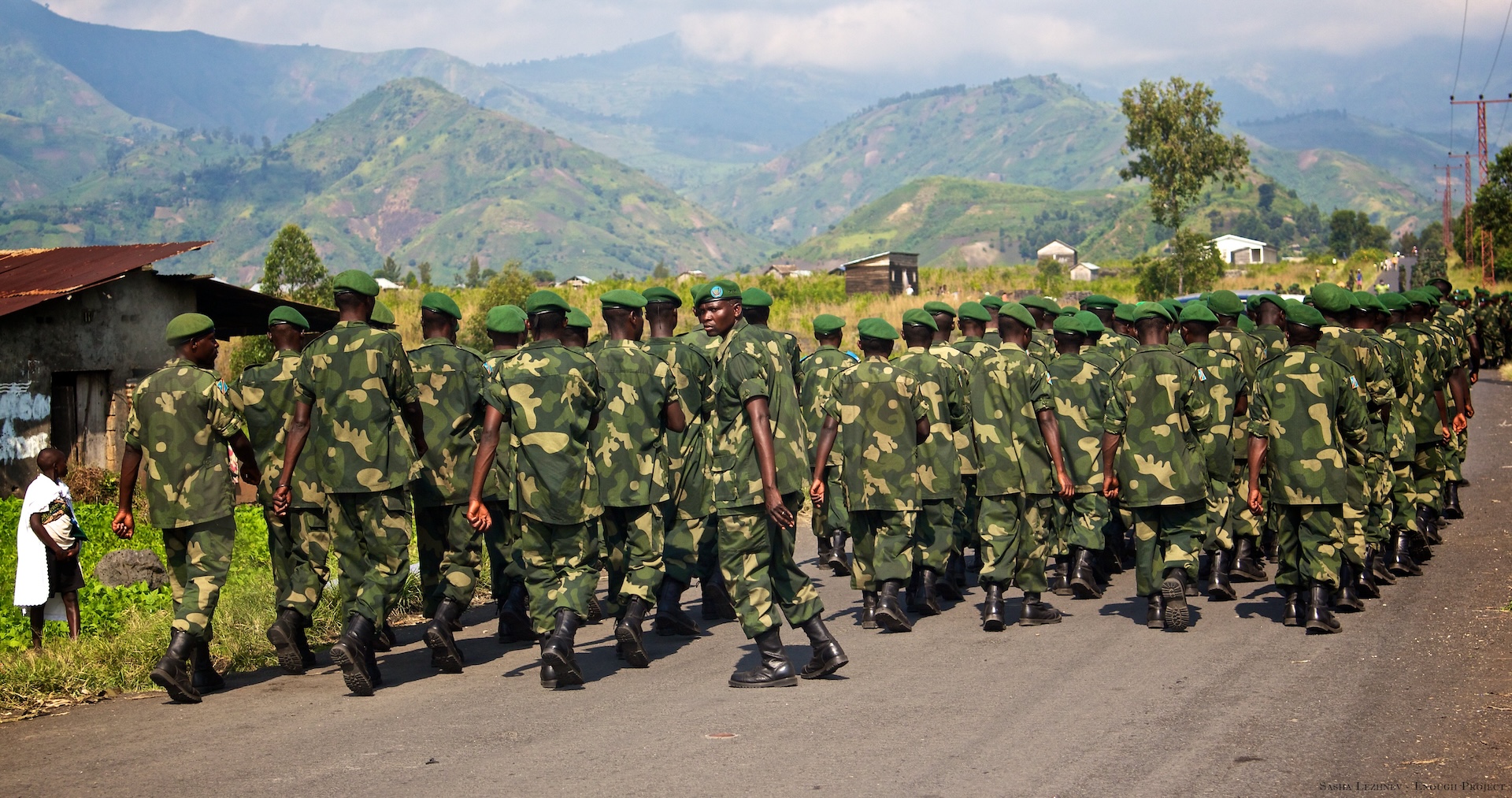 Congolese soldiers in North Kivu. (Sasha Lezhnev, Enough Project)
This agreement reportedly became an inspiration for the U.S.-DRC Strategic Partnership Agreement. The SPA is one of three agreements making up the Washington Accords, a series of Trump-negotiated deals ostensibly meant to end violence in the DRC perpetrated by Rwandan-backed militant groups. In practice, the deal gives sweeping financial and regulatory incentives to U.S. mining companies and grants the U.S. government unprecedented control over Congolese mineral resources. These are binding agreements devoid of meaningful labor, human rights, or environmental safeguards.
A similarly cynical “minerals-for-medicine” approach appears in Zambia, where the administration reportedly tried to tie health assistance and HIV funding to critical‑minerals access. A leaked draft State Department memo, reported by The New York Times, describes conditioning continued HIV aid on Zambia’s agreement to “enhance U.S. access to its vital mineral resources,” and warns that Washington must be prepared to “publicly withdraw support from Zambia on a large scale” if it refuses. Zambia’s government confirmed that the United States sought to make a critical minerals agreement — which included provisions for “preferential treatment for U.S. companies” in Zambia’s mining sector — conditional on signing a controversial health MOU. This exploitative “minerals-for-medicine” strategy is part of the same coercive playbook seen in the minerals-for-security arrangements, in which life‑saving aid and security guarantees are leveraged to secure privileged control over critical minerals supply chains.
4. Nonbinding Minerals-Specific Frameworks
Some agreements focused specifically on minerals are described as frameworks, perhaps to imply that an additional, more binding agreement could be in the future. For example, the U.S.-Japan Framework states that it is not legally binding, yet still lays out detailed pillars on securing supply, investment in mining and processing, standards‑based trading systems, and stockpiling. The U.S.-Japan Framework also includes concrete actions such as jointly identifying projects to fill supply‑chain gaps, mobilizing public and private finance, launching a ministerial‑level investment dialogue, creating a rapid‑response group for supply disruptions, and exploring coordinated stockpiling.
The Quad Critical Minerals Initiative Framework, announced by the United States, Japan, Australia, and India, is currently the only framework agreement with multiple countries. The Quad initiative, negotiated by the State Department, is a non‑binding effort that aims to mobilize up to $20 billion in public and private capital for mining, processing, and recycling projects. It is organized around three pillars: mobilizing investment via export credit agencies and development finance institutions, harmonizing permitting and regulatory frameworks, and advancing recycling and recovery.
5. Critical‑Minerals Memoranda of Understanding
Memoranda of Understanding (MOUs) are a broad category of generally non‑binding political instruments through which the administration can seek to influence the actions of foreign governments related to critical minerals supply chains while avoiding enforceable rights under domestic or international law, or obligations on labor, environmental protection, or community consent. Administration officials frequently discuss critical-minerals frameworks and MOUs in the same breath or use the terms interchangeably. The clearest distinction, based on the few available texts, seems to be that frameworks tend to use terminology commonly used in trade agreements, while MOUs tend to describe intent to cooperate.
MOUs have been negotiated by various branches of government for a variety of purposes: to function as platforms; to open channels with allied governments and corporations; and to steer investment and public financing into cross‑border mining and processing projects in the name of supply‑chain resilience. In practice, they encourage participants to strengthen and diversify critical minerals supply chains; promote trade and investment in exploration, extraction, processing, refining, recycling, and recovery; while explicitly allowing either side to withdraw by written notice.
Available texts have revealed disparate approaches, for example the 2025 U.S.-Thailand MOU explicitly describes an expectation of the signatory countries having “first opportunity to invest,” which does not appear in the United Kingdom or Malaysia MOUs.
Trump’s Critical Minerals-Related Instruments
As mentioned, there is no publicly available central repository of minerals agreements. The most complete information made available is from a February 2026 State Department fact sheet that stated:
Today, the United States signed eleven new bilateral critical minerals frameworks or MOUs with countries, including Argentina, the Cook Islands, Ecuador, Guinea, Morocco, Paraguay, Peru, the Philippines, the United Arab Emirates, the United Kingdom, and Uzbekistan. The United States signed ten other critical mineral frameworks or MOUs in the past five months and reached completion of negotiations on such agreements with seventeen other countries.
This disclosure fails to name the ten countries with which the U.S. supposedly already had signed agreements, or the 17 countries with which negotiations were allegedly completed. It suggests that in total, 38 MOUs or frameworks have been agreed or would be shortly. A Freedom of Information Act request for the list of countries and text of those agreements is pending.
Public Citizen’s review of publicly available announcements and documents revealed the existence of 15 MOUs and 12 framework agreements to date. Less than half of the MOUs announced have been made fully public, only two of which were released by the U.S. government. The rest are public thanks to the partner country. The Quad framework is the only framework agreement text released by the U.S.
The following map illustrates the known minerals-related instruments negotiated under Trump’s second term. The same information is available in a table format in Appendix 2.
Map: Known Minerals Instruments Since 2025

An interactive version of this map is available here.
| Attended the Minerals Ministerial, but has no known agreement | |
| Has a non-binding MOU, Action Plan, or Framework | |
| Has a binding ART, framework for an ART, or Minerals for Security deal | |
| Has a binding agreement and at least one non-binding agreement |
Power And Vulnerability Explain Differences Among Countries’ Deals
The instruments reviewed here form a clear spectrum, from non-binding MOUs with symmetric language and clean exit rights (such as the UK) to binding treaties that subordinate a partner country’s domestic law to U.S. negotiating priorities (Ukraine) and require sovereign governments to rewrite their constitutions on U.S. timelines (DRC). The position each country occupies on that spectrum can be explained by its vulnerability: export dependency and how badly it needs relief from U.S. tariffs, security guarantees, or military support that the agreement places at risk.
The following examples from recent minerals agreements demonstrate this dynamic.
Indonesia holds more than 40 percent of global nickel reserves and produces well over half of the world’s mined nickel, a metal that is crucial for batteries and wind and solar power. Faced with a threatened 32 percent “reciprocal” tariff, Indonesia accepted an ART that effectively dismantles its nickel‑sector industrial policy for the U.S. market. The ART requires Indonesia to “allow and facilitate U.S. investment in its territory to explore, mine, extract, refine, process, transport, distribute, and export critical minerals” on terms no less favorable than for its own firms and to “provide greater certainty for companies involved in critical mineral extraction… to increase production capacity and supporting operational growth.”
Under the agreement, Indonesia makes a binding commitment to “remove restrictions on exports to the United States of industrial commodities, including critical minerals,” which Public Citizen and Indonesian groups interpret as forbidding export bans, quotas, and domestic‑processing requirements on exports to the United States, directly undercutting Indonesia’s 2020 key industrial policy reforms. The ART also obliges Indonesia to facilitate imports of U.S. coal and purchase $15 billion in U.S. liquified natural gas (LNG) and other fossil fuels, in exchange for a reduction of Trump’s reciprocal tariff — which the U.S. Supreme Court struck down as unlawful the very next day.
In a context where nickel operations have already produced hazardous labor conditions, land conflicts, and water contamination in mining regions, locking in bans on export restrictions and processing requirements replicates a colonial extractivist model in which resource‑rich countries surrender economic sovereignty. Such deals lock resource-rich countries into raw‑commodity exporter status while richer countries capture the value‑added segments of the supply chain. The ART also lacks any enforceable protections for labor rights, the environment, or Indigenous communities, opening the door for even further unchecked exploitation, degradation, and human rights abuses.
Malaysia has vast reserves of non‑radioactive rare earth elements, bauxite, tin, and other minerals used in military equipment, wind turbines, and electric vehicle motors. Malaysia has ambitions for an industrial strategy to shift from upstream extraction to downstream value addition, towards manufacturing and technological self-sufficiency, for higher-skilled jobs, supply chain integration, and sovereignty over its resources. This strategy explicitly seeks to replicate elements of Indonesia’s nickel playbook, where export bans, quotas, and domestic‑processing requirements were used to force investment into local refining and downstream capacity.
However, under Trump’s bilateral bullying through punishing tariffs, geopolitical pressure, and executive overreach, Malaysia was effectively coerced into an ART that impedes these goals by requiring a binding commitment to refrain from enacting bans or imposing quotas on exports of critical minerals or rare earth elements to the United States. The ART instead obliges Malaysia to “promote and facilitate” U.S. investment in critical minerals assets, provide licensing certainty, and ensure predictable upstream access for U.S. firms, while constraining Malaysia’s leverage over its own resources. A parallel Critical Minerals MoU, though formally non‑binding, commits Malaysia to prioritize U.S. investment, streamline permitting, cooperate on mineral‑asset sales, and coordinate on pricing frameworks, including possible price floors — creating an institutional channel for U.S. agencies to shape Malaysia’s regulatory and investment decisions in the sector without the transparency or scrutiny that would accompany a formal trade agreement.
Ukraine, negotiating a critical minerals deal while under active military invasion, agreed to establish a jointly managed United States-Ukraine Reconstruction Investment Fund (a new vehicle to channel reconstruction and resource revenues), financed by contributing 50 percent of royalties, license fees, and similar payments from new or unexploited mineral, oil, and gas licenses and production‑sharing agreements, under an agreement of indefinite duration. Once ratified by the Ukrainian parliament, the Fund agreement’s provisions take precedence over any conflicting Ukrainian laws, meaning Kyiv cannot invoke future domestic legislation to override its obligations. The agreement ultimately grants the U.S.-Ukraine Partnership preferential strategic asset investment and offtake rights over future production from covered Ukrainian resource projects, including highly sought‑after battery and defense minerals such as lithium, titanium, and graphite. The agreement effectively functions as a “minerals for security” deal signed between the U.S. and Ukraine in the midst of war and deep fiscal dependence, and risks subordinating Ukraine’s future mineral revenues and governance to the priorities of its security patron.
The Democratic Republic of the Congo (DRC) holds the world’s largest reserves of critical minerals such as cobalt, copper, and lithium. Indeed, the DRC holds around 70 percent and 60 percent of the world’s cobalt and lithium reserves, respectively, as well as significant deposits of nickel and uranium. Under pressure from a U.S. security relationship and an active, armed rebel incursion, the DRC committed to a Strategic Partnership Agreement (SPA) and to amending its constitution to adopt a legal framework preferred by U.S. investors.The SPA grants U.S. companies a binding “right of first offer” to a secretive Strategic Asset Reserve of critical‑mineral and gold deposits, creates preferential fiscal, tax, and regulatory treatment on “qualifying projects,” amends its mining code, tax laws, and, if needed, its Constitution within a year to fit the deal. It also creates a Joint Steering Committee in which U.S. officials co‑manage decisions on those assets in the Strategic Asset Reserve. Most of the DRC’s obligations are binding, while U.S. commitments are expressions of intent to provide technical help and mobilize finance. This agreement fundamentally reshapes who controls access to the DRC’s vast mineral resources and on whose terms, requiring the Congolese government to essentially forfeit its sovereignty and governance over its mineral deposits and give U.S. companies the preference to mining sites, even over Congolese investors.
By contrast, the United Kingdom — negotiating as a peer with a position of economic and political parity (G7, NATO ally, high-income democracy, nuclear-armed, etc.) — has signed only a two-page critical-minerals memorandum with no legally binding obligations and with exit rights for either party. It is substantively different from the critical-minerals MOUs signed by developing countries. Whereas a number of those MOUs spell out investor wishlist items like the early sharing of information regarding potential tenders and projects, the UK MOU reads more like a two‑way industrial partnership, aimed at “cooperative efforts” to “jointly identify” and “work together.” It lacks references to tenders or explicit “first opportunity to invest” expectation language.
Seen simply, countries with more vulnerability signed away more sovereignty. Countries with less vulnerability, or that simply refused the binding template, signed away less.
Fora for Dialogue on Critical Minerals
In addition to negotiating agreements with varying levels of enforceability, the administration has also established fora for dialogue on critical minerals, two of which are particularly notable.
First is the Forum on Resource Geostrategic Engagement (FORGE), the successor to the Biden-era Minerals Security Partnership (MSP), aimed at building a preferential trade coalition for critical minerals and raw materials with coordinated price floors. A comprehensive list of current FORGE members is not available, but known members include the 17 legacy members from the MSP: Australia, Belgium, Canada, Estonia, Finland, France, Germany, India, Italy, Japan, New Zealand, Norway, the Republic of Korea, Sweden, the United Kingdom, the United States, and the European Union. Because FORGE was announced at the State Department’s Minerals Ministerial, attendees to that event are likely candidates for current or future FORGE membership.
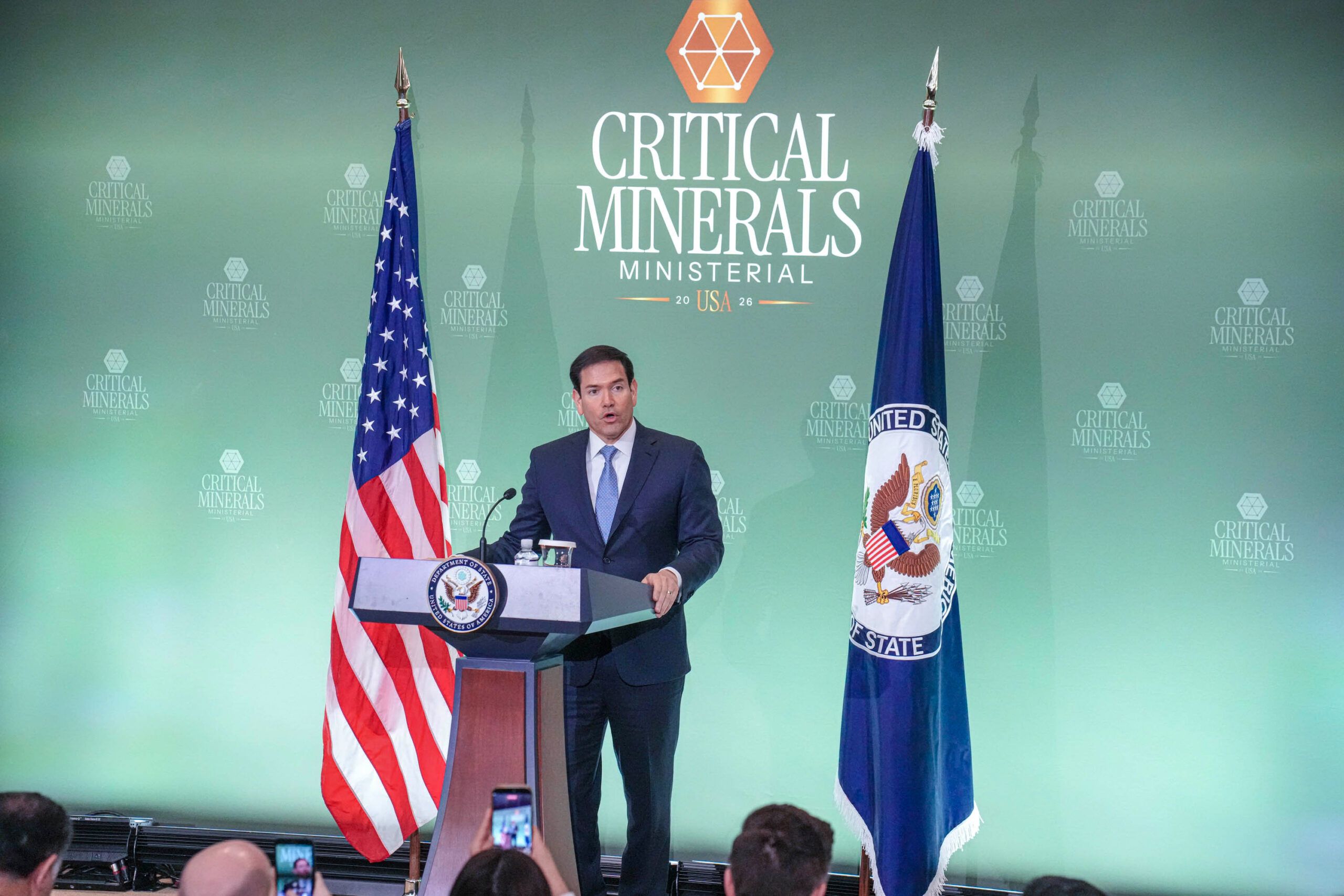
Secretary of State Marco Rubio at the 2026 Critical Minerals Ministerial. (U.S. State Department)
The second notable forum is Pax Silica, a broad initiative to strengthen global supply chains, covering tangible inputs such as critical mineral extraction and processing, advanced manufacturing, and technologies like frontier AI models and applications. While the minerals agreements and FORGE drive the upstream supply, Pax Silica adds an additional layer of U.S.-led coordination and governance related to the entire AI-supply chain. Starting from seven founding signatories, the Pax Silica coalition now numbers roughly two dozen signatories that the U.S. is working with to secure critical minerals, semiconductors, energy inputs, and other components of the AI ecosystem’s supply chain. Pax Silica signatories can plug into dedicated instruments like the $250 million Pax Silica Fund for critical minerals and infrastructure projects, as well as logistics-focused AI assistance pilot programs that move AI-related goods through key corridors.
Pax Silica signatories include Argentina, Australia, Chile, Costa Rica, El Salvador, the European Union, Finland, France, Germany, Greece, India, Israel, Japan, Kazakhstan, Korea, Netherlands, Norway, Panama, Philippines, Qatar, Singapore, Sweden, the United Arab Emirates, and the United Kingdom.
Taxpayer Financing of Critical Minerals Investments
Beyond the international trade instruments, the administration has mobilized a whole-of-government toolkit spanning export credit, development finance, stockpiling, defense-industrial planning, technology funding, and domestic permitting to secure supply through multiple, mutually reinforcing tools. Trump’s Executive Order 14241 specifically instructed agencies such as EXIM and DFC to adapt existing financing authorities to support mineral supply chains.
U.S. International Development Finance Corporation: The DFC traditionally served as America’s development bank, focusing its financing on the private sector in developing countries. Under Trump 2.0, the DFC is now one of the main government tools for shaping global critical minerals supply chains. In the FY 2026 National Defense Authorization Act (NDAA) passed by Congress, the DFC scope and scale were dramatically increased. The DFC’s contingent liability cap, the amount of money DFC can disburse in loans, was raised from $60 billion to $205 billion. A $5 billion equity revolving fund was created at the Treasury, enabling the DFC to increasingly use equity stakes and other tools, such as royalties, streams, and offtakes, to allow more active governance and influence over board decisions and project standards. DFC is also newly authorized to invest in higher-income countries and to take on greater risk (i.e., take larger equity stakes in projects and have greater flexibility to make larger investments). The DFC is now also able to provide direct loans and guarantees to domestic energy and critical minerals projects via Defense Production Act authorities.
Since 2025, confirmed DFC backing for critical minerals projects worldwide includes Angola, Brazil, the Democratic Republic of the Congo, Gabon, Kazakhstan, Malawi, Mozambique, South Africa, Tanzania, Uganda, Ukraine, and Zambia. The State Department highlighted three specific mining projects as “foundational to the successful implementation” of the U.S.-DRC agreement. The DFC is involved in all three.
Export‑Import Bank of the United States: The Export‑Import Bank (EXIM) is now also key to U.S. minerals strategy. Moving away from its traditional role as an export credit agency assisting U.S. exporters by financing foreign purchases of U.S. goods, it launched Project Vault in February 2026. Project Vault is backed by a $10 billion EXIM direct loan and nearly $2 billion in private capital to establish the U.S. Strategic Critical Minerals Reserve, a public-private partnership that aims to store raw material inventories for civilian manufacturers to protect against supply chain disruptions and support domestic production and processing. Earlier EXIM programs supporting critical minerals include a targeted financing program for U.S. buyers, known as the Supply Chain Resiliency Initiative, and Make More in America, which helps finance U.S. domestic mining, production, and processing facilities.
Department of Defense: In the sweeping 2025 budget reconciliation bill, Congress gave the Department of Defense new avenues to increase purchases, support supply chains, and channel financing into critical minerals industries. These include $5 billion for the Industrial Base Fund to support critical‑minerals supply chains, $2 billion for the National Defense Stockpile Transaction Fund to expand the National Defense Stockpile through purchases of critical minerals, $1 billion in additional Defense Production Act funding that can be used for critical‑minerals projects, and $500 million for the Office of Strategic Capital to provide loans and other support to critical‑minerals‑related companies.
Department of Energy: The Department of Energy recently created or reorganized offices around critical minerals and energy innovation and signaled nearly $1 billion in prospective funding opportunities across extraction, refining, recycling, and materials processing.
Trump’s push for critical minerals doesn’t just rewrite trade rules; it also directs EXIM, DFC, the Defense Department, and DOE to use their financing tools to pump billions of dollars in taxpayer‑backed support into mining and processing projects without sufficient oversight or guardrails to protect vulnerable communities and the environment. Recent White House and agency guidance has also pulled the Commerce Department into the mix as a central player in minerals financing and deal‑making, including through large loans and equity stakes. Taken together, these project‑finance vehicles are highly susceptible to bankrolling opaque, high‑risk, politically connected ventures under the banner of national security.
Possible Conflicts of Interest
In seeking to encourage mining, the Trump administration is prioritizing speed over corporate accountability and ethical safeguards, departing from due diligence practices and exposing U.S. taxpayers to risky projects that may result in problematic mining processes and/or wind up failing completely.
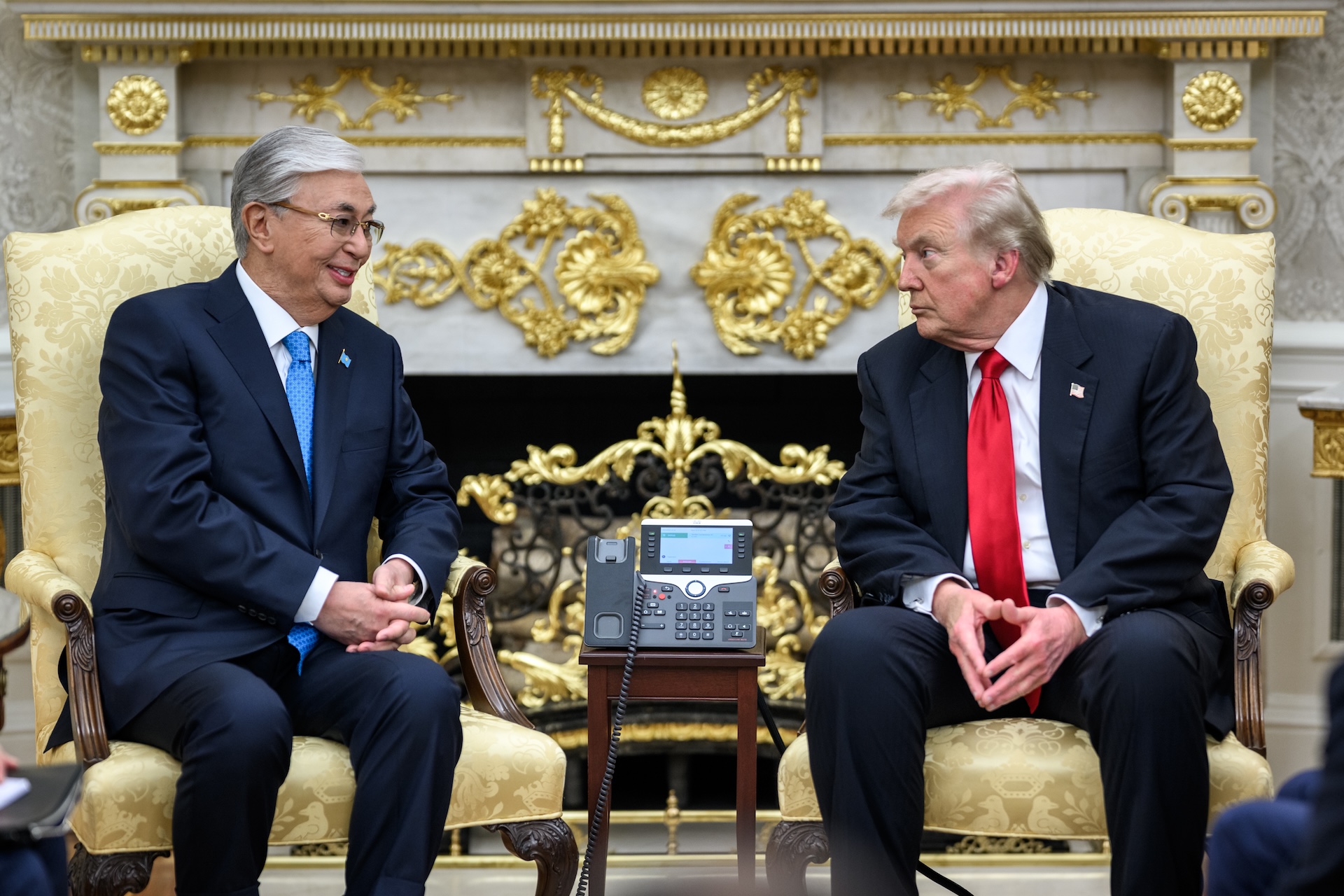
Trump with Kazakh President Kassym-Jomart Tokayev. (The White House)
Recent reporting about the timeline of private investments and government to government dealmaking related to tungsten mining in Kazakhstan raises concerns about potential conflicts of interest. President Trump’s sons Eric and Donald Jr. increased their investments in a firm that later merged with a mining company Cove Kaz shortly before the company secured significant tungsten mining rights from the Kazakh government, reportedly with the direct help of President Trump, Secretary of State Rubio, and Commerce Secretary Lutnick. The administration then announced that Commerce Secretary Lutnick signed an undisclosed MOU on critical minerals with the Kazakh government, and the DFC and EXIM bank offered up to $1.6 billion to help develop tungsten mining in regions of Kazakhstan that are now 70% controlled by that company.
Another example on the domestic front shows how taxpayer money is being used to buy into private mining firms which could benefit individuals close to the administration. The Trump administration provided a $1.6 billion package for USA Rare Earth, combining a $1.3 billion federal loan with $277 million in additional funding for a Texas rare‑earths mine. In that deal, the private financing was led by Cantor Fitzgerald, the firm formerly run by current Commerce Secretary Howard Lutnick and now controlled by his sons, raising glaring conflict‑of‑interest and cronyism concerns.
Similarly, Vulcan Elements, a small rare‑earth startup, received a record‑setting $620 million Defense Department Office of Strategic Capital loan — roughly twice the company’s valuation — after receiving backing from 1789 Capital, where Donald Trump Jr. is a partner. Vulcan Elements also secured additional Pentagon contracts and a $50 million equity investment from the Commerce Department, amid allegations that White House pressure rushed the deal through and improperly enriched the president’s son.
Considerations for Policymakers
Across these critical minerals trade and investment agreements and project finance dealmaking, the same pattern repeats: rushed, chaotic, and opaque negotiations with little or no participation by workers, the public, or communities most directly affected, and minimal congressional involvement before commitments are made. That procedural deficit has real consequences. Even nominally nonbinding MoUs and framework agreements can become gateways to real project pipelines, letters of intent, financing commitments, and equity stakes with long-term strategic and fiscal consequences.
This raises broader questions for policymakers about how the United States should balance the goal of secure, reliable supply chains for critical minerals with the needs and rights of resource-rich communities. How far should trade instruments reach into partners’ mining, export, and investment policies? And will Congress exercise its constitutional authority over trade policy, appropriations, and oversight in what is now a deeply complex global minerals program built on (mostly) bilateral trade agreements that bypass the treaty‑ratification process and on billions of taxpayer dollars for financing, domestic permitting, stockpiling, and industrial programs?
Policymakers should reject critical minerals deals that emphasize U.S. control rather than mutual development; that prioritize increased militarism and investor profits at the expense of a just clean energy transition; that exclude meaningful participation of affected communities; and that lack strong, binding, and enforceable human rights, labor standards, and environmental safeguards.
Going forward, any trade, investment, or fiscal initiatives related to critical minerals supply chains must be developed through transparent, participatory processes that allow for informed input from all interested stakeholders, especially frontline communities. Any such deals must also undergo congressional review and approval, as is required by the Constitution. Without oversight or guardrails, U.S. taxpayer money could be financing harmful investments or used to benefit administration insiders and their political allies.
The stakes of any U.S. deal to secure access to critical minerals are particularly high for already-vulnerable communities, as displacement of Indigenous Peoples, forced labor, environmental destruction, and other widespread labor and human rights abuses are widely documented throughout minerals mining, recovery, and processing supply chains. Critical minerals agreements must not perpetuate an extractivist model that drives these ongoing harms or that adds other significant long-term risks, such as increased debt liabilities, on partner countries.
Recommendations
Policymakers should insist that any deal related to trade in critical minerals contains measures that help the United States and its trade partners meet important climate, job, sustainable development, and human rights goals.
Key initial steps towards these ends include ensuring any agreements contain:
- Robust provisions to advance minerals circularity, ensuring that transition minerals are traced, reused, refurbished, and recycled whenever possible rather than burned or landfilled at the products’ end of life;
- Strong and binding labor standards, environmental safeguards, Indigenous rights guarantees, and human rights protections backed by swift and rigorous enforcement mechanisms, building on those recommended in the Principles to Ensure Energy Transition Minerals Advance Justice, Equity and Human Rights, and by the Initiative for Responsible Mining Assurances (IRMA), the International Labour Organization (ILO), the United Nations Declaration on the Rights of Indigenous Peoples (UNDRIP), and similar frameworks;
- Policy investments, technical support, and other measures that aid in the expansion of value-chain job creation in the United States and other regions where minerals are extracted or recovered.
Congress must act on both the process and the substance. It should demand hearings, documents, and Government Accountability Office and Inspector General reviews of the whole international architecture — not only for the signed ARTs and the Ukraine and DRC deals, but also for the MOUs and framework agreements being used to justify massive EXIM and DFC commitments. And it should use appropriations, authorizing legislation, and congressional review requirements to establish minimum guardrails going forward. If Congress does not act now, it will be left to supervise the consequences of far-reaching critical minerals deals that it never meaningfully reviewed, shaped, or approved.
Appendix 1: Executive Orders Related to Critical Minerals Since 2025
Executive orders (EOs) are the core legal instrument of Trump’s critical minerals agenda, providing the (purported) legal authority, coercive threat mechanisms, and deal-making architecture that underpin the bilateral agreements and MOUs described in this report.
EO 14241 (“Immediate Measures to Increase American Mineral Production,” March 20, 2025) is the foundational order. It invoked emergency power to declare “our national and economic security are now acutely threatened by our reliance upon hostile foreign powers’ mineral production,” directing all federal agencies to facilitate domestic mineral production “to the maximum possible extent” and authorizes DFC and DOD to use Defense Production Act authority for domestic mineral investment.
The trade‑enforcement and deal‑making architecture is then built around a sequence of orders. EO 14257 (“Regulating Imports with a Reciprocal Tariff…,” April 2, 2025) establishes the reciprocal tariff system used for so-called “Liberation Day” tariff orders, claiming International Emergency Economic Powers Act (IEEPA) emergency authority to threaten sharply higher tariffs to trading partners while promising tariff reductions and even retroactive duty refunds to partners that sign agreements and align with U.S. economic and security priorities.1 Although not a minerals‑specific order, it codifies the “carrots and sticks” that support the bilateral frameworks. That IEEPA‑based tariff authority was later invalidated by the Supreme Court on February 20, 2026, forcing the termination of all IEEPA‑based tariff action and leading the Administration to seek alternative legal hooks for its tariff strategy. Some countries that signed ARTs under threat of now-invalidated IEEPA tariffs are second-guessing the validity of those deals.
Latter executive orders — EO 14272 (“Ensuring National Security and Economic Resilience Through Section 232 Actions on Processed Critical Minerals…,” April 15, 2025), EO 14346 (“Modifying the Scope of Reciprocal Tariffs…,” September 5, 2025) and its annex “’Potential Tariff Adjustments for Aligned Partners’ (PTAAP)” which conditions tariff reductions on trading partners concluding trade and security agreements, and Proclamation 11001 (“Adjusting Imports of Processed Critical Minerals…,” January 14, 2026) — shift the legal basis of tariffs onto Section 232 of the Trade Expansion Act.2 These EOs direct Commerce to investigate processed critical minerals imports under Section 232, to condition relief on signing trade and security agreements, and to authorize negotiations that can include price floors and other trade‑restricting measures. Because Section 232 tariff authority was not challenged or invalidated by the Supreme Court’s IEEPA ruling, the EOs and the Proclamation survive as the legal backbone of the bilateral agreements’ architecture.
All Executive Orders Related to Critical Minerals Since 2025
- January 20, 2025 — EO 14154, Unleashing American Energy
Sec. 3. “Immediate Review of All Agency Actions that Potentially Burden the Development of Domestic Energy Resources. (a) The heads of all agencies shall review all existing regulations, orders, guidance documents, policies, settlements, consent orders, and any other agency actions (collectively, agency actions) to identify those agency actions that impose an undue burden on the identification, development, or use of domestic energy resources — with particular attention to oil, natural gas, coal, hydropower, biofuels, critical mineral, and nuclear energy resources.“ - January 20, 2025 — EO 14156, Declaring a National Energy Emergency
Sec. 3. Expediting the Delivery of Energy Infrastructure. (a) To facilitate the Nation’s energy supply, agencies shall identify and use all relevant lawful emergency and other authorities available to them to expedite the completion of all authorized and appropriated infrastructure, energy [including critical minerals], environmental, and natural resources projects that are within the identified authority of each of the Secretaries to perform or to advance. - February 14, 2025 — EO 14213 Establishing the National Energy Dominance Council
- Sec. 4 “The Council shall… advise the President on improving the processes for permitting, production, generation, distribution, regulation, transportation, and export of all forms of American energy, including critical minerals;
- February 25, 2025 — EO 14220, Addressing the Threat to National Security from Imports of Copper
Sec. 3. Required Actions. (a) The Secretary of Commerce shall consult with the Secretary of Defense, the Secretary of the Interior, the Secretary of Energy, and the heads of other relevant executive departments and agencies as determined by the Secretary of Commerce to evaluate the national security risks associated with copper import dependency. - March 20, 2025 — EO 14241, Immediate Measures to Increase American Mineral Production
Sec. 3. Priority Projects. (a) Within 10 days of the date of this order, the head of each executive department and agency (agency) involved in the permitting of mineral production in the United States shall provide to the Chair of the NEDC a list of all mineral production projects for which a plan of operations, a permit application, or other application for approval has been submitted to such agency. Within 10 days of the submission of such lists, the head of each such agency shall, in coordination with the Chair of the NEDC, identify priority projects that can be immediately approved or for which permits can be immediately issued, and take all necessary or appropriate actions within the agency’s authority to expedite and issue the relevant permits or approvals. - April 8, 2025 — EO 14261—Reinvigorating America’s Beautiful Clean Coal Industry and Amending Executive Order 14241
- Sec. 3. Strengthening Our National Energy Security. The Chair of the National Energy Dominance Council (NEDC) shall designate coal as a “mineral” as defined in section 2 of Executive Order 14241 of March 20, 2025 (Immediate Measures to Increase American Mineral Production), thereby entitling coal to all the benefits of a “mineral.”
- April 15, 2025 — EO 14272, Ensuring National Security and Economic Resilience Through Section 232 Actions on Processed Critical Minerals and Derivative Products
Sec. 3. Section 232 Investigation. (a) The Secretary of Commerce shall initiate an investigation under section 232 to determine the effects on national security of imports of processed critical minerals and their derivative products. - April 24, 2025 — EO 14285, Unleashing America’s Offshore Critical Minerals and Resources
Sec. 3. Strategic Seabed Critical Mineral Access. Within 60 days of the date of this order: (a) The Secretary of Commerce shall… acting through the Administrator of the National Oceanic and Atmospheric Administration, and in consultation with the Secretary of State and the Secretary of the Interior, acting through the Director of the Bureau of Ocean Energy Management, expedite the process for reviewing and issuing seabed mineral exploration licenses and commercial recovery permits in areas beyond national jurisdiction under the Deep Seabed Hard Mineral Resources Act - September 5, 2025 — EO 14346 – Modifying The Scope Of Reciprocal Tariffs And Establishing Procedures For Implementing Trade And Security Agreements. This EO provides the Core Legal Architecture behind Framework vs. Final Agreements.
Section 3 — Framework Agreements (MOUs)
- “Upon the conclusion of any framework agreement…the Secretary of Commerce and the United States Trade Representative shall determine whether the United States must take any action to implement such framework agreement.”
- “The Secretary of Commerce and the United States Trade Representative shall act in a manner consistent with the national interests of the United States, the purpose of this order, the need to deal with the national emergency declared in Executive Order 14257, and the need to reduce or eliminate the threats to national security I have found pursuant to section 232.”
Section 4 — Final Agreements (ARTs)
- “Upon the conclusion of any final agreement…the Secretary of Commerce and the United States Trade Representative shall take the necessary and appropriate actions to implement the final agreement in accordance with this order.”
Section 6 — Delegation of Authority (the enforcement engine)
- “The Secretary of Commerce, the Secretary of Homeland Security, and the United States Trade Representative are directed and authorized to take all necessary actions to implement and effectuate this order…including through temporary suspension or amendment of regulations or through notices in the Federal Register and by adopting rules, regulations, or guidance — and to employ all powers granted to the President, including those granted by IEEPA and section 232, as may be necessary to implement and effectuate this order.”
1. January 14, 2026 — Presidential Proclamation, Adjusting Imports of Processed Critical Minerals and Their Derivative Products into the United States
I therefore direct the Secretary and the United States Trade Representative (Trade Representative) to jointly pursue negotiation of agreements or continue any current negotiations of agreements, such as agreements contemplated in section 232(c)(3)(A)(i) (19 U.S.C. 1862(c)(3)(A)(i)), to address the threatened impairment of the national security with respect to PCMDPs.
2. February 18, 2026 — EO 14387 Promoting the National Defense by Ensuring an Adequate Supply of Elemental Phosphorus and Glyphosate-Based Herbicides
Section 1. Policy and Findings. Elemental phosphorus is pervasive in defense supply chains and is therefore crucial to military readiness and national defense. It is a key input in smoke, illumination, and incendiary devices and is a critical component for manufacturing the semiconductors that are central to numerous defense technologies, such as radar, solar cells, sensors, and optoelectronics. It is also increasingly important in modern lithium-ion battery chemistries used in a multitude of weapon-system supply chains. For these and other reasons, on November 7, 2025, the Department of the Interior, acting pursuant to the Energy Act of 2020, designated phosphate as a critical mineral.
3. July 20, 2026 — EO 14415 Securing America’s Defense Supply Chains and Ensuring Domestic Acquisition of Critical Materials
Section 1. Policy. The United States military is the most effective and powerful fighting force on the planet. It fields the most advanced weapons systems and technologies in the world, utilizing cutting edge equipment to dominate the modern battlefield. To continue this dominance in an era of renewed great power competition, the United States must secure its supply chains against physical, cyber, and economic subversion. It is the policy of the United States that not only the finished equipment deployed by our military, but also the critical materials and components necessary to manufacture, maintain, sustain, and repair that equipment, are sourced domestically or from allied nations.
Despite the longstanding prohibition on the use of sensitive materials sourced from geopolitical adversaries, defense contractors have historically under-prioritized domestic production and resilience. My Administration will act to ensure that the statutory requirements of 10 U.S.C. 4872 are strictly observed and result in resilient domestic and allied supply chains.
Sec. 6. Project Vault and U.S. Funded Sources. (a) Nothing in this order shall be construed to impair or otherwise affect the U.S. Strategic Critical Minerals Reserve (also known as “Project Vault”) for which the Export-Import Bank of the United States is a lender or the acquisition by a contractor or subcontractor of critical minerals or components produced by a foreign project or other transaction financed, guaranteed, or insured by the Export-Import Bank of the United States or the United States International Development Finance Corporation.
(c) Nothing in this order shall be construed to impair or otherwise affect the acquisition by a contractor or subcontractor of critical minerals or components produced by a company or project receiving grants, financing, loans, equity investment, or other such support from the Department of State, the Department of War, the Department of Commerce, or the Department of Energy.
Appendix 2: Compilation of Known Minerals Instruments Since 2025
The table below provides a comparison of the various minerals deals negotiated in the second Trump administration. The righthand column signifies whether a country delegation attended the 2026 Critical Minerals Ministerial, which is included as an indication of the administration’s potential interest in minerals dealmaking with that country.
- Yes indicates that the U.S. government has released the text of this agreement.
- Yes* with an asterisk indicates that the text has been made public, but not by the U.S. government.
- Announced indicates that the U.S. has acknowledged the existence of such a deal, but text is not available.
- Announced* with an asterisk indicates that the agreement was announced by the other country or in the press, but not by the United States, and text is not available.
An interactive map with this information is available here. Below the table is a list with more detail on each instrument and links to sources if available.
| Country | ART | Framework for ART | Action Plan | Minerals for Security | Framework | MOU | Attended Ministerial |
|---|---|---|---|---|---|---|---|
| Angola | Yes | ||||||
| Argentina | Yes | Announced | Yes | ||||
| Armenia | Yes* | Yes | |||||
| Australia | Yes | Yes | |||||
| Azerbaijan | Announced* | ||||||
| Bahrain | Announced* | Yes | |||||
| Bangladesh | Yes | ||||||
| Belgium | Yes | ||||||
| Bolivia | Announced | Yes | |||||
| Brazil | Yes | ||||||
| Canada | Yes | ||||||
| Cambodia | Yes | ||||||
| Chile | Announced* | ||||||
| Cook Islands | Yes* | Yes | |||||
| Czech Republic | Yes | ||||||
| DRC | Yes | Yes | |||||
| Dominican Republic | Yes | ||||||
| Ecuador | Yes | Announced | Yes | ||||
| El Salvador | Yes | ||||||
| Estonia | Yes | ||||||
| European Union | Announced | Yes | Yes* | Yes | |||
| Finland | Yes | ||||||
| France | Yes | ||||||
| Germany | Yes | ||||||
| Greece | Yes | ||||||
| Guinea | Announced | Yes | |||||
| India | Announced | Announced* | Yes | ||||
| Indonesia | Yes | ||||||
| Israel | Yes | ||||||
| Italy | Yes | ||||||
| Japan | Yes | Yes | Yes | ||||
| Jordan | Yes | Yes | |||||
| Kazakhstan | Announced | Yes | |||||
| Kenya | Yes | ||||||
| Lithuania | Yes | ||||||
| Malaysia | Yes | Yes | Yes | ||||
| Mexico | Yes | Yes | |||||
| Mongolia | Yes | ||||||
| Morocco | Announced | Yes | |||||
| Netherlands | Yes | ||||||
| New Zealand | Yes | ||||||
| North Macedonia | Announced | ||||||
| Norway | Yes | ||||||
| Oman | Yes | ||||||
| Pakistan | Yes* | Yes | |||||
| Paraguay | Announced | Yes | |||||
| Peru | Announced | Yes | |||||
| Philippines | Announced | Yes | |||||
| Poland | Announced | Yes | |||||
| Qatar | Yes | ||||||
| Romania | Yes | ||||||
| Saudi Arabia | Announced | Yes | |||||
| Sierra Leone | Yes | ||||||
| Singapore | Yes | ||||||
| Sweden | Yes | ||||||
| Switzerland- Liechtenstein | Announced | ||||||
| Taiwan | Yes | ||||||
| Thailand | Announced | Yes | Yes | ||||
| UAE | Announced | Yes | |||||
| United Kingdom | Yes* | Yes | |||||
| Ukraine | Yes | Yes | |||||
| Uzbekistan | Announced | Yes | |||||
| Vietnam | Announced | ||||||
| Zambia | Yes | ||||||
| Quad | Yes |
Note: The Guatemala ART is not included above because it does not have minerals terms. Because frameworks toward an ART are works in progress that do not have text available, we include them above even if their accompanying, high-level joint statement does not explicitly mention critical minerals.
See below for more information on each instrument and links to sources if available. The compilation includes some instruments that are not included in the table because they are drafts or otherwise not sufficiently verifiable.
Agreements on Reciprocal Trade (ARTs)
- Argentina: Agreement between the United States of America and Argentina on Reciprocal Trade and Investment, February 5, 2026; Joint Statement on Framework for a United States-Argentina Agreement on Reciprocal Trade and Investment, November 13, 2025
- Bangladesh: Agreement between the United States of America and the People’s Republic of Bangladesh on Reciprocal Trade, February 9, 2026
- Cambodia: Agreement between the United States of America and the Kingdom of Cambodia on Reciprocal Trade, October 26, 2025
- Ecuador: Agreement between the United States of America and the Republic of Ecuador on Reciprocal Trade, March 13, 2026; Joint Statement on Framework for United States-Ecuador Agreement on Reciprocal Trade, November 13, 2025
- El Salvador: Agreement between the United States of America and the Republic of El Salvador on Reciprocal Trade, January 29, 2026; Joint Statement on Framework for United States-El Salvador Agreement on Reciprocal Trade, November 13, 2025
- European Union framework only: Joint Statement on a United States-European Union Framework on an Agreement on Reciprocal, Fair, and Balanced Trade, August 21, 2025
- Guatemala: Agreement between the United States of America and the Republic of Guatemala on Reciprocal Trade, January 30, 2026, critical minerals not in text; Joint Statement on Framework for United States-Guatemala Agreement on Reciprocal Trade, November 13, 2025
- India framework only: Joint Statement on framework for an Interim Agreement regarding reciprocal and mutually beneficial trade, February 6, 2026
- Indonesia: Agreement between the United States of America and the Republic of Indonesia on Reciprocal Trade, February 19, 2026; Joint Statement on Framework For United States-Indonesia Agreement on Reciprocal Trade, July 22, 2025
- Jordan: Agreement between the United States of America and the Hashemite Kingdom of Jordan on Reciprocal Trade, July 21, 2026
- Malaysia: Agreement between the United States of America and Malaysia on Reciprocal Trade, October 26, 2025
- North Macedonia framework only: Joint Statement on a Framework for United States-North Macedonia Agreement on Reciprocal, Fair, and Balanced Trade, February 12, 2026
- Switzerland framework only: Joint Statement on a Framework for a United States – Switzerland – Liechtenstein Agreement on Fair, Balanced, and Reciprocal Trade, November 14, 2025
- Taiwan: Agreement between the American Institute in Taiwan and the Taipei Economic and Cultural Representative Office in the United States on Reciprocal Trade between the United States of America and Taiwan, February 12, 2026
- Thailand framework only: Joint Statement on A Framework For A United States-Thailand Agreement On Reciprocal Trade, on October 26, 2025
- Vietnam framework only: Joint Statement on United States-Vietnam Framework for an Agreement on Reciprocal, Fair, and Balanced Trade, October 26, 2025
Critical‑Minerals Action Plans
- European Union: United States-European Union Action Plan for Critical Minerals Supply Chain Resilience, April 24, 2026
- Japan: U.S.-Japan Action Plan for Critical Minerals Supply Chain Resilience, March 19, 2026
- Mexico: United States-Mexico Critical Minerals Action Plan, February 4, 2026
“Minerals for Security” Agreements
- Democratic Republic of the Congo: Strategic Partnership Agreement Between the Government of the United States of America and the Government of the Democratic Republic of the Congo, December 4, 2025
- Ukraine: Agreement between the Government of the United States of America and the Government of Ukraine on the Establishment of a United States-Ukraine Reconstruction Investment Fund, April 30, 2025
Framework Agreements on Critical Minerals
- Armenia: Republic of Armenia – United States of America Framework for Securing of Supply in the Mining and Processing of Critical Minerals and Rare Earths, May 26, 2026
- Australia: United States-Australia Framework for Securing of Supply in the Mining and Processing of Critical Minerals and Rare Earths, October 20, 2025
- Azerbaijan: critical minerals framework announced June 2, 2026. Title and text not available
- Bahrain: critical minerals framework announced January 27, 2026. Title and text not available
- Cook Islands: Framework for Securing of Supply in the Mining and Processing of Critical Minerals and Rare Earths, February 4, 2026
- India: Framework for Securing of Supply in the Mining and Processing of Critical Minerals and Rare Earths announced, May 26, 2026; text not released
- Japan: Framework for Securing the Supply of Critical Minerals and Rare Earths Through Mining and Processing, October 27, 2025
- New Zealand: negotiations for a critical minerals framework mentioned in a February 2, 2026 State Department release. New Zealand released a partial description of a draft United States – New Zealand Framework for Securing of Supply in the Mining and Processing of Critical Minerals and Rare Earths, May 5, 2026
- Pakistan: Framework Agreement Between the Government of the Islamic Republic of Pakistan and the Government of the United States of America on Strategic Cooperation and Supply of Rare Earth Minerals and Metals, unsigned DRAFT submitted for U.S. review: May 30, 2025. It seems this diplomatic agreement laid the foundation for a later (confidential) MOU between Missouri-based U.S. Strategic Metals and Pakistan’s military-run Frontier Works Organisation for a $500 million investment
- Poland: Framework for Securing of Supply in the Mining Processing and Recycling of Critical Minerals including Rare Earths, May 6, 2026
- Saudi Arabia: Strategic Framework for Cooperation on Securing Uranium, Metals, Permanent Magnets, and Critical Minerals Supply Chains announced November 17, 2025; text not released.
- United Arab Emirates: Framework on Securing Supply in the Mining and Processing of Critical Minerals and Rare Earths announced on February 6, 2026; text not released
- Multilateral: Quad Critical Minerals Initiative Framework among the United States, Japan, Australia, and India, May 26, 2026
Memoranda of Understanding (MOUs) on Critical Minerals
- Argentina: Critical Minerals MOU announced February 4, 2026; text not released.
- Bolivia: Critical Minerals MOU announced April 27, 2026; text not released
- Chile: Joint Declaration to Establish Consultations on Critical Minerals and Rare Earths announced March 13, 2026; text not released
- Ecuador: Critical Minerals MOU announced February 4, 2026; text not released
- European Union: MOU Between The European Union and The United States of America on a Strategic Partnership on Critical Minerals, April 24, 2026
- Guinea: Critical Minerals MOU announced February 4, 2026; text not released
- Japan: Memorandum of Cooperation Regarding Deep‑Sea Mineral Resource Development, March 19, 2026
- Kazakhstan: Critical Minerals MOU announced November 2025; text not released
- Malaysia: MOU Between the Government of the United States of America and the Government of Malaysia Concerning Cooperation to Diversify Global Critical Minerals Supply Chains and Promote Investments, October 26, 2025
- Morocco: Critical Minerals MOU announced February 4, 2026; text not released
- Paraguay: Critical Minerals MOU announced February 4, 2026; text not released
- Peru: Critical Minerals MOU announced February 4, 2026; text not released
- Philippines: Critical Minerals MOU announced February 4, 2026; text not released
- Thailand: MOU Between the Government of the United States of America and the Government of the Kingdom of Thailand Concerning Cooperation to Diversify Global Critical Minerals Supply Chains and Promote Investments, October 26, 2025
- United Kingdom: MOU between the Government of the United States of America and the Government of the United Kingdom of Great Britain and Northern Ireland for Securing of Supply in the Mining and Processing of Critical Minerals and Rare Earths, February 5, 2026
- Uzbekistan: Memorandum of Understanding between the Governments of Uzbekistan and the United States of America for Securing of Supply in the Mining and Processing of Critical Minerals and Rare Earths announced, February 5, 2026
Appendix 3: Provisions on Critical Minerals in the Agreements on Reciprocal Trade and “Minerals for Security” Agreements
Argentina: Agreement between the United States of America and Argentina on Reciprocal Trade and Investment
Section 5. Commercial Considerations and Opportunities, Article 5.1: Investment
- Argentina shall allow and facilitate U.S. investment in its territory to explore, mine, extract, refine, process, transport, distribute and export critical minerals and energy resources and to provide power generation, telecommunication, transportation, and infrastructure services on terms no less favorable than it accords to its own investors in like circumstances and shall regulate those investments in keeping with minimum standards of international law
Annex III, Specific Commitments, Section 1. Non-Tariff Barriers and Related Matters, Article 1.15: A More Resource Efficient Economy
- Argentina shall take measures to promote the recovery of critical minerals from waste streams. Such measures may include encouraging regulations, infrastructure, or technologies to expand the collection of electronic waste and spent lithium-ion batteries for recycling and recovering critical minerals.
Section 4. Commercial Considerations and Opportunities, Article 4.1: Critical Minerals
- Argentina shall work with provincial governments to facilitate investment by U.S. companies in critical mineral projects, according to its laws and regulations.
- Argentina commits to fast tracking applications for eligible projects through the Incentives Regime for Large Investments (RIGI) program.
- Argentina shall encourage Federal-level Argentine Government investment in mining infrastructure to enable access to the mining sector for U.S. companies, according to its laws and regulations.
- Argentina intends to prioritize the United States as a trade and investment partner for copper, lithium, and other critical minerals including raw, processed, and finished products, over market manipulating economies or enterprises.
Bangladesh: Agreement between the United States of America and the People’s Republic of Bangladesh on Reciprocal Trade
Section 5. Commercial Considerations and Opportunities, Article 5.1: Investment
- Bangladesh shall allow and facilitate U.S. direct investment in its territory to explore, mine, extract, refine, process, transport, distribute and export critical minerals and energy resources and to provide power generation, telecommunication, transportation, and infrastructure services on terms no less favorable than it accords to its own private investors in like circumstances and shall regulate those investments in keeping with minimum standards of international law.
Cambodia: Agreement between the United States of America and the Kingdom of Cambodia on Reciprocal Trade
Section 6. Commercial Considerations and Opportunities, Article 6.1: Investment
- Cambodia shall allow and facilitate U.S. investment in its territory to explore, mine, extract, refine, process, transport, distribute, and export critical minerals and energy resources and to supply power, telecommunication, transportation, and infrastructure services on terms no less favorable than it accords to its own investors in like circumstances, and shall regulate those investments in keeping with minimum standards of international law.
Democratic Republic of the Congo: Strategic Partnership Agreement Between the Government of the United States of America and the Government of the Democratic Republic of the Congo
Acknowledging the United States’ interest in building secure, reliable and durable supply chains for critical minerals, safeguarding its national security, supporting reindustrialization, and maintaining competitiveness in strategic sectors including defense, energy, advanced technologies, and automotive industries;
ARTICLE II – OBJECTIVES
- Facilitate stable, predictable, long-term access for U.S. persons and aligned persons to critical minerals from the Democratic Republic of the Congo to support safety, security, and prosperity for both the United States of America and the Democratic Republic of the Congo, in a manner that promotes local value addition, industrialization, and long-term economic growth in the Democratic Republic of Congo;
- Promote responsible mining practices in the Democratic Republic of the Congo, and support the formalization and industrialization of the artisanal mining sector, while actively working to reduce illicit trade in minerals, combat the use of critical minerals to finance conflict, and create alternative livelihoods for artisanal mining communities;
ARTICLE III- STRATEGIC PARTNERSHIP STATUS
- As part of this strategic partnership, the Parties intend to explore the following areas for cooperation:
- Economic Cooperation, with particular emphasis on cooperation relating to critical minerals, energy, infrastructure, technology-driven initiatives, beneficiation, and industrialization;
ARTICLE VI – JOINT STEERING COMMITTEE
- The functions of the JSC shall include:
- Discussing how the Parties may support investment in and development of SAR Projects, Qualifying Strategic Projects (QSPs), DRC Designated Strategic Projects, and the Strategic Minerals Reserve (SMR) including through technical cooperation, project planning, and mobilizing investment;
- Facilitating bilateral technical cooperation on legal, regulatory, and policy reforms needed to attract and de-risk investment into the DRC critical minerals sector for U.S. persons and aligned persons;
- Identifying means to cooperate to advance and promote fair market-based approaches to critical minerals;
ARTICLE IX – SAKANIA-LOBITO CORRIDOR
- The Parties recognize the strategic nature of the Sakania-Lobito Corridor project and that it serves as a key route for the transport and export of copper, cobalt, zinc, and other critical minerals, as well as other commercial goods, from the Democratic Republic of the Congo to the United States of America.
- The Parties intend to cooperate to increase the competitiveness of the Sakania-Lobito Corridor, including by increasing the volume of critical minerals being exported from the DRC using the Sakania-Lobito Corridor under market conditions. To accomplish this, the DRC and its SOEs intend that, within five (5) years, at least fifty (50) percent of the volumes of copper, ninety (90) percent of the volumes of zinc concentrate, and thirty (30) percent of the volumes of cobalt that the DRC and its SOEs elect to commercialize pursuant to their equity and contractual marketing rights over production from certain partnerships, are exported from the DRC using the Sakania-Lobito Corridor. The JSC may evaluate and decide to modify these numbers, taking into account commercial and logistical developments, to include the competitiveness of the Sakania-Lobito Corridor.
ARTICLE XI-· STRATEGIC MINERALS RESERVE AND OFFTAKE AGREEMENTS
- The Parties recognize the strategic importance of securing reliable, transparent, and mutually beneficial access to critical minerals in support of their shared industrialization, supply chain, and national security objectives. To this end, the Parties shall explore the establishment of a coordinated Strategic Minerals Reserve (SMR) located in the Democratic Republic of the Congo. The SMR is intended to:
- Ensure predictable and durable supply of critical minerals, including cobalt, for the United States;
- Enhance the DRC’s capacity for domestic resource management, value stabilization, local beneficiation, industrialization, and job creation; and
- Promote resilience and fair market-based approaches within global supply chains.
- The DRC and its SOEs intend to utilize their equity and contractual marketing rights relating to critical minerals production to provide access to offtake for U.S. persons and aligned persons and for use by the U.S. market.
- To accomplish this the DRC and its SOEs shall include a right of first offer on marketed critical minerals destined for export originating from SAR Projects and QSPs, to U.S. persons and aligned persons on commercially comparable terms that guarantee such minerals shall be directed for use by the U.S. market.
- Where appropriate, this offtake should be exported using the Sakania-Lobito Corridor. Subject to the availability of funds, the United States may provide targeted technical support or assistance to facilitate this access.
ANNEX 1: ELIGIBILITY CRITERIA FOR QUALIFYING STRATEGIC PROJECTS
- Offtake Requirements: A project must meet both of the following criteria·
- It meets the offtake guidelines for SAR Projects, once developed by the JSC as set out in Article VI(9)( d), or it is otherwise demonstrated to the satisfaction of the JSC how offtake would further the objectives of this Agreement; and
- It shall be designed such that critical mineral offtake exported from the project is transported using the Sakania-Lobito Corridor rail infrastructure where geographically feasible.
- Project Type and Technical Scope-The project must fall into one or more of the following categories and shall comply with all applicable DRC law:
- Greenfield exploration, expansion or development of mining of critical minerals;
- Brownfield exploration, expansion or development of existing critical mineral assets;
- Downstream beneficiation of Democratic Republic of the Congo-origin critical minerals;
ANNEX 2: DEFINITIONS
- “Critical minerals” means any minerals, materials or rare-earth elements identified as critical or strategic by the U.S. Geological Survey, the U.S. Department of Energy, or the U.S. Department of War, as well as those identified as strategic by the Democratic Republic of the Congo in accordance with its laws.
Ecuador: Agreement between the United States of America and the Republic of Ecuador on Reciprocal Trade
Section 6. Commercial Considerations and Opportunities, Article 6.1: Investment
- Ecuador shall allow and facilitate U.S. investment in its territory to explore, mine, extract, refine, process, transport, distribute, and export critical minerals and energy resources and to supply power, telecommunication, transportation, and infrastructure services on terms no less favorable than it accords to investors from any third country in like circumstances, and shall regulate those investments in keeping with minimum standards of international law.
Section 4. Economic and National Security, Article 4.1: Government Procurement
- Ecuador commits to issue open public tenders for energy projects, including the Sacha oil concession, future power generation, critical mineral extraction and processing.
Section 5. Commercial Considerations and Opportunities Article 5.1: Investment in Critical Minerals
Ecuador shall work with the United States to facilitate investment in critical mineral projects.
El Salvador: Agreement between the United States of America and the Republic of El Salvador on Reciprocal Trade
Section 6. Commercial Considerations and Opportunities, Article 6.2: Investment
- El Salvador shall allow and facilitate U.S. investment in its territory to explore, mine, extract, refine, process, transport, distribute, and export critical minerals and energy resources and to provide power generation, telecommunication, transportation, and infrastructure services on terms no less favorable than it accords to its own investors in like circumstances and shall regulate those investments in keeping with minimum standards of international law, in compliance with the commitments set out in the CAFTA-DR.
Guatemala: Agreement between the United States of America and the Republic of Guatemala on Reciprocal Trade, critical minerals not in the text.
Indonesia: Agreement between the United States of America and the Republic of Indonesia on Reciprocal Trade
Section 6. Commercial Considerations and Opportunities Article 6.1: Investment
- Indonesia shall allow and facilitate U.S. investment in its territory to explore, mine, extract, refine, process, transport, distribute, and export critical minerals and energy resources and to provide power generation, telecommunication, transportation, and infrastructure services on terms no less favorable than it accords to its own investors in like circumstances and shall regulate those investments in keeping with minimum standards of international law.
Section 2. Non-Tariff Barriers and Related Matters, Article 2.36: A More Resource Efficient Economy
- Indonesia shall take measures to promote the recovery of critical minerals from waste streams. Such measures may include encouraging regulations, infrastructure, or technologies to expand the collection of electronic waste and spent lithium-ion batteries for recycling and recovering critical minerals.
Section 6. Commercial Considerations, Article 6.1: Critical Minerals
- To strengthen supply chain connectivity between the Parties, Indonesia shall remove restrictions on exports to the United States of industrial commodities, including critical minerals.
- Indonesia and the United States shall intensify their cooperative efforts to accelerate the secure supply of critical minerals, including rare earths. Indonesia shall cooperate with U.S. companies on mining, processing, and downstream production of critical minerals based on commercial considerations.
- To this end, Indonesia shall cooperate on the expedient development of its rare earth and critical minerals sector in partnership with U.S. companies to ensure secure and diversified supply chains. Indonesia shall provide greater certainty for companies involved in critical mineral extraction, creating certainty for businesses to increase production capacity and supporting operational growth.
- Indonesia and the United States commit to continued cooperation and engagement on critical mineral supply chains.
- Indonesia shall:
(a) implement restrictions on foreign-owned processing facilities’ excess production (footnote: This includes processing facilities for nickel, cobalt, bauxite, copper, tin, and manganese) by ensuring that production conforms to Indonesia mining quotas; and
(b) ensure that foreign-owned industrial parks and processing facilities are subject to the same tax, environmental, labor, quota, and other legal requirements as other companies and entities.
Jordan: Agreement between the United States of America and the Hashemite Kingdom of Jordan on Reciprocal Trade
Section 5. Commercial Considerations and Opportunities, Article 5.1: Investment
- Jordan shall allow and facilitate U.S. investment in its territory to explore, mine, extract, refine, process, transport, distribute and export critical minerals and energy resources and to provide power generation, telecommunication, transportation, and infrastructure services on terms no less favorable than it accords to its own investors in like circumstances and shall regulate those investments in keeping with minimum standards of international law.
Malaysia: Agreement between the United States of America and Malaysia on Reciprocal Trade
Section 5. Economic and National Security, Article 5.2: Export Controls, Sanctions, Investment Security, and Related Matters
- Malaysia shall explore the establishment of a mechanism to review inbound investment for national security risks, including in connection with critical minerals and critical infrastructure, consistent with widely accepted international best practices, and shall cooperate with the United States on matters related to investment security.
Section 6. Commercial Considerations and Opportunities, Article 6.1: Investment
- With respect to the central level of government, Malaysia shall, in accordance with its laws and regulations, facilitate and promote investment by the United States in sectors including critical minerals, energy resources, power generation, telecommunications, transportation, and infrastructure services.
Taiwan: Agreement between the American Institute in Taiwan and the Taipei Economic and Cultural Representative Office in the United States on Reciprocal Trade between the United States of America and Taiwan
Article 3.11: Environment, More Resource Efficient Economies
- TECRO, through its Designated Representative, shall take measures to promote the recovery of critical minerals from waste streams. Such measures may include encouraging regulations, infrastructure, or technologies to expand the collection of electronic waste and spent lithium-ion batteries for recycling and recovering critical minerals.
Section 6: Commercial Considerations and Opportunities Article 6.1: Investment
- TECRO, through its Designated Representative, shall allow and facilitate investment from the territory represented by AIT in the territory it represents:
(a) to explore, mine, extract, refine, process, transport, distribute, and export critical minerals and energy resources; and
(b) to provide power generation, telecommunication, transportation, and infrastructure services, on terms no less favorable than what the authorities of the territory represented by TECRO accord to investors in like circumstances from a territory not represented by a Party, and shall regulate those investments in keeping with minimum standards of international law.
Ukraine: Agreement between the Government of the United States of America and the Government of Ukraine on the Establishment of a United States-Ukraine Reconstruction Investment Fund, uses the term natural resources
WHEREAS, Ukraine has, in accordance with international law, sovereignty over its natural resources located in its territory as well as in its territorial waters, in addition to sovereign rights in its exclusive economic zone and continental shelf, which allow for Ukraine to conclude this Agreement and fulfill the aims of this Agreement;
WHEREAS, Ukraine retains the right to determine the areas within its territory as well as in its territorial waters, exclusive economic zone, and continental shelf to be made available for the exercise of the activities of prospecting, exploring for, and producing natural resources, and the rights to be conveyed in the LP Agreement referenced herein are applicable to the entirety of such areas; and …
Article VII: Investment Opportunity Rights
- (a) Each Governmental Authority of Ukraine that is authorized to issue a license or special permit for subsoil use for any Natural Resource Relevant Assets shall include in such license or special permit, and in the related agreement on subsoil use conditions or production sharing agreement with subsoil users, a provision requiring the recipient thereof, at any time it is seeking to raise capital, to make relevant investment information available to the Partnership in accordance with the LP Agreement.
Article VIII: Market-Based Offtake Rights
- Each Governmental Authority of Ukraine that is authorized to issue a license or special permit for subsoil use for any Natural Resource Relevant Assets shall include in the terms of such license or special permit and in the related agreement on subsoil use conditions or in a production sharing agreement with subsoil users: (i) a provision allowing the U.S. Partner ( or its designee or assignee) to negotiate for, in accordance with the terms of the LP Agreement, offtake rights on market-based commercial terms during the term of such license or special permit; and (ii) a requirement for the recipient to, for a period of time and on conditions to be specified in the LP Agreement, refrain from offering to any third party materially more favorable financial or economic terms for offtake of a substantially similar quality or quantity of product.
- In recognition of the shared interest in ensuring that this Agreement and the LP Agreement are consistent with the strategic interests of both Parties, the Government of Ukraine shall cause each Governmental Authority of Ukraine that is authorized to issue licenses or special permits for subsoil use for any Natural Resource Relevant Assets to include in the terms of such licenses or special permits certain restrictions on entry into offtake arrangements with counterparties, on terms to be specified in the LP Agreement.
Appendix A: Definitions
“Natural Resource Relevant Assets” means the sites, reserves, and deposits in the territory of Ukraine of aluminum, antimony, arsenic, barite, beryllium, bismuth, cerium, cesium, chromium, cobalt, copper, dysprosium, erbium, europium, fluorine, fluorspar, gadolinium, gallium, germanium, gold, graphite, hafnium, holmium, indium, iridium, lanthanum, lithium, lutetium, magnesium, manganese, neodymium, nickel, niobium, palladium, platinum, potash, praseodymium, rhodium, rubidium, ruthenium, samarium, scandium, tantalum, tellurium, terbium, thulium, tin, titanium, tungsten, uranium, vanadium, ytterbium, yttrium, zinc, zirconium, oil, natural gas (including liquified natural gas), and other minerals or hydrocarbons otherwise agreed by the Principals.
“Ukraine Agreed Revenue” means 50% of all royalties (rent payments), license fees, and amounts payable under production sharing agreements received by any Governmental Authority of Ukraine from or relating to: (i) the issuance of new licenses or special permits on or after the effective date of the LP Agreement by any Governmental Authority of Ukraine with respect to the exploration, production, mining, development, extraction, exploitation, processing, refining or other use of Natural Resource Relevant Assets (provided that, unless included pursuant to clause (ii) below, any renewals or extensions of any licenses or special permits that were issued prior to the effective date of the LP Agreement will be excluded), or (ii) the exploitation of licenses or special permits with respect to the exploration, production, mining, development, extraction, exploitation, processing, refining or other use of Natural Resource Relevant Assets, which licenses or special permits were issued prior to the effective date of the LP Agreement but were not industrially exploited as of such effective date; provided, however, that in no event shall Ukrainian Agreed Revenue include any revenues (x) received from the Partnership, in the form of distributions or otherwise, or (y) received from Russia or its designees as reparations for the invasion of Ukraine by Russia.
This report was written by Nghia Nguyen, Global Trade Watch (GTW) Research Director at Public Citizen. It was edited by GTW Director Melinda St. Louis and GTW Deputy Director Melanie Foley. Thanks to GTW Program Associate Alana Matthew for research assistance, to GTW International Campaign Coordinator Sarah Grace Spurgin for copy editing, and to GTW National Field Director Ryan Harvey for the report design.
Cover photo depicts President Trump in the Oval Office receiving a gift of critical mineral samples from Pakistani Prime Minister Shehbaz Sharif (official White House photo).