Artificial Stone and the Epidemic of Silicosis in the United States
By Marie Ezran, M.D., Fellow Nibras Ahmed, Intern Robert Steinbrook, M.D., Director Health Research Group
Executive Summary
Silicosis is an occupational lung disease that is irreversible, incurable, and deadly, yet preventable. Over the last decade, physicians have recognized a global epidemic of silicosis cases associated with the cutting and grinding of artificial stone, an affordable and aesthetic alternative to natural stone for kitchen and bathroom countertops. Artificial stone (also known as engineered stone) is a composite material made of crushed quartz stone bound together with a polymer resin to create a solid surface. Artificial stone-associated silicosis is caused by exposure to fine crystalline silica dust, known as respirable crystalline silica. Workers in countertop fabrication shops are exposed to high levels of crystalline silica and are dying from silicosis at young ages. Workers, not consumers, are at risk.
Existing occupational regulations, even when strictly followed, fall short in reducing crystalline silica exposures. Resin and metals added to the artificial stone also may contribute to the rapid development of silicosis. Additional precautions, such as prohibiting dry cutting of stone and using wet methods to prevent inhalation of dust, are insufficient.
In California, silicosis is a mandatory reportable disease. As of September 10, 2026, there have been 644 reported and confirmed cases of artificial stone-associated silicosis; 75 workers have received a lung transplant, and 35 workers are known to have died. Of the cases, 99.8% were in men and 98% in Latinos. The median age at diagnosis was 46 years and the median age at death 52 years.
In 2024, Australia banned the use and manufacture, and later the importation, of artificial stone containing greater than 1% crystalline silica. In May 2026, California granted a petition to ban artificial stone. In September 2026, using emergency rule making procedures, California released draft regulations to prohibit the manufacture and fabrication of artificial stone containing more than 1% crystalline silica. California’s Occupational Safety and Health Standards Board is anticipated to vote on these regulations as soon as October 2026.
Although there is no known safe level of crystalline silica in artificial stone, regulatory agencies have focused on products with greater than 1% crystalline silica content. The United States should:
- Prohibit the importation, manufacture, distribution, sale, and commercial fabrication of artificial stone with more than 1% crystalline silica content.
- While implementing a ban, direct the Occupational Safety and Health Administration (OSHA) to strengthen occupational regulations for the fabrication of stone products and exposure to respirable crystalline silica.
- Mandate reporting of silicosis by all states and establish a national surveillance system.
- Establish and fund a national artificial stone-associated silicosis screening and prevention program.
- Direct and fund the National Institute of Occupational Safety and Health (NIOSH) to conduct research on the safety profile of newer artificial-stone products with less than 1% crystalline silica content.
Artificial stone-associated silicosis is an entirely preventable condition. Governmental agencies should act quickly to prohibit the importation, manufacture, distribution, sale, and commercial fabrication of artificial stone with more than 1% crystalline silica content and increase worker protections.
1. Introduction
Artificial stone (also known as engineered stone) is a composite material made of crushed quartz stone bound together with a polymer resin to create a solid surface. A formal definition is in the footnote.[1] Known for its heat resistance and durability, artificial stone was developed in Italy in the 1970s as an aesthetic and affordable replacement for natural stone.[2]
In the United States, artificial stone is the most popular option for countertops and has overtaken more traditional materials such as porcelain, granite, and marble.[3] In contrast to natural stone — which is extracted from quarries as blocks and refined — artificial stone is composed of crushed quartz stone, mixed with resin and metals, and then compressed under high-pressure vacuum.[4] Due to the high silica content of quartz, the finished artificial-stone product is often composed of more than 90% crystalline silica, in contrast to natural stone countertops such as marble and granite that contain 3% and 30-40% crystalline silica, respectively.[5],[6] Table 1 shows the typical crystalline silica content of various natural and manufactured stones.
Because of the unique composition of the materials, workers fabricating artificial-stone countertops are exposed to respirable crystalline silica (RCS), or crystalline silica particles smaller than 10 mm in diameter.[7] These fine particles can reach distal parts of the lung and trigger a local immune response that leads to scarring of lung tissue and impaired respiratory function. With limited treatment options, artificial stone-associated silicosis is progressive and often fatal.[8],[9]
Table 1: Typical Crystalline Silica Content of Stones
| Stone Type | Typical Crystalline Silica Content (% weight) | Natural Stone | Manufactured Stone |
|---|---|---|---|
| Artificial stone [10] | ≥ 90 % | ✔ | |
| Low-silica artificial stone | 10 – 50 % | ✔ | |
| Sandstone | ≥ 60 % | ✔ | |
| Granite | 30 – 40 % | ✔ | |
| Porcelain | 16 – 26 % | ✔ | |
| Sintered stone | 7 – 17 % | ✔ | |
| Marble | < 5 % | ✔ | |
| Cement with glass | 0 % | ✔ |
Exposure to RCS from artificial stone has led to an increase in cases of silicosis worldwide. In the United States, silicosis cases have been reported in many states including California, Colorado, Texas, Washington, and Massachusetts.[16],[17] However, cases are likely underreported due to inadequate occupational health surveillance, barriers to accessing health care in the largely Latino immigrant population that performs this work, and lack of physician awareness of this condition.[18] Cases of artificial stone-associated silicosis have also been reported in other countries, including Australia, Belgium, China, Italy, Israel, Spain, and the United Kingdom.[19]
In response to the rising rates of silicosis, several governments have acted to reduce exposure to RCS, most notably Australia and California. In 2021, Australia issued guidelines to limit workers’ exposure to silica dust.[20] Despite increasing inspections and enforcement of regulations, significant exposures to RCS persisted due to factors including the unique hazard of artificial stone and the nature of the countertop fabrication shops. In July 2024, Australia banned the use of all artificial-stone products with greater than 1% crystalline silica content.[21]
In the United States, California has led efforts to regulate artificial stone. In 2023, the state adopted an emergency temporary standard to prohibit high-risk activities and increase safety measures when working with artificial stone.[22] In October 2025, California further increased worker education on safety standards and improved data sharing between state agencies.[23] In May 2026, California granted a petition to ban artificial stone.[24] In September 2026, the California Division of Occupational Safety and Health published draft regulation that would prohibit the manufacture and fabrication of artificial stone containing greater than 1% crystalline silica six months after adoption of final regulations.[25] The state is using emergency rule making procedures. California’s Occupational Safety and Health Standards Board (OSHSB) is anticipated to vote on these regulations as soon as October 2026.
In the face of a rising number of artificial stone-associated silicosis cases, current regulations are insufficient. This report discusses silicosis, the unique features of artificial stone and its manufacturing process, the response by state and national governments, and policy recommendations for the United States.
2. Silicosis
Reported as early as 400 BC, silicosis is caused by the accumulation of RCS in the lungs, typically through recurring occupational exposure. Silica can exist in amorphous or crystalline forms. Amorphous silica is considered less toxic and can be found in living organisms. Crystalline silica, found in granite and quartz, can be toxic. When less than 5 mm in diameter, RCS particles bypass the mucociliary clearance system to reach distal bronchioles. This triggers an immune response, leading to progressive lung inflammation, fibrosis, and the formation of pulmonary silicotic nodules, which limit gas exchange and impede respiratory function.[26]
Before the development of artificial stone, silicosis was more commonly caused by exposure to RCS during mining, sandblasting, brick work, denim jean manufacturing, construction, and pottery or porcelain work. Between 1990 and 2019, the incidence of silicosis increased by 65% from approximately 85,000 to 139,000 cases worldwide.[27] The common causes of silicosis in each country reflect their industries. In countries such as Brazil and South Africa, most of the cases come from traditional exposures in the mining and metal-work industries. In countries such as Australia and Spain, cases are increasingly secondary to exposures from the fabrication of artificial stone.[28], [29] As of December 2025 there have been 6,351 cases of artificial stone-associated silicosis reported globally.[30] These data, however, likely underestimate the global burden of disease due to lack of systematic screening, potential misdiagnosis, or underreporting.
Silicosis is diagnosed based on the patient’s history of RCS exposure and pathologic findings on chest imaging. Acute silicosis is relatively uncommon and develops within five years of intense exposure to RCS. Chronic silicosis, the most common form, typically appears 10–30 years after extended exposure to low RCS concentrations. Simple chronic silicosis is characterized by silicotic pulmonary nodules less than 10mm in diameter and may be asymptomatic or present with a dry cough or shortness of breath. Simple chronic silicosis may progress to complicated chronic silicosis, characterized by the expansion of nodules and formation of conglomerate masses. Patients with complicated chronic silicosis may present with pulmonary fibrosis and severely impaired respiratory function, which can lead to pulmonary hypertension or cardiac complications known as cor pulmonale. Accelerated silicosis is like acute and chronic silicosis but manifests within 5–10 years of RCS exposure.[31]
Treatment for silicosis is limited. Most patients receive supportive care with early treatment of pulmonary infections, pulmonary rehabilitation, and supplemental oxygen to prevent complications of chronic hypoxemia. Their prognosis is poor, with progressive deterioration of pulmonary function. A lung transplant is an expensive and risky option that is not always a possibility, either because of a shortage of organs or because a patient is too ill. When successful, median survival after transplantation is six to seven years.[32]
Compared with workers exposed to natural stone, studies have found that workers exposed to RCS from artificial-stone fabrication experience symptoms earlier and have a faster progression of fibrosis. This leads to higher rates of spontaneous pneumothorax and death.[33]
The difference between disease progression with exposure to natural stone or artificial stone may be attributed to the higher silica content in dust generated from artificial stone processing, the smaller particle size of RCS in the dust, and other harmful substances in the dust.[34],[35] Metals, inorganic fillers, pigments, and polymer resins found in dust created from artificial stone have been shown to generate free radicals, an oxidative stress implicated in the pathogenesis of silicosis.[36], [37], [38]
Since 2025, silicosis has been a mandatory reportable disease in California. As of September 10, 2026, there have been 644 reported and confirmed cases of artificial stone-associated silicosis in California; 75 workers are known to have had lung transplants, an additional 53 workers referred for lung transplant evaluation, and 35 workers are known to have died. Of the cases, 99.8% were in men and 98% in Latinos. The median age at diagnosis is 46 years and the median age at death 52 years.[39] Figure 1 shows the California Engineered Stone Silicosis Surveillance Dashboard as of September 10, 2026.
Figure 1: California Engineered Stone Silicosis Dashboard
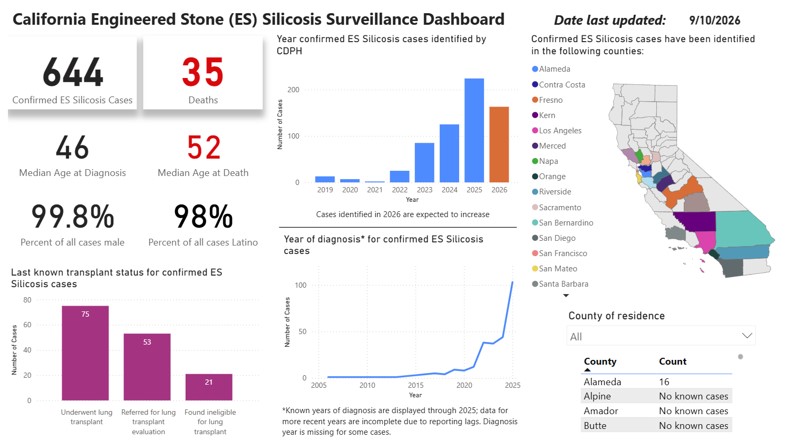
Source: California Department of Public Health – Engineered Stone Silicosis Surveillance Dashboard.
In California, many artificial stone fabrication facilities are in the Los Angeles metropolitan area. These workers are typically staffed by foreign-born independent contractors from Mexico or Central America. Many of these workers have a restricted form of Medicaid or are uninsured, leading to barriers in accessing comprehensive medical care.[40]
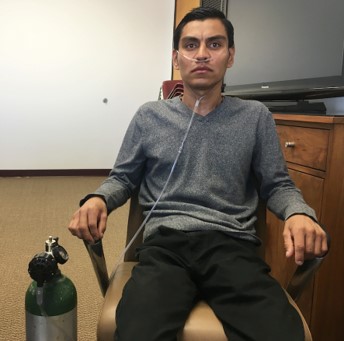
Gustavo Reyes Gonzalez suffers from a severe case of silicosis from cutting artificial-stone countertops. Read his story on the next page. (Photo courtesy of Public Health Watch. Photo Credit: Leslie Berestein Rojas.)
The Silicosis Story of Gustavo Reyes Gonzalez
In 2019 Gustavo Reyes Gonzalez developed a cough. A physician prescribed antibiotics, but the cough persisted, and his health worsened; he developed night sweats, fatigue, back pain, and weight loss. Doctors presumed he had pneumonia. He didn’t.
After a barrage of medical tests and asking about occupational exposures, a pulmonologist at last diagnosed Reyes Gonzalez with silicosis in 2021. He was told that there was no cure for the disease and that he would likely be dead within three to five years. Even after this devastating diagnosis, Reyes Gonzalez decided to keep working as a stone fabricator to “save money for my funeral,” he said in a recent interview.
Reyes Gonzalez moved from Mexico to Southern California in 2007. From 2007 to 2022 Reyes Gonzalez worked in a stone fabrication shop cutting, grinding, and polishing artificial stones in addition to other materials. He wore an N95 mask and used wet methods to keep the dust down, but these measures did not protect his lungs from the fine dust particles containing crystalline silica. He and his co-workers were “never given warnings” by the manufacturers of the artificial stone and “did not know the content of this dust,” he said. His boss also fabricated the stone alongside his employees.
After the diagnosis of silicosis, Reyes Gonzalez became progressively disabled, developing shortness of breath after walking a few steps. He lost more weight and became depressed. His family suffered as well, “as they saw that I could not breathe and could not do anything about it.” Reyes Gonzalez had private health insurance, but it did not cover all the medical expenses, adding further stress to his situation. With the support of his wife, he started the evaluation process for a lung transplant.
In 2023, Reyes Gonzalez suddenly developed a collapsed lung and was rushed to the emergency room. He was hospitalized for weeks due to complications from the progression of the disease. In February 2023, he received a double lung transplant. On the day of his transplant, he weighed only 85 pounds.
His health has improved following the transplant, but his future remains very uncertain because the transplanted lungs may only last a few more years. He also has new health issues secondary to the transplant. Due to his medications, he cannot have children. In August 2024, Reyes Gonzalez was awarded $52.4 million in a court case against three manufacturers of artificial stone.
Reyes Gonzalez said he knows about 20 people who have developed artificial stone-associated silicosis. Some of his friends have more mild forms of the disease, others must use oxygen tanks, and some have died.
“This stone needs to be prohibited,” he said. “It’s poison for individuals and it destroys families.”
3. Global Supply Chain
In the 1970s the Italian equipment manufacturer Breton S.p.A. developed the manufacturing process for artificial stone. The process begins with silica mining using open-pit techniques and dredging. This material is transported to manufacturing facilities where the finely crushed silica is mixed with polymer resins and pigments and then compressed under high temperature and vacuum. Subsequently, these slabs are shipped and sold to commercial builders worldwide. These fabrication shops, often small businesses, employ workers to cut, grind, polish, and sand the slabs into customized kitchen countertops that are then installed in the home. During this fabrication process workers are exposed to the greatest amount of dust containing RCS.[41], [42] Formal definitions of manufacture, fabrication, and installation of artificial stone are in the footnote.[43]
The procurement of artificial-stone tiles or slabs involves a global supply chain. Many of the large manufacturers are international corporations. In 2025 the Asia Pacific, North American, and European regions accounted for the largest shares of the artificial-stone market.[44] In the United States most slabs are imported from abroad. In 2024 most of the artificial stone in the United States came from India, Vietnam, Thailand, and Spain.[45]
This is a growing market in the United States and abroad. Between 2010 and 2018, artificial-stone imports in the United States increased by 800%.[46] In 2025 the global market for artificial stone was estimated to be $26.5 billion. If a projected compound annual growth rate of 7.1% were to continue, the artificial-stone market would grow to $45.2 billion by 2033.[47]
Artificial-stone manufacturers have faced multiple lawsuits for subjecting workers to unsafe levels of RCS; many lawsuits are ongoing. As of July 2026, four prominent lawsuits have concluded in California and one in Colorado. All but one of these cases were decided in favor of the plaintiff who was affected by artificial stone-associated silicosis. In August 2024, a Los Angeles County jury awarded $52 million in damages to a 34-year-old stone fabricator who underwent a lung transplant after a diagnosis of silicosis (see The Silicosis Story of Gustavo Reyes Gonzalez on page 14).[48]
In April 2025, another case resulted in a $26-million settlement to a 51-year-old stone fabricator who had worked in this industry for over two decades and subsequently developed accelerated silicosis.[49] In June 2025, a jury ruled in favor of Caesarstone, a manufacturer of artificial stone, attributing the onset of silicosis in a fabricator to the lack of safety precautions taken by the employer who violated state occupational standards.[50] In a 2026 ruling in Colorado, a jury awarded $17 million to a plaintiff who developed artificial stone-associated silicosis after 10 years of working in a countertop-fabrication shop.[51] In August 2026, the family of a deceased stoneworker in California was awarded $7 million based on claims of product design defect and failure to warn.[52]
In Congress, H.R. 5437, the Protection of Lawful Commerce in Stone Slab Products Act, was voted out of the House Judiciary Committee in June 2026. This bill, which states that these artificial-stone products are “not inherently dangerous,” would dismiss existing civil lawsuits and bar future lawsuits against manufacturers or sellers of artificial stone for personal injuries related to alteration of these products.[53] As of September 2026 the bill had not been introduced on the House floor. Congress should reject this legislation. The act would harm workers, contribute to an ongoing public health crisis, and wrongfully absolve manufacturers of their responsibilities and the potential legal consequences.
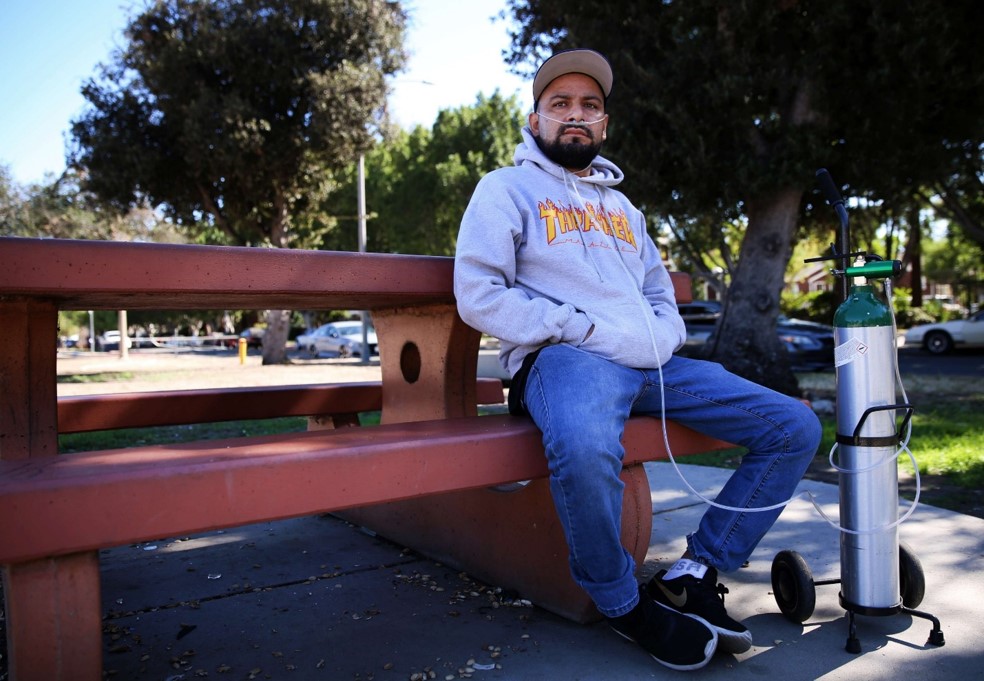
Juan Gonzalez Morin developed silicosis after cutting and grinding artificial-stone countertops in the Los Angeles area. He died in 2023 at the age of 37. (Photo courtesy of Public Health Watch. Photo credit: Trevor Stamp.)
4. Manufacturing Process and Hazards
In 1971, the Occupational Safety and Health Administration (OSHA) established permissible exposure limits (PELs) to regulate the maximum concentration of RCS that workers can be exposed to during an 8-hour workday. For general industry, the PEL was set at 100 µg/m³. For the construction and maritime industries, it was set at 250 µg/m³.
In 2016, OSHA revised these limits, issuing a new PEL of 50 µg/m³ and an action level of 25 µg/m³ based on an 8-hour time-weighted average for all industries. Despite the recognized health risk at the action level, OSHA stated that it would not adopt a PEL below the 50 μg/m3 limit in consideration of “the technological and economic feasibility of the standard in determining exposure limits.”[54]
For general and maritime industries, which include stone fabrication work, OSHA requires that workers exposed to RCS above the action level for more than 30 days per year receive exposure monitoring, medical surveillance at no cost to the employee, and may be required to wear respiratory protection. For the construction industry, which includes countertop installation, OSHA requires specific engineering controls and work practices, including use of respirators, based on the construction task. Medical surveillance is required if an employee uses a respirator for more than 30 days per year. According to an OSHA estimate, exposure to RCS at the action level of 25 µg/m³ over 45 years would result in between 3 and 23 deaths per 1,000 workers.[55]
A 2023 study of construction workers in the United States found that employees that followed OSHA-specific engineering controls for RCS may still expose their workers to hazardous levels. The study collected air samples during core drilling, cutting, dowel drilling, grinding, and jackhammering with OSHA-mandated dust-control methods and extrapolated collected samples to project exposure over 4-hour and 8-hour shifts. The study found that all tasks had samples that exceeded the action level over an 8-hour workday. Dowel drilling, grinding, and jackhammering subjected workers to particularly high RCS levels, with some samples exceeding PEL for even a 4-hour shift. When exposures were extrapolated to an 8-hour shift, 47% of workers were exposed above the action level and 29% above the PEL.[56]
Fabrication shops that work with artificial stone may reduce worker exposure to RCS by (1) physically isolating processes that produce the dust; (2) using local ventilation to remove airborne dust; (3) only cutting stone when it is wet (wet cutting), which prevents the generation of dry dust; and (4) requiring and enforcing the use of respirators by workers.[57] These dust control measures may be supplemented with mandated employee training and regular health monitoring to assess worker exposure. Figure 2 shows the dry and wet stone fabrication methods.
Multiple studies, however, demonstrate that these additional control measures may still be insufficient to protect workers. For example, wet controls methods are increasingly recommended or required by governmental agencies, yet they do not ensure RCS exposure levels below the PEL. A study in stone-countertop fabrication shops in Georgia from 2017 to 2023 demonstrated that 48.3% of employees using automated machines or small tools with wet methods had exposures above the PEL.[58] In 2025 a survey of stone-countertop fabrication shops found that “among the 80 samples obtained from workers who used small tools with wet methods, 26.3% had RCS exposures between the action level and PEL, and 6.2% had exposures > PEL.”[59] In this study, 37% of the shops did not require the use of respirators. Of the shops that required respiratory protection, only 42% had reported fit testing their employees for appropriate respirators.[60]
Figure 2: Dry and Wet Stone Fabrication Methods
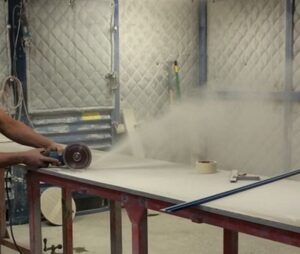
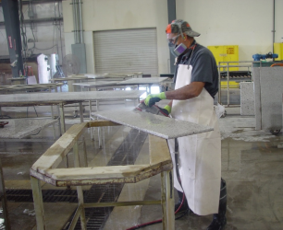
Left: Stoneworker cutting stone using a dry method (source: Washington State Labor & Industries).
Right: Stoneworker using a wet grinder and respiratory protection (source: Centers for Disease Control and Prevention).
Worker exposure to RCS during the processing of artificial-stone countertops has been investigated in other countries. In 2017, Australia’s Workplace Health and Safety Queensland investigated RCS exposure at 10 workplaces in Southeast Queensland. The investigation assessed the effectiveness of measures to protect workers from RCS exposures. The audit found that workers who dry cut or ground the stone were at highest risk. Workers who used water suppression to limit dust exposure assumed respiratory protective equipment was unnecessary, yet they were still at risk of increased exposure to RCS.[61]
When the audit was conducted, the Workplace Exposure Standard (WES) set by Safe Work Australia, a government agency, was an 8-hour time-weighted average of 100 µg/m³. The audit found that 70% of workers had exposures that exceeded 25 µg/m³ and 9% of workers who shaped stone had exposures that exceeded 100 µg/ m³.[62] In 2019 Australia lowered the WES to 50 µg/m³, in line with OSHA standards in the United States. Although consideration was given to lowering the WES to 20 µg/m³; this standard would have been difficult to enforce because of the challenge of accurately measuring RCS levels below the 50 µg/m³ threshold.[63]
In Australia, many artificial-stone fabricators are small businesses with little capital to invest in automated technology. Fabricators often use hand tools that put workers at greater risk of RCS exposure. In 2023, Safe Work Australia found that many shop owners were still unaware of the occupational risks associated with artificial-stone fabrication. Safe Work Australia concluded that the obstacles to enforcing workplace safety standards were embedded in the “nature of the engineered stone industry.”[64]
The lack of adherence to safety regulations is also evident in the United States. In many cases, stone-fabrication shops are small businesses that create products to customer specifications. In a survey of 257 fabrication shops, the median number of employees per shop was 10, with a range of 1 to 125.[65] The large number of small shops makes it harder for states or the federal government to regularly inspect and enforce occupational safety regulations. As in Australia, these small businesses may not have the capital to invest in more expensive dust control methods such as ventilation and wet cutting.
In a 2025 qualitative study of 20 stone-countertop workers in California, 68% reported regularly using dry-cutting methods, 50% reported not having access to appropriate respirators from their employers, and only 5% reported receiving formal safety training. In interviews, none of the participants could link dust exposure to development of silicosis but all knew about health-related consequences from their work. They gained knowledge on this topic via online videos, segments on Spanish news channels, and talking to colleagues. When advocating for improved safety measures in the workplace, some of the workers feared or were threatened with retaliation, such as firing or deportation.[66] Another report demonstrated that the majority of surveyed stone-fabrication shops did not perform air sampling for RCS, did not provide employees with fit testing for respirators, and did not complete adequate medical surveillance.[67]
5. Policy Responses
Australia
In response to rapidly rising rates of silicosis associated with artificial stone, Australia banned the use, supply, and manufacture of artificial stone in 2024 and the importation in 2025. Australia is the first and only country to do so.[68] Prior to the ban, Safe Work Australia assessed three policy options: (1) prohibition on all artificial stone; (2) prohibition on all artificial stone containing 40% or more crystalline silica; or (3) option two with a licensing requirement for companies fabricating artificial stone containing less than 40% crystalline silica.[69]
Safe Work Australia cited evidence of continued noncompliance with standards for workplace exposures, despite efforts to increase awareness and enforcement starting in 2021 with the recommendations from the National Dust Disease Taskforce.[70] The agency also expressed concern that permitting artificial stone with lower crystalline silica content would give workers a false sense of safety while handling these materials, potentially leading to greater noncompliance with safety measures. For these reasons, in 2023 Safe Work Australia recommended a ban on all artificial stone (option 1). The agency highlighted the lack of toxicological evidence for a safe threshold of crystalline silica content and the inherent risk of RCS exposure when processing artificial stone, even with reduced silica content.[71]
Following Safe Work Australia’s recommendation, Australia prohibited the use, supply, and manufacture of artificial stone that contains at least 1% crystalline silica as of July 1, 2024.[72] The cutoff of 1% was based on prior occupational codes that define and regulate any crystalline silica substance as a material that contains greater than 1% crystalline silica.[73]
Sintered stone and porcelain products, other forms of manufactured stone that contain no resin, were excluded from Australia’s ban, presumably due to the lower silica content of these products and the different manufacturing technique (Table 1). Safe Work Australia noted the need for further research on the potential health risk from emissions of sintered and porcelain stones.[74] Australia also excluded artificial-stone products that do not require modification (such as jewelry, ornaments, and sculptures) and established a framework for the removal, disposal, and modification of artificial stone fabricated prior to the ban, denoted as “legacy engineered stone.”[75]
As of January 1, 2025, Australia banned the import of artificial stone, an important step as most artificial stone was produced overseas.[76]
Other Countries
In 2017, the European Union classified silica dust as a carcinogen. This designation led to mandatory silica exposure monitoring and the elimination of workplace practices that exposed workers to high levels of silica dust.[77]
In 2024, Spain’s National Institute for Safety and Health at Work and the Ministry of Health issued a report describing the increase of occupational-related silicosis from 1990 to 2023. Citing Australia and California as examples, the government agencies recommended improving surveillance in the construction industry and consideration of prohibiting the use of artificial stone.[78]
In 2026, the United Kingdom’s Health and Safety Executive implemented measures to improve worker safety by prohibiting dry cutting of stone among other occupational hazard controls and increasing inspections of work sites.[79]
United States
In 2000, the National Toxicology Program listed crystalline silica as “known to be a human carcinogen.”[80] In 2009, silicosis was made a nationally notifiable non-infectious condition, encouraging but not mandating states to record and report this disease to local health departments and the Centers for Disease Control and Prevention.[81],[82] In 2020, OSHA implemented a National Emphasis Program to identify, reduce, and eliminate worker exposure to RCS, according to new OSHA guidelines. The program aimed to increase the number of inspections and monitor general industry, maritime, and construction workplaces.[83] In 2023, after increasing reports of artificial stone-associated silicosis, OSHA supplemented the National Emphasis Program with a directive to increase inspections in targeted regions throughout the country.[84]
Between 2021 and 2026, the National Institute for Occupational Safety and Health (NIOSH) funded additional silicosis surveillance programs in California, Michigan, Washington, and Wisconsin.[85] In 2026, data from these states, along with findings from the additional OSHA inspections, led to a joint OSHA and NIOSH “Hazard Alert” to raise awareness about the health risks in the countertop industry and protective measures to counteract the risk.[86], [87]
OSHA and NIOSH refer to the Hierarchy of Controls framework, developed by NIOSH and shown in Figure 3, as a guideline for reducing exposure to RCS. Because elimination and substitution of exposure is the most effective standard for worker protection, fabrication of artificial-stone countertops with no or reduced crystalline silica is an obvious and essential approach. OSHA and NIOSH also recommended engineering controls to improve workplace safety, such as monitoring air quality to identify high-exposure tasks, using water delivery methods while cutting or grinding the stone, and improving workplace ventilation. With administrative controls, such as providing sites for workers to wash body parts exposed to RCS and ensuring wet sweeping of worksite floors, the goal is to reduce exposure by changing how individuals work. Finally, the agencies called attention to the OSHA requirement that properly fitting personal protective equipment (PPE) always be used when RCS exposure is above the PEL.[88]
Figure 3: Hierarchy of Controls
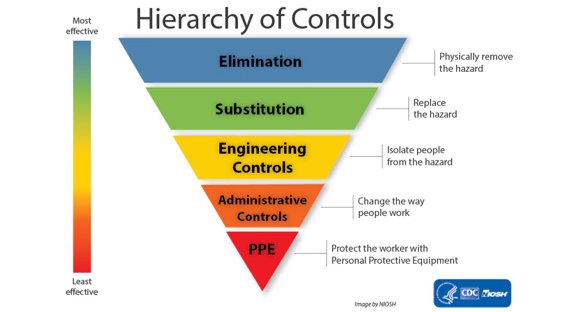
Source: National Institute for Occupational Safety and Health.
California
In December 2023, the California Occupational Safety and Health Standards Board (OSHSB), the standards-setting agency within California’s Division of Occupational Safety and Health (Cal/OSHA), granted a petition from the Western Occupational & Environmental Medical Association (WOEMA) to establish an emergency temporary standard for artificial-stone fabrication workers.[89] This petition aimed to further protect workers who engage in “high-exposure tasks” with artificial stone containing more than 0.1% crystalline silica and natural stone containing more than 10% crystalline silica. The standards include mandating the use of wet methods, requiring the use of powered air-purifying respirators or similar alternatives, and ensuring employees are trained in the risks of RCS and how to prevent exposure. In February 2025, OSHSB made these emergency regulations permanent.[90]
In October 2025, the California legislature enacted the Silicosis Training, Outreach, And Prevention (STOP) Act. The STOP Act classifies silicosis as a “serious illness” and creates an educational training requirement for workers and fabrication shop owners. It also requires Cal/OSHA and the California Department of Public Health to share reported case information to enable more rapid detection of silicosis statewide.[91]
As of May 2026, Cal/OSHA through its Silica Special Emphasis Program had issued more than 900 citations totaling $1.9 million in penalties to stone-fabrication sites violating state OSHA regulations. The agency has also provided 465 consultations to fabrication shops.[92]
In May 2026, OSHSB granted a second WOEMA petition to prohibit the fabrication and installation of artificial stone with greater than 1% crystalline silica content. The agency cited Australia as an example and stated that artificial stone is “inherently dangerous, highly toxic, and harmful to workers.”[93] OSHSB used the 1% cutoff, as did Australia. The 1% cutoff is a regulatory threshold and product definition, not a toxicological threshold, and it is intended to effectively ban these products altogether. There is no known safe level of silica in artificial stone.
In response to the OSHSB decision, Cal/OSHA convened an advisory meeting in July 2026 to solicit stakeholder input on proposed emergency regulations. The agency received feedback on the timeline for fabricators and suppliers to transition to safer alternative products; requirements to be included in an employer’s phaseout plan; handling of waste or unwanted inventory; and product testing and certification.
In September 2026, Cal/OSHA published draft regulations to prohibit the manufacture and fabrication of artificial stone containing greater than 1% crystalline silica.[94] As proposed, the prohibition would start six months after the adoption of the emergency regulations, meaning workers could continue to fabricate artificial stone for six months. Given the ongoing health risks, the draft regulations should be revised to ban the manufacture and fabrication of artificial stone immediately upon adoption of the regulations and without a delay period.
The draft regulations also include the creation of a new “artificial stone action level” of 3 µg/m³, calculated as an 8-hour time-weighted average, for high-risk activities. This is a significant reduction compared to the current OSHA action level of 25 µg/m³, which is also based on an 8-hour time-weighted average. The use of wet-stone fabrication methods, which are mandatory, must not exceed the new artificial stone action level when applicable. The state also proposes to prohibit the use of “loose-fitting” powered-air purifying respirators in favor of more protective respirators, such as half-face, full face, helmet or hood air-purifying respirators.[95]
Massachusetts
After the first confirmed case of artificial stone-associated silicosis in Massachusetts in 2025, the Department of Public Health issued a safety alert with recommendations on how to protect workers.[96]
New Jersey
New Jersey has similarly issued a “Health Alert” for stone-countertop workers, which reinforces the OSHA standards. The state Department of Health also offered free consultations to fabrication shops to measure silica exposure levels and assist with occupational standards compliance.[97]
6. Proposed Solutions
Potential policy solutions to limit occupational exposures to RCS during fabrication of artificial stone are discussed below. As mentioned previously, the NIOSH Hierarchy of Controls framework (Figure 3) can be applied to determine the potential effectiveness of each solution. According to the framework, worker protection through personal protective equipment is the least effective method for mitigating risk, and elimination of the hazard is the most effective strategy. Policy solutions will be discussed in increasing order of efficacy.
- Mandate reporting and surveillance of silicosis
Currently silicosis is a national notifiable non-infectious condition, which encourages but does not require reporting to local and federal public health agencies. States should make reporting of silicosis mandatory and educate clinicians on the importance of this obligatory reporting. With these data, states could identify geographic “hot spots” of artificial stone-associated silicosis, which would inform state occupational health agencies about areas that need additional workplace inspections and enhanced enforcement. In these locations, health departments could reach out to physicians to increase awareness and provide guidance on disease recognition and screening. In addition, the creation of a national surveillance system for artificial stone-associated silicosis, mandated by Congress and administered by NIOSH, would allow for systematic data collection, analysis, and dissemination. Although these steps would increase knowledge, such measures alone are unlikely to prevent the development of new silicosis cases.
- Establish and fund a national artificial stone-associated silicosis screening and prevention program
A national artificial stone-associated silicosis screening and prevention program would identify current and former workers who are at risk from RCS exposure. Such a program would increase the likelihood that these individuals receive appropriate medical screening and treatment. Similar programs include the Coal Worker’s Health Surveillance Program, which offers free black lung screening to coal miners, and the World Trade Center Health Program, which provides no-cost health monitoring and treatment to first responders and survivors from the September 11, 2001 attacks. Both programs were created by Congress and are administered by NIOSH.[98], [99] Importantly, an adequately funded artificial stone-associated silicosis screening and prevention program should include funds to cover specified medical expenses for uninsured workers and workers not adequately covered by health insurance.
- Increase funding for research on artificial stone
Many unknowns remain about the safety profile of artificial stone and RCS. In addition, although new stone products with reduced silica content and alternative materials, as discussed below, are thought to be safer, additional basic and clinical research must be conducted to further characterize any potential health risks. Congress should direct dedicated funding to NIOSH to establish and carry out a research program to identify, develop, evaluate, and facilitate the adoption of safer alternatives to artificial stone containing more than 1% crystalline silica. The goal is for new stone products to be considered safe as they enter the market and prevent the development of a regrettable substitute product for artificial stone. The research findings can also help inform future occupational safety regulations.
- Enforce the OSHA silica standard
Current OSHA standards set the PEL for RCS to 50 µg/m³ and the action level to 25µg/m³ over an 8-hour time-weighted average.[100] Stricter enforcement of these standards with additional funding to the National Emphasis Program would reduce, but not eliminate, worker exposure to RCS, given that these standards are implemented based on the assumption that RCS from natural stone and artificial stone are equivalent. However, as previously noted, particles released by fabricating artificial stone are smaller in diameter than particles from natural stone and contain metals and resins. Therefore, even if workers were to wear PPE to meet OSHA standards for the action level and the PEL, the standards themselves may fail to reflect the unique toxicity of RCS from artificial stone.[101], [102], [103]
- Issue new OSHA regulations for high-risk activities
Administrative and engineering controls offer potential ways to limit RCS exposure, particularly during high-risk activities such as dry cutting, grinding, and polishing. The Cal/OSHA emergency temporary standards should be adopted nationally by OSHA. These measures include prohibiting dry methods for fabricating stone, conducting yearly exposure monitoring, and mandating the use of powered air-purifying respirators when appropriate.[104] In addition, following California’s draft regulations, OSHA should create a new artificial stone action level of 3 µg/m³ for certain high-risk activities.[105]
Although important, these measures alone are unlikely to adequately protect workers from the risks of artificial stone. Workers would typically be required to wear respirators and employ dust-suppression methods throughout an entire shift, a solution that is not feasible. The dust generated by grinding and polishing stone is so significant that brief breaks in the use of respirators can lead to exposure to resuspended dust.[106] Based on the findings from the 2023 Safe Work Australia investigation, it is doubtful that additional protection measures will be fully effective in practice.[107] The artificial-stone industry largely relies on small shops with limited capital that are unable to both invest in essential engineering controls, such as comprehensive ventilation systems, and to remain in business. In addition, employees often face language barriers that complicate their understanding of occupational risks and their rights as workers.[108]
- Prohibit fabrication of artificial-stone products with high crystalline silica content
Although stone with lower crystalline silica content has been proposed as a safer alternative to stone with higher content, only prohibiting the manufacture and fabrication of artificial-stone products with high silica content is an insufficient policy response.
Following the 2023 Australian ban on artificial stone, Caesarstone and Cosentino, large manufacturers and suppliers of artificial stone, introduced lower-silica (<40% and <10%) alternatives, branded as “mineral surfaces.”[109],[110] In these products, some of the silica is replaced with inorganic fillers, such as recycled glass and feldspar or other minerals, that are bound together with polymer resins.[111] Silica content in the stone and silica content in the dust generated from cutting and polishing are correlated.[112] However, even lower crystalline silica artificial stone can produce fine RCS that can lead to silicosis. In addition, the inorganic components of artificial stone, such as metals, that are present in stone with both higher and lower silica content may produce a significant inflammatory response in human lung cells. There is also growing concern about the potential pulmonary toxicity from inhaling volatile organic compounds released from the resin during the processing of artificial stone.[113]
Although reduced silica content in stone is a step in the right direction, it does not fully eliminate the risk to fabrication workers. Moreover, the safety profile of lower-silica artificial stone is unknown. As Safe Work Australia found, there is no evidence of a safe threshold for RCS irrespective of the crystalline silica content in the stone. The fabrication of artificial stone with lower crystalline silica content would create a false sense of safety for workers and likely lead to reduced compliance with occupational safety regulations.
- Prohibit fabrication of all crystalline silica artificial-stone products
Consistent with decisions by Australia and California, banning the importation, manufacture, distribution, sale, and commercial fabrication of artificial-stone products with greater than 1% crystalline silica content is the most effective public health measure. There is no known safe level of silica in artificial stone. Alternative regulatory approaches have been or will likely be unsuccessful in protecting all workers and preventing new silicosis cases.
Large manufacturers have already created silica-free artificial-stone options that are available in the U.S. market.[114], [115] These materials are primarily made of recycled glass, aluminum trihydrate, and organic compounds such as resins and dyes.[116] During fabrication, silica-free artificial stone produces no RCS.[117] The resins, dyes, and potentially other components, however, may have health risks.
Other alternatives include sintered and porcelain stones, which do not contain glue or resin as binding agents. Sintered and porcelain stone rely on compression of materials at high pressures and temperatures to achieve a surface that mimics stone.[118] Porcelain stoneware contains 16-26% crystalline silica by weight and sintered stone contains 7-17% crystalline silica, significantly lower than artificial stone (90%) and granite (30-40%).[119], [120] Another novel countertop material that does not release RCS is made of cement with pieces of colored recycled glass (Table 1).[121]
Any new products will need to be investigated for potential health hazards. For stone countertops, granite and marble remain options, albeit more expensive than artificial stone. Wood, laminate, and stainless steel can also be used.
7. Recommendations and Conclusion
Although artificial stone-associated silicosis is a devastating and irreversible condition, it is also imminently preventable. Young workers are dying from silicosis at unprecedented rates, and families are forever changed by caring for a sick relative. In California, the epicenter of this epidemic in the United States, the workers diagnosed with artificial stone-associated silicosis are almost all Latino men, with an average age of 46.[122] Many of these individuals are undocumented and have no or limited health insurance, further compounding their challenges of receiving medical care and advocating for safe working conditions.[123]
The high silica content of artificial stones, the nature of the stone-fabrication shops, and the inadequate regulations and safety measures to protect workers all contribute to a public health crisis that remains largely silent.
The United States should:
- Prohibit the importation, manufacture, distribution, sale, and commercial fabrication of artificial stone with more than 1% crystalline silica. In the face of clear evidence of the harms of RCS and an absence of evidence on the safety profile of lower-silica-content artificial stone, the only effective solution is to ban artificial-stone products with greater than 1% crystalline silica content. Regulatory agencies should prohibit artificial stone with greater than 1% crystalline silica to move the market towards products with “zero crystalline silica.” This is the most important policy to prioritize.
- While implementing a ban, direct OSHA to strengthen occupational regulations for the fabrication of stone products and exposure to RCS. OSHA should establish enhanced occupational safety and health standards to protect workers engaged in the fabrication and installation of stone and other high-silica stone products. Congress should direct OSHA to expedite this regulatory process. These new occupational regulations should include prohibiting high-risk activities such as dry fabrication, increasing the level and use of respiratory protection, and creating an artificial stone action level. Rigorous enforcement of occupational safety measures is essential to protect workers irrespective of stone type.
- Mandate reporting of silicosis by all states and establish a national surveillance system. States should designate silicosis as a reportable disease and strengthen education to clinicians about the importance of mandatory reporting to state health departments. In addition, Congress should mandate a national artificial-stone surveillance system under NIOSH, using California’s surveillance system as a model. These data would lead to a better understanding of the scope and magnitude of artificial stone-associated silicosis and allow for targeted enforcement of safety regulations and educational programs.
- Establish and fund a national artificial stone-associated silicosis screening and prevention program. A national program to identify current and former workers at risk of artificial stone-associated silicosis would increase the likelihood that they receive appropriate medical screening and treatment.
- Direct and fund NIOSH to conduct research on the safety profile of newer artificial-stone products with less than 1% crystalline silica content. As the industry adapts to changing market demand, there is a need for continued research on the potential health effects of newly developed stone products. Congress should direct and fund NIOSH to establish and implement a research program to identify, develop, evaluate, and facilitate the adoption of safer alternatives to artificial stone containing more than 1% crystalline silica.
In summary, artificial stone-associated silicosis is a preventable condition. To end the epidemic, prohibiting the importation, manufacture, distribution, sale, and commercial fabrication of artificial stone containing greater than 1% crystalline silica is necessary.

Ana Miriam Gonzalez Moreno and her husband Victor at their wedding in 2020. Victor, a countertop fabricator, died of silicosis the next year. (Photo courtesy of Public Health Watch. Photo provided by Ana Miriam Gonzalez Moreno.)
[1] Artificial or engineered stone “means any reconstituted, artificial, synthetic, composite, engineered, or manufactured stone product. It is commonly made by combining natural stone or other crystalline silica-containing materials with adhesives, polymers, epoxies, resins, or other binding materials to form a slab.” Definition is from California’s Draft Regulations on the Prohibition of Artificial Stone.
State of California Department of Industrial Relations. Emergency Rulemaking to Prohibit the Fabrication of Engineered Stone Countertops Containing More than One Percent Crystalline Silica. September 2026. https://dir.ca.gov/dosh/doshreg/silica-2026/. Accessed September 17, 2026.
[2] Fazio JC, Viragh K, Houlroyd J, Gandhi SA. A review of silicosis and other silica-related diseases in the engineered stone countertop processing industry. J Occup Med Toxicol. 2025;20(1): 9. Published 2025 Mar 17. doi:10.1186/s12995-025-00455-8
[3] U.S. International Trade Commission. Quartz Surface Products. May 2026. https://www.usitc.gov/publications/safeguards/pub5738.pdf. Accessed September 2, 2026.
[4] Ibid.
[5] Ramkissoon C, Gaskin S, Thredgold L, et al. Characterisation of dust emissions from machined engineered stones to understand the hazard for accelerated silicosis. Sci Rep. 2022;12(1):4351. Published 2022 Mar 14. doi:10.1038/s41598-022-08378-8
[6] Thompson D, Qi C. Characterization of the emissions and crystalline silica content of airborne dust generated from grinding natural and engineered stones. Ann Work Expo Health. 2023;67(2):266-280. doi:10.1093/annweh/wxac070
[7] Ibid.
[8] Leung CC, Yu IT, Chen W. Silicosis. Lancet. 2012;379(9830):2008-2018. doi:10.1016/S0140-6736(12)60235-9
[9] Churg A, Muller NL. Update on silicosis. Surg Pathol Clin. 2024;17(2):193-202. doi:10.1016/j.path.2023.11.005
[10] Ramkissoon C, Pavan C, Petriglieri JR, et al. Physico-chemical features and membranolytic activity of dust from low or no crystalline silica engineered stone with implications for toxicological assessment. Sci Rep. 2025;15(1):25451. Published 2025 Jul 15. doi:10.1038/s41598-025-10460-w
[11] Thompson D, Qi C. Characterization of the emissions and crystalline silica content of airborne dust generated from grinding natural and engineered stones. Ann Work Expo Health. 2023;67(2):266-280. doi:10.1093/annweh/wxac070
[12] Ramkissoon C, Gaskin S, Song Y, et al. From Engineered stone slab to silicosis: A synthesis of exposure science and medical evidence. Int J Environ Res Public Health. 2024;21(6):683. Published 2024 May 27. doi:10.3390/ijerph21060683
[13] Hall S, Stacey P, Pengelly I, et al. Characterizing and comparing emissions of dust, respirable crystalline silica, and volatile organic compounds from natural and artificial stones. Ann Work Expo Health. 2022;66(2):139-149. doi:10.1093/annweh/wxab055
[14] Ramkissoon C, Gaskin S, Thredgold L, et al. Characterisation of dust emissions from machined engineered stones to understand the hazard for accelerated silicosis. Sci Rep. 2022;12(1):4351. Published 2022 Mar 14. doi:10.1038/s41598-022-08378-8
[15] Molinari C, Conte S, Dondi M, Zanelli C. Content of crystalline silica phases in porcelain stoneware. Open Ceramics. 2024;19. doi: https://doi.org/10.1016/j.oceram.2024.100650
[16] Rose C, Heinzerling A, Patel K, et al. Severe silicosis in engineered stone fabrication workers — California, Colorado, Texas, and Washington, 2017–2019. MMWR Morb Mortal Wkly Rep. 2019;68:813–818. DOI: http://dx.doi.org/10.15585/mmwr.mm6838a1.
[17] Massachusetts Department of Public Health. Massachusetts Public Health Officials Issue Safety Alert to Employers After State’s First Confirmed Silicosis Case in Stone Countertop Industry. December 9, 2025. https://www.mass.gov/news/massachusetts-public-health-officials-issue-safety-alert-to-employers-after-states-first-confirmed-silicosis-case-in-stone-countertop-industry. Accessed September 2, 2026.
[18] Hua J, Rose C, Redlich C. Engineered stone–associated silicosis—A lethal variant of an ancient disease. JAMA Intern Med. 2023 Sep 1;183(9):908-910.
[19] Fazio JC, Viragh K, Houlroyd J, Gandhi SA. A review of silicosis and other silica-related diseases in the engineered stone countertop processing industry. J Occup Med Toxicol. 2025;20(1):9. Published 2025 Mar 17. doi:10.1186/s12995-025-00455-8
[20] National Dust Disease Taskforce, Department of Health. Final Report to Minister for Health and Aged Care. Australian Government DOH National Dust Disease Taskforce. June 2021. https://www.cdc.gov.au/sites/default/files/2025-11/national-dust-disease-taskforce-final-report_0.pdf. Accessed September 2, 2026.
[21] Department of Employment and Workplace Relations. COMMUNIQUÉ Meeting of Workplace Relations and Work Health and Safety Ministers. December 13, 2023. https://www.dewr.gov.au/work-health-and-safety/resources/work-health-and-safety-and-workplace-relations-ministers-meeting-13-december-2023. Accessed September 2, 2026.
[22] California Department of Industrial Relations. Standards Board Adopts Emergency Temporary Standard to Protect Workers from Silicosis. December 14, 2023. https://www.dir.ca.gov/DIRNews/2023/2023-93.html. Accessed September 2, 2026.
[23] Menjivar C. SB-20 Occupational Safety: High-Exposure Trigger Tasks on Artificial Stone. 2024. https://leginfo.legislature.ca.gov/faces/billTextClient.xhtml?bill_id=202520260SB20. Accessed Sept. 2, 2026.
[24] Occupational Safety and Health Standards Board. Petition File No. 609 Proposed Decision. https://www.dir.ca.gov/oshsb/documents/petition-609-propdecision.pdf. Accessed September 2, 2026.
[25] State of California Department of Industrial Relations. Emergency Rulemaking to Prohibit the Fabrication of Engineered Stone Countertops Containing More than One Percent Crystalline Silica. September 2026. https://dir.ca.gov/dosh/doshreg/silica-2026/. Accessed September 17, 2026.
[26] Baum L, Arnold T. Silicosis. StatPearls. August 6, 2023. https://www.ncbi.nlm.nih.gov/books/NBK594245/. Accessed September 2, 2026.
[27] Liu X, Jiang Q, Wu P, et al. Global incidence, prevalence and disease burden of silicosis: 30 years’ overview and forecasted trends. BMC Public Health. 2023;23(1):1366. Published 2023 Jul 17. doi:10.1186/s12889-023-16295-2
[28] Ibid.
[29] Hoy RF, Tomic D, Gwini S, et al. The rapid rise of silicosis in Victoria, Australia associated with artificial stone countertop industry work. Am J Ind Med. 2025;68(4):358-367. doi:10.1002/ajim.23704
[30] Gandhi SA, Liu GY, Fazio JC, et al. Silicosis in the artificial stone countertop industry: An official American Thoracic Society workshop report. Ann Am Thorac Soc. Published online June 26, 2026. doi:10.1093/annalsats/aaoag176
[31] Baum L, Arnold T. Silicosis. StatPearls. August 6, 2023. https://www.ncbi.nlm.nih.gov/books/NBK594245/. Accessed September 2, 2026.
[32] Ibid.
[33] Wu N, Xue C, Yu S, Ye Q. Artificial stone-associated silicosis in China: A prospective comparison with natural stone-associated silicosis. Respirology. 2020;25(5):518-524. doi:10.1111/resp.13744
[34] Ramkissoon C, Gaskin S, Thredgold L, et al. Characterisation of dust emissions from machined engineered stones to understand the hazard for accelerated silicosis. Sci Rep. 2022;12(1):4351. Published 2022 Mar 14. doi:10.1038/s41598-022-08378-8
[35] Carrieri M, Guzzardo C, Farcas D, Cena LG. Characterization of silica exposure during manufacturing of artificial stone countertops. Int J Environ Res Public Health. 2020;17(12):4489. Published 2020 Jun 22. doi:10.3390/ijerph17124489
[36] Vallyathan V, Leonard S, Kuppusamy P, et al. Oxidative stress in silicosis: evidence for the enhanced clearance of free radicals from whole lungs. Mol Cell Biochem. 1997;168(1-2):125-132. doi:10.1023/a:1006850920080
[37] Pavan C, Polimeni M, Tomatis M, et al. Editor’s Highlight: Abrasion of artificial stones as a new cause of an ancient disease. Physicochemical features and cellular responses. Toxicol Sci. 2016;153(1):4-17. doi:10.1093/toxsci/kfw101
[38] Maharjan P, Crea J, Tkaczuk M, et al. Metal ion release from engineered stone dust in artificial lysosomal fluid-variation with time and stone type. Int J Environ Res Public Health. 2021;18(12):6391. Published 2021 Jun 12. doi:10.3390/ijerph18126391
[39] California Department of Public Health. Engineered Stone Silicosis Surveillance Dashboard. December 3, 2025. https://www.cdph.ca.gov/Programs/CCDPHP/DEODC/OHB/Pages/essdashboard.aspx. Accessed September 15, 2026.
[40] Fazio JC, Gandhi SA, Flattery J, et al. Silicosis among immigrant engineered stone (quartz) countertop fabrication workers in California. JAMA Intern Med. 2023;183(9):991-998. doi:10.1001/jamainternmed.2023.3295
[41] Fazio JC, Viragh K, Houlroyd J, Gandhi SA. A review of silicosis and other silica-related diseases in the engineered stone countertop processing industry. J Occup Med Toxicol. 2025;20(1):9. Published 2025 Mar 17. doi:10.1186/s12995-025-00455-8
[42] U.S. International Trade Commission. Quartz Surface Products. May 2026. https://www.usitc.gov/publications/safeguards/pub5738.pdf. Accessed September 2, 2026.
[43] Manufacture: “to make, produce, or otherwise create artificial stone slabs containing crystalline silica by combining or otherwise processing crystalline silica containing materials with adhesives, resins, pigments, or other materials.”
Fabrication: “to process, modify, alter, shape, or otherwise transform a manufactured artificial stone slab containing crystalline silica into a final or near-final product for its intended use by cutting, grinding, drilling, routing, polishing, finishing, joining, or otherwise processing a manufactured slab.”
Installation: “fitting, positioning, leveling, securing, and final on-site modification or assembly of artificial stone slabs that were previously fabricated. This is limited to minor on-site adjustments to improve fit.”
Definitions are from California’s Draft Regulations on the Prohibition of Artificial Stone.
State of California Department of Industrial Relations. Emergency Rulemaking to Prohibit the Fabrication of Engineered Stone Countertops Containing More than One Percent Crystalline Silica. September 2026. https://dir.ca.gov/dosh/doshreg/silica-2026/. Accessed September 17, 2026.
[44] Grand View Research. Engineered Stone Market (2026 – 2033). June 2026. https://www.grandviewresearch.com/industry-analysis/engineered-stone-market. Accessed September 2, 2026.
[45] U.S. International Trade Commission. Quartz Surface Products. May 2026. https://www.usitc.gov/publications/safeguards/pub5738.pdf. Accessed September 2, 2026.
[46] National Institute for Occupational Safety and Health. Outbreak of Silicosis among Engineered Stone Countertop Workers in Four States. October 29, 2019. https://www.cdc.gov/niosh/bulletin/2019/silicosis-countertop.html. Accessed September 2, 2026.
[47] Grand View Research. Engineered Stone Market (2026 – 2033). June 2026. https://www.grandviewresearch.com/industry-analysis/engineered-stone-market. Accessed September 2, 2026.
[48] Morris, J. Jury Awards $52.4M in Case Against Artificial-Stone Countertop Makers. Public Health Watch. August 8, 2024. https://publichealthwatch.org/2024/08/08/jury-awards-52-4m-in-case-against-artificial-stone-countertop-makers/. Accessed September 2, 2026.
[49] CBS42. Landmark Results Against Artificial Stone Manufacturers Total Over $78 Million for Workers with Fatal Silicosis. Mar. 12, 2025. https://www.cbs42.com/business/press-releases/cision/20250312SF37773/landmark-results-against-artificial-stone-manufacturers-total-over-78-million-for-workers-with-fatal-silicosis/. Accessed September 2, 2026.
[50] King & Spalding Law. King & Spalding Secures Complete Defense Victory for Caesarstone in Hard-Fought Product Liability Trial. June 6, 2025. https://www.kslaw.com/news-and-insights/king-spalding-secures-complete-defense-victory-for-caesarstone-in-hard-fought-product-liability-trial. Accessed September 2, 2026.
[51] Brayton Purcell LLP. Brayton Purcell LLP Announces $17,450,000 Verdict in the First Colorado Artificial Stone Countertop Fabrication Silicosis Case. May 4, 2026. https://www.prnewswire.com/news-releases/brayton-purcell-llp-announces-17-450-000-verdict-in-the-first-colorado-artificial-stone-countertop-fabrication-silicosis-case-302761811.html. Accessed September 2, 2026.
[52] Brayton Purcell LLP. Brayton Purcell LLP announces $7.1 Million Plaintiff’s Verdict in the Fifth Artificial Stone Countertop Fabrication Silicosis Trial. August 20, 2026. https://www.prnewswire.com/news-releases/brayton-purcell-llp-announces-7-1-million-plaintiffs-verdict-in-the-fifth-artificial-stone-countertop-fabrication-silicosis-trial-302856733.html. Accessed September 3, 2026.
[53] H.R.5437 – Protection of Lawful Commerce in Stone Slab Products Act. 119th Congress (2025-2026). September 19, 2025. https://www.congress.gov/bill/119th-congress/house-bill/5437. Accessed September 2, 2026.
[54] Federal Register. Occupational Exposure to Respirable Crystalline Silica. May 18, 2026. https://www.federalregister.gov/documents/2016/03/25/2016-04800/occupational-exposure-to-respirable-crystalline-silica#h-39. Accessed September 2, 2026.
[55] Ibid.
[56] Cothern EJ, Brazile WJ, Autenrieth DA. The Evaluation of Worker Exposure to Airborne Silica Dust During Five OSHA Table I Construction Tasks. Ann Work Expo Health. 2023;67(5):572-583. doi:10.1093/annweh/wxad012
[57] State of California Department of Industrial Relations. How Do You Control Hazards the Hazard? June 2019. https://www.dir.ca.gov/dosh/etools/08-019/control.htm. Accessed September 2, 2026.
[58] Soo JC, Houlroyd J, Warren H, Philpot BJ, Castillo S. Respirable dust and respirable crystalline silica exposures among workers at stone countertop fabrication shops in Georgia from 2017 through 2023. Ann Work Expo Health. 2025;69(5):473-485. doi:10.1093/annweh/wxaf014
[59] McGowan CM, Cantley LF, Klein R, Redlich CA. Work Practices and Respirable Crystalline Silica Exposures in Stone Countertop Fabrication Shops. Am J Ind Med. 2025;68(11):973-987. doi:10.1002/ajim.70020
[60] Ibid.
[61] Workplace Health & Safety Queensland, Office of Industrial Relations. Findings Report: Phase One Audits of Engineered Stone Benchtop Fabricators in South East Queensland. https://www.worksafe.qld.gov.au/__data/assets/pdf_file/0008/20033/rti-200148-published-documents.pdf. Accessed September 2, 2026.
[62] Ibid.
[63] Safe Work Australia. Research into a lower workplace exposure standard and short term exposure limit for respirable crystalline silica. https://www.safeworkaustralia.gov.au/safety-topic/hazards/silica/whs-duties-silica/research-lower-workplace-exposure-standard-and-short-term-exposure-limit-respirable-crystalline-silica. Accessed September 2, 2026.
[64] Safe Work Australia. Decision Regulation Impact Statement: Prohibition on the Use of Engineered Stone. August 2023. https://www.safeworkaustralia.gov.au/doc/decision-regulation-impact-statement-prohibition-use-engineered-stone. Accessed September 2, 2026.
[65] McGowan CM, Cantley LF, Klein R, Redlich CA. Work practices and respirable crystalline silica exposures in stone countertop fabrication shops. Am J Ind Med. 2025;68(11):973-987. doi:10.1002/ajim.70020
[66] Fazio JC, Garcia SR, Torres IR, et al. Silica hazards in engineered stone countertop production: Worker experiences and challenges in Los Angeles. Am J Ind Med. 2025;68(10):867-880. doi:10.1002/ajim.70010
[67] Nguyen, Tony Huy. Insights into medical surveillance among engineered stone countertop workers in the United States of America. Public Health Theses. 2534. Published January 2025. https://elischolar.library.yale.edu/ysphtdl/2534
[68] Fazio JC, Viragh K, Houlroyd J, Gandhi SA. A review of silicosis and other silica-related diseases in the engineered stone countertop processing industry. J Occup Med Toxicol. 2025;20(1):9. Published 2025 Mar 17. doi:10.1186/s12995-025-00455-8
[69] Safe Work Australia. Decision Regulation Impact Statement: Prohibition on the Use of Engineered Stone. August 2023. https://www.safeworkaustralia.gov.au/doc/decision-regulation-impact-statement-prohibition-use-engineered-stone. Accessed September 2, 2026.
[70] National Dust Disease Taskforce, Department of Health. Final Report to Minister for Health and Aged Care. June 2021. https://www.cdc.gov.au/sites/default/files/2025-11/national-dust-disease-taskforce-final-report_0.pdf. Accessed September 2, 2026.
[71] Safe Work Australia. Decision Regulation Impact Statement: Prohibition on the Use of Engineered Stone. August 2023. https://www.safeworkaustralia.gov.au/doc/decision-regulation-impact-statement-prohibition-use-engineered-stone. Accessed September 2, 2026.
[72] Department of Employment and Workplace Relations. COMMUNIQUÉ Meeting of Workplace Relations and Work Health and Safety Ministers. December 13, 2023. https://www.dewr.gov.au/work-health-and-safety/resources/work-health-and-safety-and-workplace-relations-ministers-meeting-13-december-2023. Accessed September 2, 2026.
[73] Safe Work Australia. Managing Risks of Respirable Crystalline Silica in the Workplace. November 2025. https://www.safeworkaustralia.gov.au/sites/default/files/2025-11/modelcop_managing-risks-respirable-crystalline-silica_nov2025.pdf. Accessed September 2, 2026.
[74] Safe Work Australia. Decision Regulation Impact Statement: Prohibition on the Use of Engineered Stone. August 2023. https://www.safeworkaustralia.gov.au/doc/decision-regulation-impact-statement-prohibition-use-engineered-stone. Accessed September 2, 2026.
[75] Department of Employment and Workplace Relations. COMMUNIQUÉ Meeting of Work Health and Safety Ministers. March 22, 2024. https://www.dewr.gov.au/work-health-and-safety/resources/work-health-and-safety-meeting-ministers-22-march-2024. Accessed September 2, 2026.
[76] Australian Border Force. Australian Customs Notice No. 2024/45 – New Import Control on Engineered Stone. December 17, 2024. https://www.abf.gov.au/help-and-support-subsite/CustomsNotices/2024-45.pdf. Accessed September 2, 2026.
[77] European Agency for Safety and Health at Work. Directive (EU) 2017/2398 of the European Parliament and of the Council of 12 December 2017 amending Directive 2004/37/EC on the protection of workers from the risks related to exposure to carcinogens or mutagens at work. Official Journal of the European Union. December 12, 2017. https://eur-lex.europa.eu/legal-content/EN/TXT/PDF/?uri=CELEX:32017L2398. Accessed September 2, 2026.
[78] Ministerio De Salud. La Remergencia de La Silicosis En España. 2024. https://www.sanidad.gob.es/areas/saludLaboral/enfermedadesProf/docs/REMERGENCIA_SILICOSIS._Accesible.pdf. Accessed September 2, 2026.
[79] Health and Safety Executive. HSE Says No Dry Cutting of Engineered Stone Ahead of Inspection Crackdown. May 11, 2026. https://press.hse.gov.uk/2026/05/11/hse-says-no-dry-cutting-of-engineered-stone-ahead-of-inspection-crackdown/. Accessed September 2, 2026.
[80] National Toxicology Program, Department of Health and Human Services. Report on Carcinogens, Fifteenth Edition: Silica, Crystalline (Respirable Size). December 21, 2021. https://ntp.niehs.nih.gov/sites/default/files/ntp/roc/content/profiles/silica.pdf. Accessed September 2, 2026.
[81] U.S. Centers for Disease Control and Prevention. Public Health Ascertainment and National Notification for Silicosis. CDC Stacks. July 10, 2009. https://stacks.cdc.gov/view/cdc/224282. Accessed September 2, 2026.
[82] U.S. Centers for Disease Control and Prevention. What Is Case Surveillance? March 25, 2026. https://www.cdc.gov/nndss/what-is-case-surveillance/. Accessed September 2, 2026.
[83] Occupational Safety and Health Administration. National Emphasis Program – Respirable Crystalline Silica. February 4, 2020. https://www.osha.gov/sites/default/files/enforcement/directives/CPL_03-00-023.pdf. Accessed September 2, 2026.
[84] Occupational Safety and Health Administration. Respirable Crystalline Silica Focused Inspection Initiative in the Engineered Stone Fabrication and Installation Industries. September 22, 2023. https://www.osha.gov/laws-regs/standardinterpretations/2023-09-22. Accessed September 2, 2026.
[85] National Institute for Occupational Safety and Health. Silicosis Surveillance. December 17, 2024. https://www.cdc.gov/niosh/surveillance/respiratorydisease/silicosis.html. Accessed September 2, 2026.
[86] OSHA, NIOSH. Hazard Alert: Worker Exposure to Silica during Countertop Manufacturing, Finishing, and Installation. 2026. https://www.osha.gov/sites/default/files/publications/OSHA3768.pdf. Accessed September 2, 2026.
[87] OSHA. Hazard Analysis: Lessons Learned and Initial Findings from OSHA’s Emphasis Program on Silica in Engineered Stone. https://www.osha.gov/sites/default/files/publications/SILICA-HAZARD-ALERT.pdf. Accessed September 2, 2026.
[88] OSHA, NIOSH. Hazard Alert: Worker Exposure to Silica during Countertop Manufacturing, Finishing, and Installation. 2026. https://www.osha.gov/sites/default/files/publications/OSHA3768.pdf. Accessed September 2, 2026.
[89] California Department of Industrial Relations. Standards Board Adopts Emergency Temporary Standard to Protect Workers from Silicosis. December 14, 2023. https://www.dir.ca.gov/DIRNews/2023/2023-93.html. Accessed September 2, 2026.
[90] Occupational Safety and Health Standards Board. Proposed Petition Decision of the Occupational Safety and Health Standards Board (Petition File No. 609). https://www.dir.ca.gov/oshsb/documents/petition-609-propdecision.pdf. Accessed September 2, 2026.
[91] Menjivar C. SB-20 Occupational Safety: High-Exposure Trigger Tasks on Artificial Stone. 2024. https://leginfo.legislature.ca.gov/faces/billTextClient.xhtml?bill_id=202520260SB20. Accessed September 2, 2026.
[92] State of California Department of Industrial Relations. Standards Board Advances Efforts to Protect Workers from Silicosis. May 22, 2026. https://www.dir.ca.gov/DIRNews/2026/2026-45.html. Accessed September 2, 2026
[93] Occupational Safety and Health Standards Board. Proposed Petition Decision of the Occupational Safety and Health Standards Board (Petition File No. 609). https://www.dir.ca.gov/oshsb/documents/petition-609-propdecision.pdf. Accessed September 2, 2026.
[94] State of California Department of Industrial Relations. Emergency Rulemaking to Prohibit the Fabrication of Engineered Stone Countertops Containing More than One Percent Crystalline Silica. September 2026. https://www.dir.ca.gov/dosh/doshreg/silica-2026/. Accessed September 17, 2026.
[95] Ibid.
[96] Department of Public Health. Massachusetts Public Health Officials Issue Safety Alert to Employers After State’s First Confirmed Silicosis Case in Stone Countertop Industry. December 9, 2025. https://www.mass.gov/news/massachusetts-public-health-officials-issue-safety-alert-to-employers-after-states-first-confirmed-silicosis-case-in-stone-countertop-industry. Accessed September 2, 2026.
[97] New Jersey Department of Health. Health Alert! Stone Countertop Fabrication Workers At Risk For An Incurable Lung Disease. https://www.nj.gov/health/workplacehealthandsafety/documents/occupational-health-surveillance/njdoh%20stone%20countertops%20alert_2020.pdf. Accessed September 2, 2026.
[98] National Institute for Occupational Health and Safety. Coal Workers’ Health Surveillance Program. May 20, 2026. https://www.cdc.gov/niosh/cwhsp/about/index.html. Accessed September 16, 2026.
[99] Centers for Disease Control and Prevention. World Trade Center Health Program. September 9, 2026. https://www.cdc.gov/wtc/about.html. Accessed September 16, 2026.
[100] Federal Register. Occupational Exposure to Respirable Crystalline Silica. May 18, 2026. https://www.federalregister.gov/documents/2016/03/25/2016-04800/occupational-exposure-to-respirable-crystalline-silica#h-39. Accessed September 2, 2026.
[101] Ramkissoon C, Gaskin S, Thredgold L, et al. Characterisation of dust emissions from machined engineered stones to understand the hazard for accelerated silicosis. Sci Rep. 2022;12(1):4351. Published 2022 Mar 14. doi:10.1038/s41598-022-08378-8
[102] Carrieri M, Guzzardo C, Farcas D, Cena LG. Characterization of silica exposure during manufacturing of artificial stone countertops. Int J Environ Res Public Health. 2020;17(12):4489. Published 2020 Jun 22. doi:10.3390/ijerph17124489
[103] Pavan C, Polimeni M, Tomatis M, et al. Editor’s Highlight: Abrasion of artificial stones as a new cause of an ancient disease. Physicochemical features and cellular responses. Toxicol Sci. 2016;153(1):4-17. doi:10.1093/toxsci/kfw101
[104] California Department of Industrial Relations. Standards Board Adopts Emergency Temporary Standard to Protect Workers from Silicosis. December 14, 2023. https://www.dir.ca.gov/DIRNews/2023/2023-93.html. Accessed September 2, 2026.
[105] State of California Department of Industrial Relations. Emergency Rulemaking to Prohibit the Fabrication of Engineered Stone Countertops Containing More than One Percent Crystalline Silica. September 2026. https://www.dir.ca.gov/dosh/doshreg/silica-2026/. Accessed September 17, 2026.
[106] Carrieri M, Guzzardo C, Farcas D, Cena LG. Characterization of silica exposure during manufacturing of artificial stone countertops. Int J Environ Res Public Health. 2020;17(12):4489. Published 2020 Jun 22. doi:10.3390/ijerph17124489
[107] Safe Work Australia. Decision Regulation Impact Statement: Prohibition on the Use of Engineered Stone. August 2023. https://www.safeworkaustralia.gov.au/doc/decision-regulation-impact-statement-prohibition-use-engineered-stone. Accessed September 2, 2026.
[108] Fazio JC, Garcia SR, Torres IR, et al. Silica hazards in engineered stone countertop production: Worker experiences and challenges in Los Angeles. Am J Ind Med. 2025;68(10):867-880. doi:10.1002/ajim.70010
[109] Caesarstone US. Introducing New Caesarstone Mineral TM Surfaces. August 18, 2023. https://www.caesarstoneus.com/blog/introducing-new-caesarstone-mineral-surfaces/. Accessed September 2, 2026.
[110] Cosentino USA. The first low-silica surface. https://www.cosentino.com/usa/silestone/. Accessed September 2, 2026.
[111] Ramkissoon C, Pavan C, Petriglieri JR, et al. Physico-chemical features and membranolytic activity of dust from low or no crystalline silica engineered stone with implications for toxicological assessment. Sci Rep. 2025;15(1):25451. Published 2025 Jul 15. doi:10.1038/s41598-025-10460-w
[112] Hall S, Stacey P, Pengelly I, et al. Characterizing and comparing emissions of dust, respirable crystalline silica, and volatile organic compounds from natural and artificial stones. Ann Work Expo Health. 2022;66(2):139-149. doi:10.1093/annweh/wxab055
[113] Ramkissoon C, Song Y, Yen S, et al. Understanding the pathogenesis of engineered stone-associated silicosis: The effect of particle chemistry on the lung cell response. Respirology. 2024;29(3):217-227. doi:10.1111/resp.14625
[114] Caesarstone US. Caesarstone Unveils Groundbreaking Surface Innovation at KBIS 2025. https://studio.caesarstoneus.com/caesarstone-unveils-groundbreaking-surface-innovation-at-kbis-2025/. Accessed September 2, 2026.
[115] Cosentino USA. Eclos: A New Layer of Matter & Design. https://www.cosentino.com/usa/eclos/. Accessed September 2, 2026.
[116] Ramkissoon C, Gaskin S, Song Y, Pisaniello D, Zosky GR. From Engineered Stone Slab to Silicosis: A Synthesis of Exposure Science and Medical Evidence. Int J Environ Res Public Health. 2024;21(6):683. Published 2024 May 27. doi:10.3390/ijerph21060683
[117] Ramkissoon C, Pavan C, Petriglieri JR, et al. Physico-chemical features and membranolytic activity of dust from low or no crystalline silica engineered stone with implications for toxicological assessment. Sci Rep. 2025;15(1):25451. Published 2025 Jul 15. doi:10.1038/s41598-025-10460-w
[118] Ramkissoon C, Gaskin S, Song Y, Pisaniello D, Zosky GR. From Engineered Stone Slab to Silicosis: A Synthesis of Exposure Science and Medical Evidence. Int J Environ Res Public Health. 2024;21(6):683. Published 2024 May 27. doi:10.3390/ijerph21060683
[119] Molinari C, Conte S, Dondi M, Zanelli C. Content of crystalline silica phases in porcelain stoneware. Open Ceramics. 2024;19. doi:https://doi.org/10.1016/j.oceram.2024.100650
[120] Hall S, Stacey P, Pengelly I, et al. Characterizing and comparing emissions of dust, respirable crystalline silica, and volatile organic compounds from natural and artificial stones. Ann Work Expo Health. 2022;66(2):139-149. doi:10.1093/annweh/wxab055
[121] Thompson D, Qi C. Characterization of the emissions and crystalline silica content of airborne dust generated from grinding natural and engineered stones. Ann Work Expo Health. 2023;67(2):266-280. doi:10.1093/annweh/wxac070
[122] California Department of Public Health. Engineered Stone Silicosis Surveillance Dashboard. December 3, 2025. https://www.cdph.ca.gov/Programs/CCDPHP/DEODC/OHB/Pages/essdashboard.aspx. Accessed September 15, 2026.
[123] Fazio JC, Garcia SR, Torres IR, et al. Silica hazards in engineered stone countertop production: Worker experiences and challenges in Los Angeles. Am J Ind Med. 2025;68(10):867-880. doi:10.1002/ajim.70010