Congress Must Stop Trump’s Venezuelan Oil Takeover
By Aaron Regunberg, Tyson Slocum, and Alan Zibel
President Trump’s brazenly illegal abduction of Venezuela’s head of state was a naked grab for Venezuela’s oil wealth. American consumers—already suffering under the weight of high home heating and electricity prices driven by Trump’s policies—do not stand to benefit from the Venezuela takeover, which will have minimal impact on global oil supplies. Rather, along with advancing a “dominance” agenda for the Western hemisphere and serving certain ideological interests, Trump’s attack is primarily designed to benefit Trump’s Big Oil buddies, and, of course, Trump himself.
Oil companies—especially global oil giants—stand to gain much from this attack. They were informed of the operation before Congress was, and will be at the center of the U.S. administration of Venezuela moving forward—indeed, Trump plans to meet with the companies on Friday. But their gains will likely be at the expense of U.S. taxpayers. Because of the degradation of Venezuela’s oil infrastructure, the relative low quality of Venezuela’s oil resources, and the political uncertainty in the country, most Big Oil corporations are hesitant to invest without a guarantee of profits. Trump’s solution appears to be U.S. taxpayer subsidies and guarantees for Big Oil—meaning taxpayers are likely to foot a massive bill for the Trump administration’s plan to rebuild the Venezuelan oil and gas industry, with plenty of opportunities for corruption and grift.
Trump is also clearly seeking to use the takeover of Venezuela to build his own power. His recent announcement that the U.S. will be expropriating 30 to 50 million barrels of Venezuelan oil, to be sold at “market price” in the U.S., with proceeds to be “controlled by me, the President of the United States of America,” in bank accounts external to the U.S. Treasury, gives away the game. This is not just a cash grab. It’s also a power grab—an opportunity for Trump to create independent slush funds that he can dispense with as he sees fit, creating unprecedented opportunities to undermine what remains of our constitutional order.
Senate lawmakers appear on track to pass a bipartisan resolution to reaffirm Congress’s lawful power over military actions and block any further military action. But Congress must go further. Congressional leaders of both parties must aggressively expose corporate connections and taxpayer subsidies that arise from Trump’s Venezuelan takeover, and insist on some degree of constitutional oversight over Trump’s administration of Venezuelan oil resources, with the goal of preventing such abuses from coming to pass.
It’s About the Oil
The Trump administration has an independent interest in establishing “dominance” over the Western Hemisphere and Secretary of State Marco Rubio in particular has an ideological agenda. But this military action is indeed about oil—Donald Trump has told us so and, on this at least, we should take him at his word.
Trump’s attack on Nicolás Maduro wasn’t about freedom for Venezuelans. Traveling on Air Force One, Trump was asked whether he would demand that Venezuela’s acting leadership free political prisoners or permit opposition figures to return. The first words of his response were telling: “We haven’t gotten to that. Right now, what we want to do is fix up the oil . . . .”
It wasn’t about democracy. Trump was asked, “Are you going to demand free and fair elections in the short-term in Venezuela?” He responded, “Well, it depends . . . We’re going to have to have big investments by the oil companies.” In the long history of U.S. intervention in Latin America, this overt resource grab is something that hasn’t been seen since at least World War II.
It wasn’t about creating a better regime. Venezuela’s newly sworn-in leader, Delcy Rodriguez, was vice president under Maduro and has longstanding relationships with U.S. oil majors, having served as the country’s oil minister. The regime running Venezuela today is the same, with one exception, which Trump summed up neatly when he was asked, “What do you need from Delcy Rodriguez?” His singular response: “Total access. We need access to the oil.”
It certainly wasn’t about stopping the flow of drugs into the United States. Venezuela does not produce any fentanyl, and it is the source of only a tiny fraction of the cocaine that comes here, to say nothing of the fact that Trump just pardoned the former right-wing president of Honduras, a convicted drug trafficker.
But Oil for Whom?
The attack on Venezuela is not about lowering prices at the pump for American consumers. The U.S. is already the largest oil producer in the history of the world, and no country on earth exports more oil and refined oil products every day than we do.
America’s domestic gasoline sales have essentially been flat for twenty years. So even if Venezuela’s infrastructure is upgraded enough to produce significantly more oil—and analysts suggest this could take many years—the U.S. refineries in Texas and Louisiana designed to process Venezuela’s dirty crude will just convert that high-sulfur oil into finished oil products for export out of the U.S.
Handing over Venezuela’s oil industry to Big Oil so it can refine and export more will do nothing to lower prices at the pump for American consumers.
So Who Really Gains?
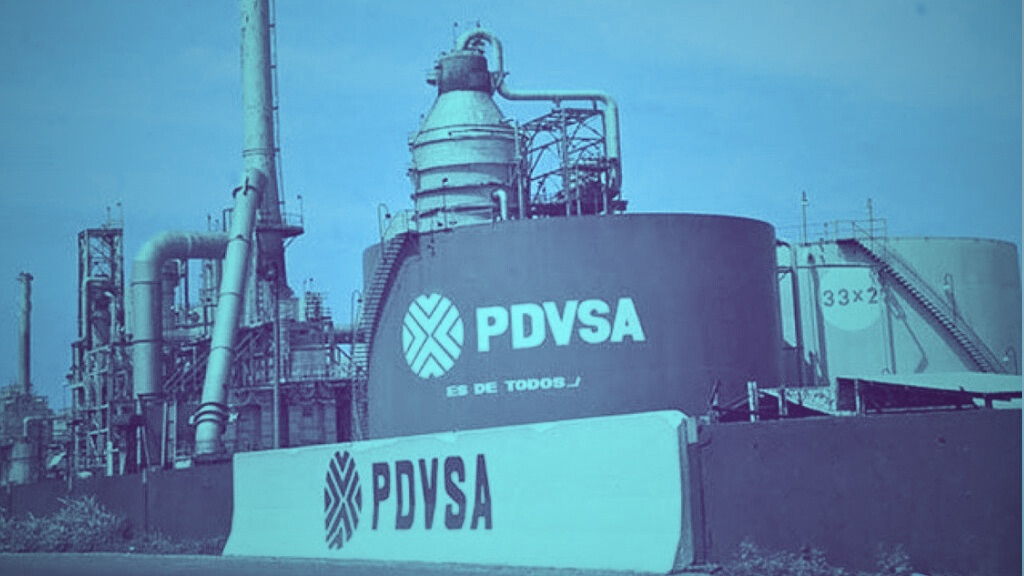
Who really stands to gain from Trump’s gunboat diplomacy? It’s most directly the elites who bankrolled Trump’s campaign and continue bankrolling his ventures and Super PAC. It’s billionaires like Trump megadonor Paul Singer, whose hedge fund Elliott Management last November acquired Citgo, the U.S.-based former subsidiary of Venezuela’s state-run oil company, PVDSA. Citgo’s oil refineries stand to make huge profits from Venezuela’s heavy crude oil reserves, according to the executive director of refining and oil products at the energy data provider OPIS, who called this access “a game changer for U.S. Gulf Coast and West Coast refiners in terms of profitability.” A Wood Mackenzie crude markets analyst told the Financial Times that “Near-term, Gulf Coast refiners could be among the biggest winners of shifts that could occur here.”
That means profits for other owners of Gulf Coast refineries, such as Valero Energy, Phillips 66, and Marathon Petroleum, whose facilities already import Venezuelan heavy crude and could import more. Indeed, Secretary of State Marco Rubio said in a television interview that “Our refineries in the Gulf Coast of the United States are the best in terms of refining the heavy crude” and predicted “tremendous demand and interest from private industry.”
A Big Oil–friendly government in Venezuela could also benefit corporations like ExxonMobil and ConocoPhillips in their long-running legal battles against the Venezuelan government. These oil giants have used the controversial investor-state dispute settlement system hidden in obscure investment treaties to claim tens of billions from the Venezuelan government following the companies’ refusal to cooperate with the government’s restructuring of the oil sector. Those companies were ultimately awarded $1.6 billion and $8.7 billion, respectively from shadowy international arbitration tribunals, which the Venezuelan government refused to pay. In December, Halliburton Co., the massive multinational oil service company embroiled in controversies dating back to its role in the Iraq war under former CEO and Vice President Dick Cheney, used a Barbados subsidiary to launch a claim against the Venezuelan government. That claim, under a Barbados-Venezuela investment treaty, demanded more than $200 million in compensation for its losses as it ceased operations to comply with U.S. sanctions against the country. These claims will likely serve as a starting point for Trump to force payments to Big Oil.
Privatizing Profits, Socializing Costs and Risks
Despite these prospects for short-term profits for the few, rebuilding Venezuela’s battered oil industry in the long term will require a massive influx of capital. The fossil fuel industry is unwilling to take on this risk without some sort of taxpayer-backed guarantee.
Energy consultancy Rystad Energy estimates that merely maintaining Venezuelan oil production at current levels will require about $3.5 billion per year over the next 15 years. Beyond that, an additional $8 billion to $9 billion every year would be required to provide a significant boost in Venezuelan production, in a time when future oil and gas demand is uncertain and fossil fuel alternatives are still advancing rapidly despite a retreat in the U.S.
With global oil prices currently below $60 per barrel, drilling in battered Venezuela does not make much economic sense when cheaper places to drill are available. “It’s hard to imagine increases beyond 300,000–400,000 barrels a day in the next year, just given the degraded state of the infrastructure, especially the upgraders,” a top Goldman Sachs analyst said at an energy conference, according to Reuters. It could take until 2030 for Venezuela to reach 1.5 million to 2 million barrels per day, and that would require significant support from the U.S. government, according to Goldman Sachs.
In short, investing in Venezuela carries risk, and Big Oil companies have a long history of demanding that taxpayers shoulder their risks, even when they choose to operate in politically volatile jurisdictions. They rake in billions in profit exploiting the natural resources from impoverished nations, then demand taxpayer compensation if those nations require them to clean up their pollution or if affected communities convince their governments to halt harmful projects. And so it seems likely that these companies are going to require their investments in Venezuela to have some sort of “guarantees and conditions”—that’s the exact phrase Marco Rubio used on Face the Nation on Monday. Already, Richard Goldberg, who led the White House’s National Energy Dominance Council until August, has said the administration could offer financial incentives from the Export-Import Bank and the U.S. International Development Finance Corp. to subsidize companies returning to Venezuela.
Trump has now confirmed in an interview with the New York Times that there will be extensive U.S. involvement. “We will rebuild it in a very profitable way,” Trump said. “We’re going to be using oil, and we’re going to be taking oil. “Energy Secretary Chris Wright, himself a former fracking industry executive, has made it clear that the U.S. government will be in control of Venezuelan production indefinitely. “Going forward, we will sell the production that comes out of Venezuela into the marketplace,” Wright said at a Goldman Sachs energy conference.
Congress must therefore be on the lookout for Trump to offer any federal government guarantee to Big Oil that would force American taxpayers—or use the proceeds from purloined Venezuelan oil—to cover all or some of the risk of their investments in Venezuela, or to provide Big Oil with extreme investor rights that allow them to bypass domestic courts and seek billions in compensation from Venezuelan taxpayers. A responsible Congress would stop any such scheme, especially given doubts that it makes economic sense without government support.
How Lawmakers Should Respond
Lawmakers in Congress must be aggressive in reacting to and watchdogging Trump’s imperial racketeering. Fundamentally, Trump’s invasion reveals what has been evident from the very start of his brand of right-wing faux-populism. This is a scam designed to cloak the greed of a small number of billionaires in the mantle of patriotic nationalism so that their profits can be insured by the public—all while this administration continues to jack up health insurance costs and cut programs that support working people. And, unless there is sufficient public and Congressional outrage and opposition, we should not expect it will stop with Venezuela. Should Trump proceed with any unhinged plan to annex Greenland next, the minerals and oil and gas reserves buried there will not be safeguarded for our collective national welfare; they’ll go to Trump’s billionaire friends, to be exploited in the most profitable ways available to them.
Congressional leaders should be clear about this reality in all their public communications, and should pursue every possible legislative tool that could block—or at least draw attention to—efforts by the administration to further subsidize or provide taxpayer-backed guarantees to Big Oil, or to utilize proceeds from Venezuelan oil as extraconstitutional slush funds.
That means, for example, preventing the Trump Administration from using federal programs like the Development Finance Corporation (DFC) to provide risk insurance and other subsidies for Big Oil. The fiscal year 2026 military spending legislation passed in December expanded the DFC’s investment cap from $60 billion to $205 billion and created a separate, brand-new $5 billion revolving equity fund. While the reauthorization lists the “Bolivarian Republic of Venezuela” as a country ineligible for DFC projects, Trump could get the name of the country changed or simply cite national security as justification to override this congressional restriction and assume his Supreme Court will let him do it.
That said, it is important for Congress to aggressively and explicitly block any Trump administration efforts to use federal agencies, or illegally grabbed Venezuelan oil proceeds, to subsidize or give handouts to Big Oil under Trump’s violent Venezuela imperialism.