Get to Know Rick Morris
Public Citizen News / Jan-Feb 2026
This article appeared in the January/February 2026 edition of Public Citizen News. Download the full edition here.
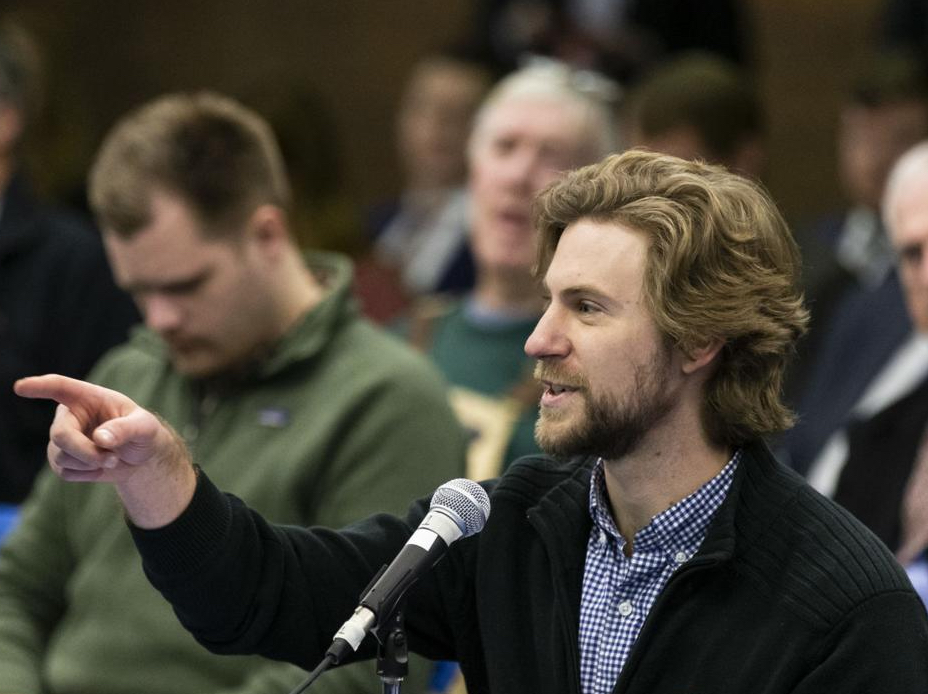
Since 2023, Rick Morris has served as an insurance campaigner with Public Citizen’s Climate Program, advocating for bold action to safeguard consumers and the environment from financial institutions that have driven the climate to the tipping point. His path to this work began far from the insurance world: after studying religion at Wheaton College and Princeton Seminary, he gravitated toward environmental justice work. Originally from New Jersey and long drawn to the outdoors, Morris moved to Minnesota in 2014, where he raised money for the Land Stewardship Project and later became a clean energy organizer with the Sierra Club. It was at the latter organization that he took up skiing. He loved the sport so much that he quit his job to relocate to Vermont and work on ski patrol before transitioning to his role at Public Citizen. Outside of work, Morris met his fiancée, a fellow mountain enthusiast, on the slopes and the two are now planning a move to Utah to support her career.
- You’ve worked on environmental justice campaigns focused on the harms of extracting and burning fossil fuels. Was there a particular community or campaign that shaped how you think about the connection between climate and equity?
Pipeline fights opened my eyes to the connection between pollution and racism. From Standing Rock to Iowa resisting the Dakota Access Pipeline, and throughout northern Minnesota fighting against Line 3, I saw that these projects consistently ran through Native and low-income communities. Racism and classism allow powerful interests to write off these communities as sacrifice zones. Antiracism, justice, and equity must be at the center of any successful climate effort.
- Tell us about your career path to climate advocacy.
While finishing graduate school, I worked at a group home where we saw that LGBTQ+ kids routinely faced discrimination and abuse within the child welfare system. We organized a campaign urging the state to recognize and protect the children’s gender and sexual identities. That experience was my turning point: it made me want to address the root causes that created those harms. Now I work on what I see as the most essential cause of our time: climate change.
- Before joining Public Citizen, you spent time working on the front lines of environmental justice. How has that grassroots perspective informed your approach to campaigning against financial institutions now?
Grassroots organizing taught me there are two sources of power: organized money and organized people. Our opponents have all of the former, so we need to go all in on the latter. The core of my work is sparking, connecting, and resourcing a people-powered movement. Public Citizen is not just a think tank, but a “do tank.” Having the right answers to problems is rarely enough. You need to build power, and ours comes from the people.
- What’s something you wish more people understood about the role of the insurance industry in the climate crisis?
Despite its opacity, the industry operates on a simple model: maximize premium income, minimize claims costs, and invest customer money for big returns. Here’s the kicker: fossil fuel projects cannot secure financing without insurance, and the industry holds an estimated half a trillion dollars in fossil fuel investments. The sector just saw its most profitable year ever. Its influence on the climate crisis is enormous.
- Public Citizen’s climate program pushes for systemic change in industries that often resist it. How do you stay motivated when progress feels incremental?
To quote Wendell Berry, “it all turns on affection.” Without affection for people and the land, this work becomes impossible to sustain. Once you feel that affection, it’s impossible not to keep fighting.
- What’s one project or campaign you’ve worked on at Public Citizen that you’re especially proud of?
After the Eaton and Palisades fires in California, we worked with survivor groups to demand accountability from insurers that were denying, delaying, and underpaying claims. The pressure worked! The state is now investigating State Farm. It’s rare to see quick wins in this work, especially ones that help people so directly.
- What is one thing that someone might be surprised to learn about you?
I love cooking as much as skiing! My dream is to run a bed-and-breakfast in the mountains– cooking in the morning, skiing in the afternoon, and fitting in a bit of advocacy in between.