Community Effort Takes Aim at Plastic Pollution in Lady Bird Lake
By Jazmin Storrs
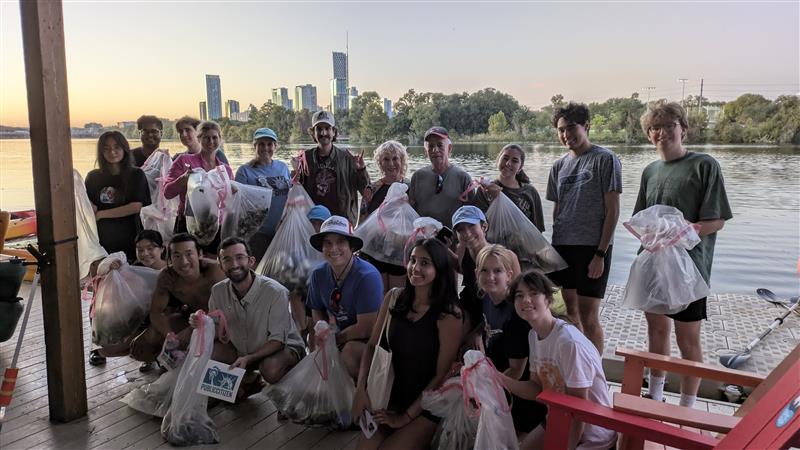
In early November, Public Citizen partnered with Epic SUP, an Austin-based kayak and paddleboard distributor, to host a community cleanup on Lady Bird Lake. Volunteers from UT, local nonprofits, and nearby neighborhoods spent the evening collecting plastic waste that has polluted our waterways — from bottle caps nearly blending in with algae to chip bags and other food wrappers, plastic straws, full water bottles, plastic bags, plastic flossers, and even pieces of clothing. Each item served as a reminder of how easily plastics find their way into the environment, slowly breaking down into smaller fragments that contribute to plastic pollution.
While cleanups help remove what we can see floating on the surface, the greatest danger is often what we can’t see.
What are microplastics?
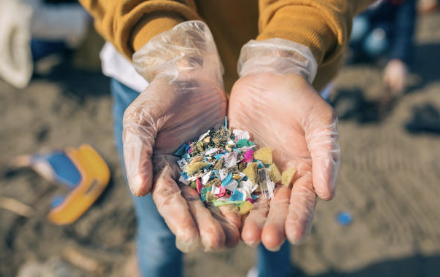
 Austin’s lakes and creeks are some of the most cherished parts of our city. However, beneath the surface, a growing threat accumulates. We all notice the floating bottles and wrappers, yet what’s harder to see are the tiny fragments these items break into over time. Microplastics are pieces of plastic smaller than five millimeters that come from everyday products such as the polyester in our favorite shirts, the wear from car tires, and even the packaging from a bag of chips. Due to their size, they can easily slip through water treatment systems and enter the environment, where turtles, fish, and birds can ingest them. Microplastics degrade further into nanoplastics, which are between 1 and 1,000 nanometers in size and can penetrate cell walls and cross through the placenta and enter an unborn fetus.
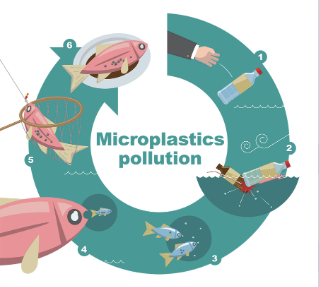
Once these plastics enter the food chain, they eventually reach our dinner table. Serving microplastics for dinner is not only unappetizing, but it can also pose real health risks.
Health Impacts
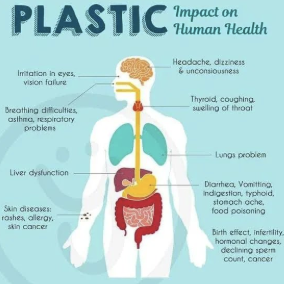
Microplastics are everywhere, and often in places we least expect. They have been detected in bottled and tap water, the air we breathe, and even sea salt. As our exposure to microplastics increases, so do the associated health risks. Here are a few alarming statistics from research organizations:
- One study found that people who drink exclusively bottled water may consume over 130,000 microplastic particles every year, compared to about 4,000 for those who rely mostly on tap water (National Geographic Summary).
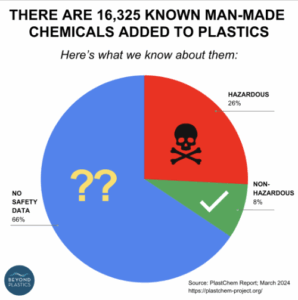
- More than 16,000 chemicals are used to make plastic, including at least 4,200 that scientists classify as chemicals of concern and nearly 9,800 that haven’t been tested for safety (Beyond Plastics)
- Plastic particles have now been detected in the bloodstream of around 80% of people tested, suggesting they are circulating throughout the human body (The Guardian).
- Plastics contain chemicals that interfere with hormones that regulate growth, metabolism, and reproductive health. These endocrine-disrupting chemicals have been linked to developmental issues, infertility, and some cancers (Endocrine Society).
While scientists are working to understand the full impacts, early research shows that our bodies are not designed to process plastic. Once these particles enter the human body, they accumulate. As plastic production continues to rise, so does the risk to our long-term health and our ecosystems.
Plastics in Austin
This issue affects not only our oceans, but also the bodies of water in our city of Austin.
Recent research conducted by Danielle Zaleski, a geology student at the University of Texas, found that Lady Bird Lake and nearby Lake Austin are accumulating thousands of microplastic particles in every 100 grams of sediment. The highest concentrations, around 4,600 particles per 100 grams, were found in the most recent sediment layers, compared to approximately 200 particles in the oldest layers.
Even more troubling: Lady Bird Lake showed five times more microplastics than Lake Austin, indicating that stormwater runoff and tire wear are significant contributors to urban pollution.

Changing Our Lifestyle
In a world where plastics are widely used, how can we escape their impact? While it’s nearly impossible to avoid plastic entirely, and broader policy changes are needed to address production and marketing, there are still many practical alternatives you can start using in your daily life now.
- Food storage/packaging: glass jars, stainless steel containers (buy food in bulk)
- Cookware: cast iron, stainless steel, ceramic-coated
- Utensils: reusable metal or bamboo sets
- Coffee & Tea: loose-leaf or pod-free methods (e.g., French press).
- Water bottles: stainless steel or glass
- Cleaning: washable natural-fiber cloths, cellulose sponges, loofahs, Swedish dishcloths
- Clothes: linen, hemp, organic cotton, wool, thrifting
- Brushes: wood/bamboo handles
- Body & hair care: loofahs, solid bars, refillable or non-plastic packaging
- Laundry: wool dryer balls instead of synthetic dryer sheets
- Menstrual products: menstrual cups, organic cotton materials
- Office supplies: refillable pens and metal mechanical pencils
- Trash bags: compostable bags
- Transportation: durable, low-wear tires, or use public transit
Support Local Change
Taking action in your own community is a crucial part of tackling plastic pollution. At Public Citizen, we believe that local-level advocacy can drive real change. Here are some ways to get involved:
Policy and Advocacy
- Advocate for phasing out single-use plastics in city buildings and parks
- Expand water refill stations across the city
- Ask for better incentives for restaurants to use alternatives to plastic
- Support funding for additional litter cleanup crews
- Speak at City Council meetings: ly/ATXcouncilmeetings
- Find your City Council member: gov/government
Reporting and Volunteering
- Report trash in waterways: Austin 3-1-1 → “Litter in Waterways”
- Participate in local initiatives:
- Public Citizen: educational, cleanup events, and policy advocacy
- Austin Resource Recovery: Zero Waste Block Leaders, recycling outreach
- Austin Watershed Protection Dept.: cleanups and storm-drain projects
- Austin Creative Reuse: preparing donated materials for reuse
- Shoal Creek Conservancy: creek cleanups and stormwater education
- Keep Austin Beautiful (KAB): creek, park, and street cleanups
Support Broader Efforts
Plastic production is big business and addressing its pollution requires international cooperation. In March 2022, the UN Environment Assembly adopted a historic resolution to develop an international legally binding instrument on plastic pollution, including in the marine environment. The resolution requested the Executive Director of the UN Environment Programme (UNEP) to convene an Intergovernmental Negotiating Committee to develop an instrument, based on a comprehensive approach that addresses the full life cycle of plastic, including its production, design, and disposal. This “instrument” is referred to as the Global Plastics Treaty. To be effective, this treaty must limit the production of new plastics.
- Advocate for a Global Plastics Treaty: org/plastics-treaty

Moving Forward
When our volunteers set out to collect trash from the water, they are actively preventing the formation of future microplastics. Every bottle retrieved is one less item that will break down into thousands of microscopic pieces. Beyond removing litter, we can all address the problem at its source by choosing reusable alternatives to single-use items, reducing reliance on bottled water, and preventing waste from entering waterways.
Austin takes pride in caring for the places we cherish. Protecting our lakes and rivers from plastic pollution is a vital way to uphold that commitment and ensure that our waterways remain safe and healthy for the communities and ecosystems that rely on them.
Jazmin Storrs is a student at the University of Texas at Austin and an Environmental Policy intern with Public Citizen’s Texas office.