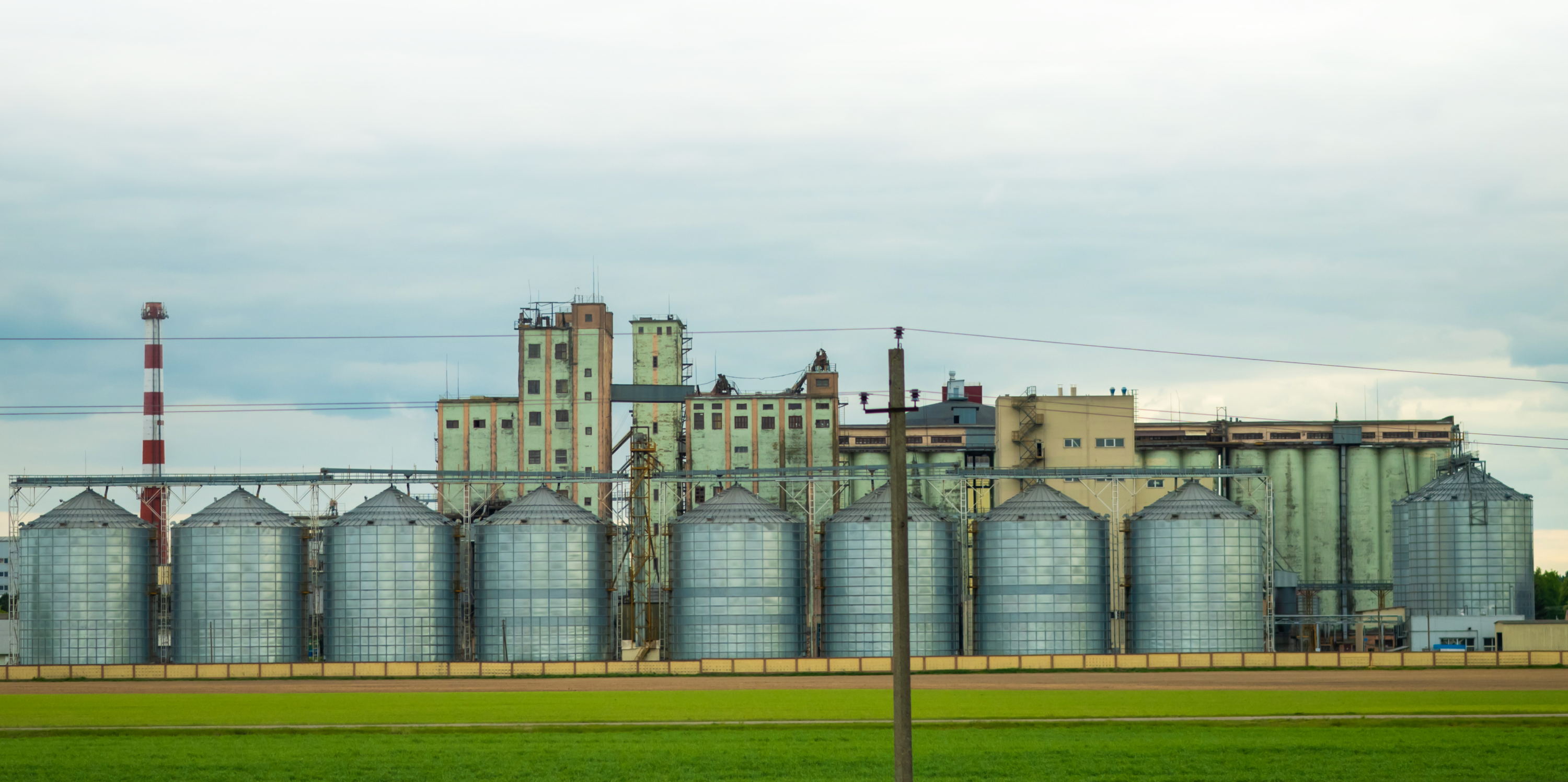
Trump’s Trade Deals Put Agribusiness Before Farmers & Food Safety
By Nghia Nguyen
President Donald Trump claimed to be the most “pro-farmer” president in history, and yet has presided over the worst farm economy in memory. American farm bankruptcies jumped by 46% in 2025, the second consecutive annual increase. Trump’s trade policies have created uncertainty for farmers while continuing to boost the interests of Big Agribusiness. His chaotic and illegal tariffs get most of the attention, but his bilateral trade deals are filled with giveaways to Big Agribusiness while harming farmers and ranchers at home and people who eat food around the world.
Since early 2025, the administration has concluded ten trade deals called the “Agreements on Reciprocal Trade” (ARTs). A smaller number of frameworks for ARTS and “early harvest” trade deals have also been announced.[1] While Trump railed against free trade deals like NAFTA, agricultural provisions in the ARTs mostly repackage the corporate wishlist for multinational exporters seen in earlier deals where industrial grain exporters and factory meat farms win market access, wide-open volume limits, and a friendly regulatory environment for high-volume exports; agricultural biotech firms win strengthened intellectual property rights and favorable pesticide rules.
These ARTs take away food and agriculture policymaking, limiting trading partners’ ability to manage agricultural imports in the public interest and strengthen consumer, environmental, or other protections to fit local needs. Certain provisions restrict the partner’s regulatory decision-making about biodiversity, crop varieties, or production methods, and discourage precautionary food safety practices. Other provisions limit consumers’ right to know and make informed choices by restricting food labels on pesticides or genetically modified foods. Additional intellectual property-related provisions help agricultural biotech companies but threaten traditional farming practices. Many ARTs also include previously unseen multiyear managed-trade purchase commitments that guarantee billions in sales to politically connected exporters. Nothing in the ARTs helps small and family farmers or rural workers deal with trade competition, consolidation, displacement, or climate crisis.
What is new about these trade deals is their extreme asymmetry and striking lack of reciprocity.[2] The U.S. makes almost no binding concessions, while the partner country is left shouldering all the obligations.[3] The U.S. agreement to apply lower tariff rate(s) listed in annexes can be changed at any time. In many ways, the ARTs mark a return to unabashedly neocolonial negotiations full of threats and coercion. As Malaysia’s Trade Minister admitted, “Malaysia would not have willingly and voluntarily entered into the ART, which was not negotiated on an equal footing” but had “no choice.”
The U.S. keeps trying to ram its corporate-driven, export model wherever it can. For decades, U.S. trade negotiators and agribusiness interests have challenged rules they say constrain U.S. commodity exports, at the expense of other countries’ choices on food and farm policy. Since NAFTA, through the USMCA and continuing through the 2026 USMCA review, the U.S. has attacked Canada’s dairy supply management system, which includes production and import controls. Canadian Dairy farmers credit that system of balancing commodity supply and demand with helping support farmer livelihoods by stabilizing farm prices and preventing ruinous oversupply and production. The ART with Indonesia limits commodity supply programs such as Canada’s. In that deal, Jakarta agreed to limits on imposing or maintaining “quantitative restrictions, including through the application of import licenses, a commodity balance program, or similar measures, on imports of originating goods of the United States.” The ARTs with Taiwan, Guatemala, and Argentina have similar provisions that prohibit quotas and either eliminate import licensing or make it automatic on U.S. goods.
Agribusiness market access takes priority over food safety and public health.
The U.S. food safety system is in disarray and fails to protect Americans. The GAO writes, “one in six Americans get sick, and 3,000 die from foodborne illness every year,” plus tens of millions are harmed and tens of thousands hospitalized annually. The FDA hasn’t met domestic food facility inspection targets since 2018 and is consistently “short” on foreign food facilities. The USDA also repeatedly fails to meet meat and poultry inspection and safety standards. These structural food safety issues are worsened by food safety standards already captured by private industry and corporate interests, and then further weakened by Health Secretary Robert Kennedy Jr. and his MAHA mania, undermining our health standards at every turn. Multiple Senators have accused Secretary Kennedy Jr. of “sabotaging food safety” after federal surveillance programs stopped tracking most foodborne pathogens in 2025. The Cyclospora outbreak through the Spring and Summer sickened 20,000 persons across the country, and recurring outbreaks of listeria, salmonella, and other foodborne pathogens show the public is dangerously vulnerable.
In this worrying context, the Trump administration has included provisions in the ARTs that compel the partner countries to accept U.S. standards as satisfying their own requirements for food imports.
Food safety and public health regulations are treated as a trade barrier.
The ARTs typically treat other countries’ food‑safety standards, labels, and other domestic safeguards as “non‑tariff barriers” or “illegal barriers to trade” to be eliminated or weakened. These trade rules reduce democratic governance and national sovereignty, and narrow policy space by treating public-interest regulations as trade violations and restricting governments from adopting stronger protections or managing agricultural imports.[4] Every completed ART requires partners to make their sanitary and phytosanitary (SPS) rules “science- and risk-based.”[5] For example, the Bangladesh ART requires Dhaka to “ensure that its sanitary and phytosanitary (SPS) measures are science- and risk-based and do not operate as disguised restrictions on bilateral trade [and] remove unjustified SPS barriers in areas that undermine reciprocity.” Dhaka must also “recognize that the U.S. sanitary and phytosanitary (SPS) measures and other measures for food and agricultural products, including technical regulations and standards, adopted or maintained by the U.S. government,” satisfy the requirements of Bangladesh’s measures applied to food and agricultural products and specified to include those “related to food safety; the regulatory oversight of processed food production; labeling of perishable and processed foods,” and other measures. Similar variations of these SPS-related provisions exist across the ARTS.
Although the ostensible purpose of SPS rules is to boost trade and reduce exporter regulatory and compliance costs by providing a single, standard set of safety rules (referred to as harmonization), in practice, SPS language privileges the U.S. (de)regulatory approach to what counts as legitimate science, when much of the “science” is produced by the industry that wants to evade regulation. Additionally, the language requires partners to automatically accept U.S. standards and certifications for its imports, and effectively limits additional standards or review.
In effect, SPS rules demand trading partner acquiescence to an FDA/USDA inspection and certification system that the GAO has already found broken. Partners who want to challenge U.S. standards have the exceptionally high burden of proving every stricter standard is not “non-scientific,” discriminatory, or preferential. This has the deterrent effect of preventing the adoption of more precautionary measures, limiting independent scientific judgment, and denying more protective alternatives.
The ARTs add restrictions on biodiversity and biotech safeguards.
The issue of agricultural biotechnology and GMO foods is a leading area of dispute in modern trade policy, as many trading partners have significant disagreement over what counts as science and risk-based standards, whether governments can protect biodiversity and public health by adopting more precautionary standards, approval requirements, and whether right-to-know labeling requirements can be attacked as unjustified trade barriers that obstruct agribusiness exports. These competing priorities were on full display in a landmark WTO dispute where the U.S.’s corporate-friendly approach ultimately prevailed against the European Communities’ more precautionary regulatory approach over the approval and marketing of biotech ag products.[6] The WTO generally found in favor of the U.S., finding the moratorium caused unjustified delays and that the member state safeguard measures were not based on the WTO-required risk assessment. More recently, the U.S. used the U.S.-Mexico-Canada Agreement (USMCA) to challenge Mexico over restrictions on genetically engineered corn, despite substantial multifaceted and scientific evidence that Mexico’s actions serve to protect biodiversity, Indigenous Peoples’ rights, cultural heritage, food sovereignty and self-sufficiency. The U.S. called its win, “a major trade enforcement victory for U.S. corn growers, processors, and exporters.”
The measures used against Europe and Mexico carry forward in the ARTs through specific agricultural biotech provisions that refer back to familiar science- and risk-based regulatory frameworks and authorization processes. A few ARTs contain additional language that carves out a clear access-to-market pathway. These ARTs (including those with Bangladesh, El Salvador and Guatemala) require the country to allow any biotech product that can be legally sold in the United States to be imported and marketed “without requiring a pre-market review, deregulation, additional labeling requirements, or approval.”[7]
Provisions on pesticide rules and enforcement limit public protections.
Trade rules continue to limit governments’ ability to set and enforce stricter pesticide standards or conduct more rigorous inspections. The ARTs restrict stronger food pesticide rules mainly by including language on so-called Maximum Residue Limit (MRL) provisions and enforcement clauses that push partners to “recognize and accept the corresponding U.S. tolerances,” thereby restricting other governments from determining, based on their own population’s exposure and risk tolerance, what pesticide level or biotech product is safe to sell to their own citizens. Agricultural biotech giants push for MRL language in trade deals because it locks in residue tolerances and dictates practices that guarantee those companies can challenge more stringent standards and delay or undermine enforcement. For example, the Bangladesh and Taiwan ARTs state that those countries “shall limit suspension of U.S. entities based on MRL non-compliance … only after multiple instances of non-compliance,” and must give that entity a chance to dispute the finding before acting.
ARTs deeply curtail consumers’ right to know about the pesticides in their food. For example, if a country chooses to implement a mandatory label related to pesticides, such as “produced without pesticide X”, “contains residues of pesticide Y,” or more detailed pesticide disclosures, that requirement could be challenged as non-scientific, as a disguised trade restriction, or as violating other SPS obligations. This may be especially alarming given that the EPA under Trump has further loosened pesticide rules and approved five new PFAS “forever chemical” pesticides, called such because their chemical makeup means they “do not break down in the environment” and “can last thousands of years.”[8]
Current trade rules are used to attack consumers’ right to know. Congress first enacted mandatory country-of-origin labeling (COOL) in the 2002 Farm Bill on beef, pork, and other covered products so consumers could know where their food came from. After several implementation delays and revisions in the 2008 Farm Bill, the mandatory rule for beef and pork took effect in 2009. Canada and Mexico challenged the requirement at the WTO. The WTO ruled against the U.S. policy, and in order to avoid trade sanctions, Congress was forced to repeal COOL for beef and pork in December 2015. Renewed bipartisan support to reinstate COOL for beef has emerged in both Congress and the administration, even while, ironically, the U.S. continues to seek limits on other countries’ labeling requirements for U.S. imports in the ARTs. To date, the ARTs don’t address the issue of COOL on meat products specifically, but Taiwan’s agreement shows how an ART can limit the trading partners’ enforcement of COOL compliance. The Taiwan ART requires that for inspections of pork or pork products, Taiwan will “ensure that the nature and frequency of inspections conducted … for compliance with country of origin labeling requirements are based on the establishment’s record of compliance with the country of origin labeling requirements.” Future ARTs could likewise include constraints on COOL requirements or their enforcement.
The ARTs advance corporate control measures over farmers’ traditional seed practices.
The ARTs also undermine, and in many ways prohibit, traditional small-scale and indigenous farm seed-planting practices. All ARTs contain language advancing the 1991 UPOV Convention, a treaty that restricts farmers’ rights to save and replant protected seeds from their own harvest. The convention significantly extends the intellectual property rights of seed breeders and helps maximize biotech giants’ profits at the expense of farmers’ rights, traditional farm practices, biodiversity, and overall food security in developing nations. Restrictions on replanting seeds and farmers’use can also deepen recurring dependency on the purchase of expensive purchases of seed and associated inputs, potentially raising production and borrowing costs for farmers and other issues.[9] Hundreds of farmer-led and Indigenous groups around the world have led protests against UPOV for decades.
The ARTs use a few different mechanisms to pursue 1991 UPOV. Some ARTs contain language requiring the partner to “ratify or accede to and fully implement” the 1991 UPOV convention; Taiwan’s requires it to “adopt, maintain, and implement laws, regulations, and all other measures necessary to comply with” 1991 UPOV; while the ARTs with Ecuador, Argentina, and El Salvador each require the country to submit a request for accession to the 1991 UPOV Convention to their respective legislatures within a limited time period.
“Managed trade” commitments deliver billions in profits for Big Agribusiness.
Many of the ARTs also contain a new feature of specific government-brokered “managed trade” purchase commitments that lock partners into importing billions of dollars worth of U.S. goods like bulk sales of agricultural commodities, fossil fuels, aircraft, and other items with no reciprocal U.S. purchase obligation. Indonesia’s ART obligates it to “support and facilitate” multiyear “commercial arrangements to import” at least $4.5 billion of agricultural commodities, including five years of annual imports of about 7.7 billion pounds of soybeans, 8.4 billion pounds of soybean meal, 4.4 billion pounds of wheat, and 359 million pounds of cotton, plus guaranteed increased imports of a dozen other high‑value products like beef and rice thereafter. Bangladesh is obligated to “purchase, or to facilitate the purchase” of at least $3.5 billion on similar commodities, such as soy (at least $1.25 billion USD or 5.7 billion pounds), wheat (at least 1.5 billion pounds annually for five years), and cotton.
Beyond the completed ARTs, the administration has announced several purchase commitments through framework ART agreements and other trade deals. The White House has not publicized the texts of the frameworks, but accompanying fact sheets provide a glimpse into the terms of these non-binding agreements. The framework ART with Thailand ostensibly includes “purchase of agriculture products including feed corn, soybean meal… with an estimated value of $2.6 billion per year.” A framework ART with Vietnam describes 20 MOUs “to purchase U.S. agricultural commodities, with a total estimated value of over $2.9 billion.” The White House also announced a trade framework with Japan including a “commitment to purchase $8 billion of U.S. agricultural goods;” and commitments with China to “ purchase at least $17 billion per year of U.S. agricultural products in 2026 (prorated), 2027, and 2028” in addition to an earlier soybean purchase commitment made in 2025.
The huge-volume, multi-year commitments of specific commodities in the ARTs are more likely to benefit the large farms, processors, grain traders, and exporters that already dominate world markets.[10] Although some small and mid-size farms grow commodity crops for export, typical small family farmers do not produce at the scale, or have the storage or logistics capacity, to benefit from these managed export provisions. An individual farmer doesn’t own grain terminals, ports, and ships, but giants like ADM and Cargill do, and these trade commitments do not guarantee smaller farms will share in these benefits.[11]
These multiyear managed trade commitments also lessen the partner country’s flexibility to adjust agricultural policy to domestic conditions and respond to changes in production or demand. The vast import of U.S. agricultural commodities could crowd out local production or create downward price pressure.
President Trump’s decision to allow tariff-free imports of EU-rejected meat raises concerns. In September 2026, President Trump signed a deal waiving tariffs on 661 million pounds of beef imports over three months (ostensibly to lower food prices), in a scheme he announced one day after meeting with a fellow billionaire who co-owns the scandal-ridden Brazilian company JBS, the world’s largest meatpacking company. Said billionaire Joesley Batista, the single largest donor to Trump’s inaugural fund through a JBS subsidiary, met with the president in the Oval Office and lobbied him to lift a 26% import duty on Brazilian beef. The meeting between Batista and Trump came after the EU announced it would halt Brazilian beef imports because meat from the country isn’t meeting its standards around antibiotic use and concerns around antibiotic resistance, leaving the Brazilian meatpackers with an immense surplus of export-ready meat and creating an urgent bottleneck that likely motivated JBS and Batista to aggressively lobby Trump for a tariff-free outlet in the U.S. The American Farm Bureau called for the plan’s reversal, due to its harm to U.S. beef producers, with no guarantee that the reduction in tariffs on imported beef would be passed on to American grocery bills.
Small-scale farmers and rural communities are in crisis.
Chaotic tariffs, trade retaliation, and decades of trade deals that favor Big Agribusiness have brought many small-scale farmers and their rural communities to the breaking point.
Trump’s trade war shows the vulnerability of an agricultural system built around export dependence. Amidst an escalating trade war over reciprocal tariffs with China, a major market for U.S. agricultural exports, China sharply reduced its purchases in 2025. U.S. agricultural exports to China fell approximately 66% from the previous year, to $8.4 billion. and turned to other countries such as Brazil and Argentina. U.S. soybean farmers were especially hit.
According to Karen Hansen-Kuhn at the Institute for Agriculture and Trade Policy (IATP), many small farms “are locked into the vicious cycle of farm programs that compel them to grow a few crops and depend on the prices set in export markets. So, when the Chinese soy market shut down, small farmers were hurt too, and they had less support than large Agribusiness to recover.” With U.S. farm debt at historic levels and Chapter 12 farm bankruptcy filings rising 46% to 315 in 2025, the second consecutive annual increase, it is scandalous that the ARTs are silent about price shocks, farm consolidation, and displacement of farmers and rural workers. Small-scale U.S. farmers and farmers abroad do not receive anywhere near enough transition support when they are on the losing end of trade policy, nor any relief from the squeeze they experience when Big Agribusiness dictates the terms of these deals. These agreements also fail to even mention climate change, which is an existential threat to the livelihoods of family farmers. While Big Agribusiness has deep resources to take on leverage, diversify, and adapt their supply chains as the impacts of climate change accelerate, family farms have little protection against increased extreme weather events, including droughts and flooding, shifting seasons, or changing markets brought about by our changing climate.
TABLE: Agriculture and food-related provisions vary across Trump’s ARTs.
The following table shows (in RED) which ARTs contain provisions related to:
- Sanitary and phytosanitary (SPS) standards – Mandating acceptance of U.S. standards and regulations,
- Agricultural biotechnology – Mandating imports of genetically modified foodstuffs that are legal in the United States without pre-market review or additional labeling requirements.
- Maximum Residue Levels (MRLs) – Mandating how much pesticide and chemicals are allowed to stay on food.
- 1991 UPOV aka 1991 Act of the UPOV Convention – Mandating biotech property rights over farmer rights, and
- Agriculture Managed Trade Purchase Commitments
| Country | SPS | Agricultural Biotech | Pesticides (MRL) | UPOV 91 | Managed Trade |
|---|---|---|---|---|---|
| Argentina | Y | Y | |||
| Bangladesh | Y | Y | Y | Y | Y |
| Cambodia | Y | Y | |||
| Ecuador | Y | Y | |||
| El Salvador | Y | Y | Y | ||
| Guatemala | Y | Y | Y | ||
| Indonesia | Y | Y | Y | Y | Y |
| Jordan | Y | Y | Y | ||
| Malaysia | Y | Y | Y | Y | |
| Taiwan | Y | Y | Y | Y |
Trade policy must be rebalanced to benefit all of us, not just the politically connected.
U.S. trade policy did not devolve into a Big Agribusiness wishlist by accident. Agribusiness giants, large corporations, and their trade associations dominate the USTR and USDA agricultural advisory system with privileged access to trade negotiations, the texts being negotiated, and implementation and enforcement of existing agreements.
The Trump administration has flouted Congress’s constitutional authority over trade by bypassing Congress and implementing the ARTs exclusively through the executive branch. The Supreme Court ruled Trump’s “reciprocal” tariffs, which formed the basis of the negotiations, illegal. As such, the legal basis of these deals is questionable, and Congress should exercise its authority and demand that any trade deals be presented for scrutiny and approval before implementation. Similarly, other countries can point to the legal ambiguity of these deals and the Supreme Court decision to back out of these asymmetrical deals. Malaysia is one example. Though signed in October 2025, Kuala Lumpur still hasn’t ratified it at home. After the U.S. Supreme Court struck down the IEEPA tariff authority that supplied Trump’s negotiating leverage, Malaysia’s trade minister declared the deal “null and void” in March 2026. The deal’s current status remains unclear.
The new Congress should also work to undo the ARTs, and work with civil society and farm justice groups to demand mutually beneficial partnerships with our trading partners that elevate the interests of small farmers, food safety, and consumer right to know over the corporate profits of Big Agribusiness.
Endnotes
[1] Existing ARTs covering Argentina, Bangladesh, Cambodia, Ecuador, El Salvador, Guatemala, Indonesia, Jordan, Malaysia, and Taiwan. Framework ARTs for India, Thailand, and Vietnam have been announced.
[2] These deals are reciprocal in name only. As an example, in the 2026 Indonesia-U.S. ART, the phrase “Indonesia shall” appears more than 200 times. “United States shall” appears just nine.
[3] The asymmetry does have practical implications for Americans. Public Citizen noted previous trade deals forced U.S. consumers to accept imported food that relied on foreign inspection systems that may not meet domestic standards. In contrast, these ARTs are mostly one way, forcing partners to accept U.S exports abroad but mostly silent on U.S. treatment of foreign imports into the U.S.
[4] Even food based religious certification isn’t out of bounds for the USTR. For example the ART with Indonesia, a majority Muslim country, places a multitude of restrictions on the country’s governance of halal certification and halal labeling requirements involving U.S. products.
[5] While the ARTs insist on the use of “science” in regulatory decisions, U.S. regulators rely largely on confidential technical papers produced by the very companies seeking certification.
[6] In WTO DS291, the United State initiated dispute settlement with the European communities (EC) over a general EC moratorium and measures impacting approvals of biotech products, and certain member State safeguards on biotech import and marketing. The WTO generally found in favor of the U.S., finding the moratorium caused unjustified delays and that the member state safeguard measures were not based on the WTO required risk assessment.
[7] “Deregulation” is formal determination that a genetically modified plant is no longer subject to biotechnology-specific regulation. In the United States, developers may seek a determination of “nonregulated status” by demonstrating that the modified plant is not a plant pest. Deregulation language in the ARTS, therefore prevents the partner country from requiring its own equivalent nonregulated-status or commercial-release determination before allowing a qualifying U.S. biotech product to be imported and marketed. For more information, see: https://www.congress.gov/crs-product/IF11573.
[8] Trump’s moves rollback a February 2024 proposal by the EPA that nine PFAS be categorized as hazardous to human health — a designation only applied to substances that are toxic or cause cancer, genetic mutation, or embryo malformation.
[9]An example of how intellectual property patents impair farmer seed use rights, Monsanto’s licensing for Roundup Ready soybeans permitted planting for only one season and prohibited saving harvested seed for replanting, requiring farmers to continue using the licensing system to purchase new seed each year. Monsanto sued an Indiana farmer for reusing the seeds of patented, genetically engineered soybean Roundup Ready variety which he had purchased the year before. In a 2013 Supreme Court case, Bowman vs Monsanto, the court ruled that patent protections did not allow farmers to plant and grow patented seeds without the patent owners permission. According to a case description, Monsanto argued that it’s not fair to their company if they sell a patented product that a buyer can then use over and over again. The farmer Bowman insisted he was just doing what farmers like him have been doing for centuries – reusing seeds- to develop diverse crop varieties able to adapt to different soil types, climate challenges, and plant diseases.
[10] Big commodity exporters are also helped by the provisions included in the ARTs that strike down partner import quotas and quantitative restrictions. They are free to dump and flood partner markets!
[11] The agriculture sector is heavily consolidated and concentrated. Just four companies ADM/Archer Daniels Midland, Bunge, Cargill, and Louis Dreyfus Company, collectively known as the ABCDs handle around 50-60% of agricultural raw materials like cereals, oilseeds and protein crop, according to a 2024 report from the European Parliament.