How Trump Conned MAHA
MAHA Named 21 Dangerous Chemicals. The Trump Administration Went Easy on 20.
By Peter Whoriskey, Research Director
Key Findings
In May 2025 the Trump administration published the MAHA Report, a “call to action” on the declining health of American children. A key section of the report focused on the harm caused by chemicals in the environment, including pesticides, industrial pollutants, and emissions. U.S. Health and Human Services (HHS) Secretary Robert F. Kennedy, Jr., said President Donald Trump is willing to “stand up to industry when it’s the right thing to do.”
This Public Citizen report shows how far the Trump administration has strayed from the MAHA Report’s warnings about hazardous chemicals in the environment and ignored its own advice about corporate influence and corrupted science.
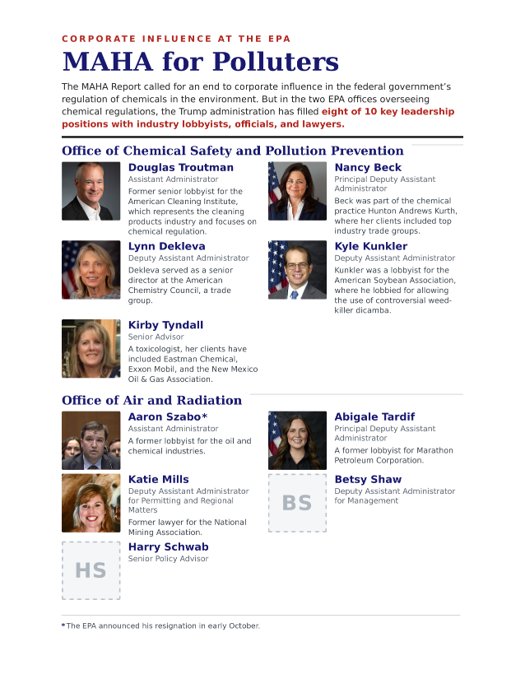
- Despite raising alarms about corporate influence and bias at the U.S. Environmental Protection Agency (EPA), the Trump administration staffed key regulatory posts with former industry lobbyists and employees (See Figure, page 9). Eight of the top 10 leadership posts in the EPA offices most closely overseeing chemical regulation were filled with people with industry ties. The deputy administrator overseeing them is an attorney who built his career defending companies the EPA regulates.
- Despite the MAHA Report’s claim that the Trump administration is committed to “gold-standard science to better understand… environmental exposures,” the administration disbanded the EPA’s Office of Research and Development, a division with more than 1,500 employees that for decades ferreted out environmental dangers. The Office of Research and Development had raised warnings about the dangers of formaldehyde, dioxins, and PFAS (perfluoroalkyl and polyfluoroalkyl substances), a large group of man-made chemicals are sometimes known as “forever chemicals.” The administration also abolished the EPA’s Clean Air Act Advisory Committee and appointed industry consultants and employees to the Clear Air Scientific Advisory Committee.
- For 20 of 21 environmental chemicals called out in the MAHA Report, the Trump administration has either moved toward loosening regulations protecting public health (nine chemicals); enacted no significant regulation (10 chemicals); or, in one case, endorsed the use of the herbicide glyphosate despite its links to cancer (see Table, page 5). For only one of the 21 chemicals named in the report — microplastics — has the Trump administration taken any step toward regulation, and at best it was a baby step. In preliminary reviews of two other chemical families, the EPA identified risks to workers but not the public. Those two are phthalates, the industrial chemicals used to make plastics softer and more flexible, and tetrabromobisphenol A [TBBPA], a widely used brominated flame retardant.
- Among the most egregious betrayals: The Trump administration (1) lifted limits on forever chemicals, which persist in the environment and human bodies and have been found in the drinking water of most Americans; (2) on air pollution, loosened regulation of “particulate matter,” the tiny airborne particles linked to respiratory and cardiovascular disease; and (3) on agricultural chemicals, defended and endorsed the use of glyphosate, even as the manufacturer faces tens of thousands of lawsuits from farmers and gardeners with cancer. These examples show how the Trump administration’s retreat on chemicals in the environment is failing to keep Americans healthy.
Earlier this year, leaders of the Make America Healthy Again (MAHA) movement warned the Trump administration that MAHA must be more than just a “catchy slogan.” As this report shows, however, MAHA is worse than an empty slogan. It’s a sham.
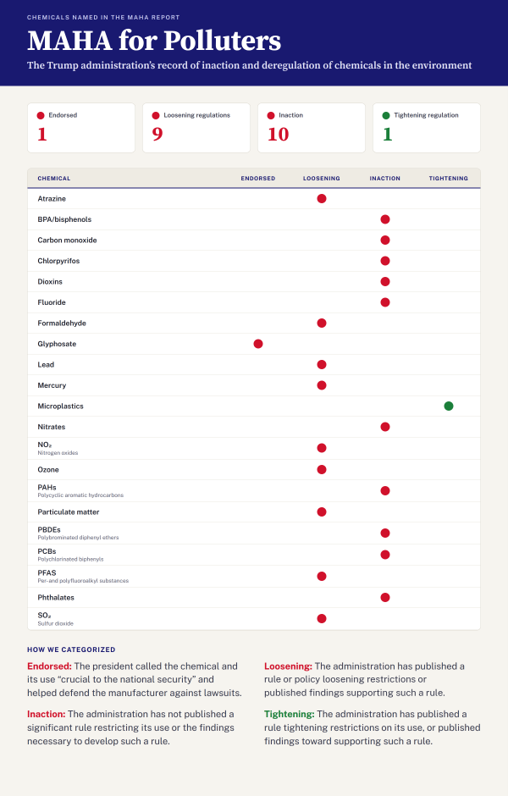
The MAHA Report called out 21 chemicals of concern in the environment. For 20 of those 21, the Trump administration has either moved toward loosening regulations protecting the public, left the regulation largely unchanged, or endorsed a chemical’s use.
Background
The MAHA movement arose out of the 2024 presidential campaign of HHS Secretary Kennedy, who had crusaded for years against vaccines and for freedom from “medical tyranny.” The movement grew to encompass wellness influencers and others critical of pesticides and food additives.
In February 2025, shortly after his second inauguration, Trump announced that he was acting to fulfill his MAHA campaign promises. He issued an executive order creating the MAHA Commission, a 14-member panel led by Kennedy.
Within months, the panel published the MAHA Report, formally known as the Make Our Children Healthy Again: Assessment, a damning checkup on American health and chronic disease, with sections on ultraprocessed foods, environmental chemicals, childhood behavior in the digital age, and the “overmedicalization of our kids.”
The report portrayed the United States as an environmental catastrophe, a dystopia in which some corporations pour poisons into the air and water and others corrupt our diets, leaving the enfeebled American public with cancer, learning disabilities, asthma, attention deficit hyperactivity disorder, and allergies.
“We are now the sickest country in the world,” Kennedy said at a MAHA press event, alongside Trump and other administration officials.
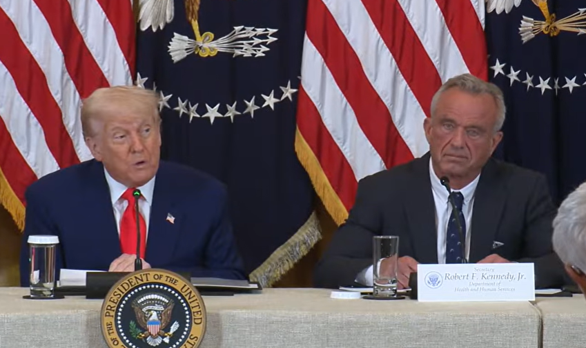
President Trump and HHS Secretary Robert F. Kennedy, Jr., unveiled the MAHA Report in May 2025.
This Public Citizen report focuses on the section of the MAHA Report about environmental chemicals. The section, titled “The Cumulative Load of Chemicals in Our Environment,“ cited more than 50 research studies providing evidence linking environmental toxins to a public health crisis.
The dangerous environmental contaminants are inescapable, the report said. “Virtually every breastmilk sample” tested in America contains persistent organic pollutants, including pesticides, microplastics, and dioxins, it warned. These same chemicals are also “commonly found” in the blood and urine of American children and pregnant women, some at “alarming levels.” Almost 90% of homes show measurable levels of at least one insecticide on their floors. “Hundreds of industrial chemicals and pollutants” can pass through the umbilical cord and placenta to reach the developing fetus.
“[T]here is a growing concern about the link between environmental health risks, particularly cumulative risks, and chronic disease,” the report warned. “Furthermore, in the past nearly 30 years, the chemicals children are exposed to have grown – and no country fully understands how the cumulative impact of this growth impacts health.”
Among those who celebrated the MAHA Report was Vani Hari, best known as the “Food Babe,” a MAHA influencer with more than three million followers.
“It was absolutely extraordinary today to see President Trump and the highest levels of leadership and coming out of the executive branch with this report,” she said. “We’ve been mass-poisoned as Americans. We’re in a chemical soup right now. There’s an amazing chart [in the report] that shows you all the chemical exposures that are happening to the human body and our small children.”
How the Trump administration betrayed the MAHA movement
The Trump administration ignored its own MAHA warnings about environmental chemicals by (1) embracing corporate influence at the EPA, (2) crippling the EPA’s scientific research, and (3) stalling and weakening the EPA’s regulation of environmental chemicals.
Embracing Corporate Influence at the EPA
For years, Kennedy, like other leaders in the MAHA movement, accused federal regulators of being controlled by corporate lobbyists and failing to protect Americans from dangerous industrial and agricultural chemicals. Accordingly, they campaigned to curtail corporate influence at the EPA and other federal agencies.
“I have been fighting big polluters and the corrupt ‘agency capture’ that has prevented effective government action on environmental threats for my entire career,” Kennedy wrote in a 2023 essay in Newsweek, where he cited the dangers of glyphosate, among other chemicals. “In effect, that agency capture has made the U.S. Environmental Protection Agency (EPA) a partner in crime with the corporations that poison our environment and endanger our health.”
In unveiling the MAHA Strategy Report, a follow-up report released in September 2025, Kennedy said no president had been more willing than Trump to stand up to industry.
“He says again and again, ‘I don’t care, this is children,’” Kennedy said at the press conference. “’We need to save the children.’”
In practice, however, the Trump administration has not only accommodated industry demands but appointed industry lobbyists and other officials to senior positions in the EPA.
The most prominent example is the appointment of David Fotouhi as deputy administrator of the EPA, the agency’s second-highest official. An attorney, Fotouhi built a career defending the companies the EPA regulates. For example, Fotouhi defended International Paper against lawsuits accusing the firm of contaminating the environment with forever chemicals. He represented a coalition of Washington-state businesses that sued the EPA over its water-quality standards for the pollutants known as polychlorinated biphenyls (PCBs). Fotouhi challenged the EPA’s ban on asbestos on behalf of a group of automobile manufacturers, claiming the EPA “failed to demonstrate” the risks of chrysotile asbestos, a proven human carcinogen.
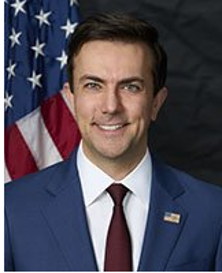
David Fotouhi, who built a career representing companies the EPA regulates, is a top EPA official in the Trump administration. (Photo from EPA)
The corporate influence at the EPA goes deeper into the agency’s ranks, however.
Within the agency, two key groups are charged with regulating toxic chemicals. The Office of Chemical Safety and Pollution Prevention (OCSPP) evaluates and regulates the risks of pesticides and industrial chemicals. The Office of Air and Radiation (OAR) evaluates and regulates air pollution from power plants, cars, and trucks.
The Trump administration filled eight of the 10 top leadership positions in these offices with industry-friendly appointees — officials, lawyers, and lobbyists who previously worked for chemical oil, chemical, and agriculture companies (see Figure, page 9).
For example, the chief of the OCSPP, EPA Assistant Administrator Douglas Troutman, is a former senior lobbyist for the American Cleaning Institute, a trade group representing manufacturers of household and industrial cleaning products and chemical distributors to the cleaning product industry. The group has lobbied the EPA on microplastics, tiny plastic particles less than 5 millimeters in size that have been detected inside the human body and in the environment, and, more broadly, on the implementation of toxic chemicals regulations.
Likewise, to lead OAR, EPA Trump appointed Aaron Szabo, a former lobbyist who previously represented the American Fuel and Petrochemical Manufacturers and American Petroleum Institute trade associations, as well as fossil fuel companies. His former clients lobbied the EPA on smog, particulate matter, and other air quality issues. (Szabo left the agency as this report was going to press.)
The lobbyists are not only inside the building, they are setting policy.
Crippling the EPA’s scientific research
Kennedy and others in the MAHA movement have criticized the environmental research establishment, which they view as corrupted by corporate bias.
Corporate interests have dominated and distorted scientific literature, academic institutions and medical journals, according to the MAHA Report.
It lamented that “government funding has been a small portion of the totality of research dollars being spent on chronic childhood disease,” and promised that the “U.S. government is committed to fostering radical transparency and gold-standard science to better understand the potential cumulative impacts of environmental exposures.”
Trump administration officials repeatedly refer to “gold-standard science,” but it has never defined the term.
The Trump administration, moreover, has severely cut funds for government scientific research.
The Trump administration disbanded the EPA’s scientific research arm, the Office of Research and Development (ORD). Since the 1970s, the ORD has conducted pivotal research on the effects of environmental chemicals on people and made important scientific contributions on PFAS, endocrine disruptors such as bisphenols, PCBs, and dioxins.
Of the ORD’s staff of more than 1,500 employees under the Biden administration, about a third are no longer with the government and another a third are still at the EPA but no longer working in research, two former officials told me in interviews. Many have been reassigned to EPA field offices. In place of ORD, EPA officials created a smaller unit, the Office of Applied Science and Environmental Solutions.
Among the key losses was the government’s air pollution research facility in Chapel Hill, North Carolina, the largest U.S. laboratory studying the effects of vehicle exhaust, soot, and other air pollutants on people.
The unraveling of ORD followed the ouster of all the members of the Clean Air Scientific Advisory Committee (CASAC), a key EPA advisory committee. CASAC advises EPA staff during required reviews of air quality standards for six pollutants, including lead, ozone, and particulate matter.
The Trump administration then appointed new members to CASAC, most of whom had worked for corporations whose products pollute the environment. Louis Anthony Cox, appointed the chair of CASAC in March 2026, has worked for the American Petroleum Institute, Exxon Mobil Corporation, and the American Chemistry Council and has suggested that tightening particulate matter controls might be harmful to public health.
“By removing these independent experts, this administration is—yet again—selling out our nation’s public health and environmental protections to the same polluting industries that bankrolled much of Trump’s campaign,” U.S. Senator Sheldon Whitehouse said in a statement in January 2025.
In 2025 the Trump administration also dissolved the Clean Air Act Advisory Committee, which provided independent advice on the implementation of the Clean Air Act.
Stalling and weakening the EPA’s regulation of environmental chemicals
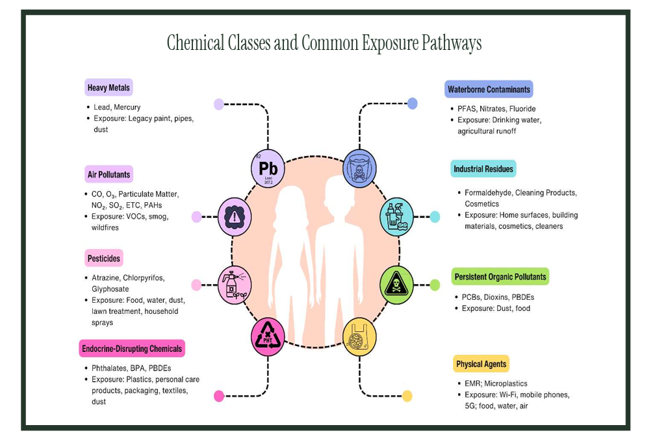
The MAHA Report includes a graphic, shown below, that summarizes the chemical classes and common exposure pathways for environmental chemicals.
“We must understand and ameliorate any potential links between cumulative chemical exposure and childhood chronic disease,” according to the report.
Source: MAHA Report
Although the message was urgent and specific, the Trump administration has been backtracking ever since.
In the MAHA Report, Public Citizen identified 21 environmental chemicals that were targeted for scrutiny (see Table, page 5). When the MAHA “Strategy Report” was released four months later, however, only three of the 21 environmental chemicals were mentioned at all.
The retreat was just beginning. In the 16 months since the MAHA Report highlighted those 21 chemicals, the Trump administration has moved toward loosening regulations on nine, enacted no significant regulation on ten, and, in one case — for the herbicide glyphosate — advocated its use despite links to cancer. The Trump administration also helped defend glyphosate’s manufacturer from lawsuits, as discussed in more detail below.
For only one of the 21 chemicals — microplastics — has the Trump administration moved toward regulation, and then only by a baby step. In April 2026 the administration announced that it was placing microplastics on a list of substances that could be considered for regulation in future years. The administration simultaneously announced that it would spend $144 million to study measuring and removing microplastics and nanoplastics from the human body.
In preliminary reviews of two chemical families, the EPA did identify “unreasonable” risks for workers but said they posed no such risks to the general public. In December 2025 the agency announced that five phthalates (industrial chemicals used to make plastics softer and more flexible) pose an “unreasonable risk” in workplaces, but the agency said it “found no products…that are causing unreasonable risk to the general population.” In June 2026, in a draft assessment of TBBPA, a widely used brominated flame retardant, the EPA found risks to workers who inhale it but “did not find unreasonable risk to consumers or the general population.” Neither finding is likely to produce a ban; regulations are more likely to require workplace controls.
Three examples
Three examples — PFAS (“forever chemicals”), particulate matter air pollution, and the herbicide glyphosate — show how the Trump administration’s retreat on environmental chemicals is failing to keep Americans safe.
PFAS, or “forever chemicals”
The MAHA movement has long focused on the dangers of PFAS, better known as “forever chemicals.”
Used in consumer products since the 1940s, maybe most famously in Teflon, a fluoropolymer coating used on cookware, and other nonstick products, PFAS have been linked to multiple cancers and reduced cognitive and motor development in children. These chemicals also have been used in food packaging, stain-resistant fabrics, and firefighting foam. In 2026, forever chemicals are commonly found in drinking water across the country, reaching about 176 million Americans.
The MAHA Report refers to PFAS seven times, citing five scientific sources that describe the dangers they pose and the ways that industry has concealed their harm. Almost 100% of the U.S. population is exposed to at least one PFAS, according to a 2022 report from the National Academies of Sciences, Engineering, and Medicine (NASEM). The “pervasiveness of the contamination is alarming,” the report said.
The NASEM report found sufficient or suggestive evidence of an association between PFAS and kidney, breast, and testicular cancer; thyroid disease; decreased fetal growth; and other afflictions. The Trump administration, however, loosened regulation of forever chemicals.
In May 2026 the EPA announced that it was rescinding previous federal limits on four PFAS substances that would have compelled public water systems to test for them and, if found, reduce their prevalence. For two other PFAS, the EPA retained the previously established limits but said it would allow public water systems to remain out of compliance until 2031.
In addition, the Trump administration stalled a PFAS study that would help the EPA understand which industries dump those chemicals into their wastewater, according to two former officials, the Associated Press reported. The study, a survey of wastewater treatment plants, was submitted to the White House for approval in 2024, during the Biden administration.
In the same May 2026 press release announcing that PFAS limits were being rescinded or delayed, Kennedy asserted nonetheless that the administration was taking steps to protect Americans.
Kennedy said that the Trump administration was working “to address environmental contributors to chronic disease and advance the Make America Healthy Again agenda.”
As proof of the administration’s commitment, the EPA announced nearly $1 billion in grant funding to address PFAS and other emerging contaminants in drinking water. This funding, however, was not a Trump administration initiative. The grant funding originated with the Infrastructure Investment and Jobs Act of 2021 and the Biden administration, which appropriated $5 billion for the purpose.
MAHA advocates were not pleased. After the announcement, Kelly Ryerson, a MAHA activist, wrote on X, the social media platform: “It is not MAHA to rescind limits on harmful forever chemicals in tap water, no matter how the EPA twists the legal logic to the benefit of chemical corp interests. Not buying it.”
Among the many people worried about the administration’s retreat on PFAS regulation is Brenda Hampton of Courtland, Alabama. Hampton started a community group after the local utility reported dangerously high levels of PFAS and advised against drinking tap water. Going door to door in her neighborhood, Hampton found that on two streets alone, there had been 54 cases of cancer and 14 cases of renal failure, she said in an interview.
“Going backward on PFAS is going to put a lot of people at risk,” she said. “It’s horrible what’s going on. When would you ever think that because of a glass of water you might get cancer 20 years later?”

After the discovery of PFAS in the drinking water in Courtland, Alabama, which draws water from the Tennessee River, Brenda Hampton saw a pattern of neighbors experiencing cancer and kidney troubles. (Photo courtesy of Brenda Hampton)
Particulate matter air pollution
The MAHA Report highlighted the dangers of “particulate matter,” the tiny particles in the air that come from human activities such as vehicle emissions and industrial processes. Also referred to as soot, particulate matter has been linked to heart attacks, asthma, and, for people with heart or lung disease, premature death.
The Trump administration moved quickly to loosen limits on the amount of particulate matter in the air.
In February 2024, under the Biden administration, the EPA had imposed stricter limits on particulate matter. In setting the stricter limits, EPA officials said they were acting in accordance with recent scientific findings. They said the new rule would avoid 4,500 premature deaths by 2032.
Industry groups immediately attacked the stricter limits. The American Chemistry Council, the American Petroleum Institute, and other business groups sued to block the limits, arguing that they were too stringent and costly.
In March 2025, not long after Trump’s second inauguration, EPA administrator Lee Zeldin began to reverse course. In what he described as the “greatest day of deregulation our nation has seen,” Zeldin said that the agency would reconsider the 2024 limits. The rules had “shut down opportunities for American manufacturing and small businesses,” the EPA announcement said.
Rather than defending the rules from the legal assault by the industry associations, the EPA agreed with the corporations and said that the new rules should be abandoned.
“EPA now confesses error,” attorneys for the agency said in a court filing.
The reversal on particulate matter air pollution was part of the Trump administration’s broader rollback of air quality regulations. The administration also has loosened rules affecting other air pollutants, including mercury, lead, nitrogen oxides (NOx), and ozone. “I don’t think these MAHA people care about breathing,” one former EPA official said in an interview.
Indeed, in July 2026 Trump pardoned nine people of Clean Air Act violations related to tampering with the emission controls on diesel vehicles. One of those pardoned had been connected to the sale or installation of more than 250,000 devices to turn off pollution controls on diesel engines. The EPA equated the impact of those devices with adding 11 million vehicles to U.S. roads.
As the legal battle continued over the stricter limits on particulate matter, the Trump administration declined to enforce them. An estimated 120 counties nationwide have particulate matter levels exceeding the 2024 standard. Several of the counties are in California’s San Joaquin Valley; others are in the Sacramento, Houston, Cleveland, and Detroit areas. Enforcing the rules would require states to impose emission controls to curb the sources of pollution, including controls on industrial facilities and diesel engines.
Allegheny County, Pennsylvania, the area around Pittsburgh, is a prominent example. The American Lung Association gives the county an “F” for particulate matter. The poor air quality has been linked to a range of chronic medical ills, most notably asthma. The prevalence of asthma among elementary schoolchildren in Pittsburgh is 23%, more than three times the national average, research has shown. A longstanding website, “Smell Pittsburgh,” allows users to rate and describe the smells in their neighborhoods.
Edith Abeyta lives less than a mile from a steel mill in Allegheny County. “What industry is doing to the air is killing people by slowly deteriorating their health,” she said in an interview. “It’s devastating.”
On the worst days, which are detected by her home air monitor, Abeyta’s eyes water and she sneezes a lot. She was appalled by the Trump administration’s decision to retreat from the stricter rules, given how much it touts the MAHA agenda and the importance of health.
“It’s an outrageous contradiction,” Abeyta said. “With MAHA, Kennedy says not to drink sodas. But the effect of this plant is a hundred times worse than drinking a Coke.”

Edith Abeyta says the pollution in her Pennsylvania neighborhood is regularly bad enough to make her eyes water. She says the Trump administration’s decision to back off air pollution limits is “an outrageous contradiction” of the MAHA agenda. (Photo courtesy of Breathe Project.)
The herbicide glyphosate
Long before becoming HHS Secretary, Kennedy warned of the potential dangers of glyphosate, one of the most used herbicides in American agriculture. On an annual basis, about 280 million pounds of glyphosate are applied throughout the country, even though scientists have repeatedly linked the chemical to many illnesses, most notably non-Hodgkins’s lymphoma, a cancer of the lymphatic system.
As a presidential candidate, Kennedy called glyphosate “one of the likely culprits in America’s chronic disease epidemic.” If elected, he said, he would ban some of its uses.
Kennedy seemed to mean it. After becoming HHS Secretary in the Trump administration, the MAHA Report reiterated Kennedy’s concerns.
Research studies on glyphosate “have noted a range of possible health effects, ranging from reproductive and developmental disorders as well as cancers, liver inflammation and metabolic disturbances,” according to the report. The report cited four research studies about such harms.
Kennedy soon reversed course, however. Four months after the MAHA Report was published, the September 2025 MAHA Strategy Report was silent on glyphosate.
The reversal was just beginning. By the end of 2025, the Trump administration had become one of the loudest advocates for glyphosate and its manufacturer, Monsanto, which had been acquired by Bayer, the German pharmaceutical and agricultural biotechnology corporation. Monsanto’s best-known product is Roundup, a glyphosate-based weedkiller. Monsanto has faced tens of thousands of lawsuits from farmers and gardeners who linked their cancers to Roundup.
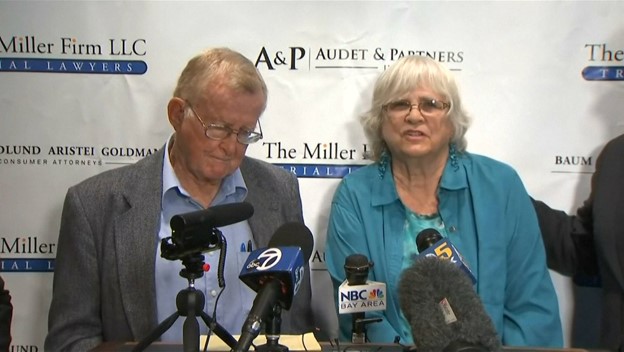
Alva and Alberta Pilliod, a California couple, both had non-Hodgkin’s lymphoma. Like thousands of others, they sued Bayer’s Monsanto over the company’s failure to warn that their products could cause cancer. Photo Courtesy of Wisner Baum.
The lawsuits, filed in state courts, allege that Monsanto failed to warn consumers that its glyphosate-based herbicides could cause cancer. The company countered that glyphosate is safe and that the federal government, through the EPA, had approved the products’ label and use. Monsanto said the lawsuits should be dismissed because federal approval of the herbicides preempted state laws.
In February 2026, Trump issued an executive order declaring that glyphosate is “crucial to the national security.” The executive order praised the role of glyphosate in American agriculture and, as many MAHA devotees noted with dismay, it said glyphosate helped provide “healthy” food options.
“As the most widely used crop protection tools in United States agriculture, glyphosate-based herbicides are a cornerstone of this Nation’s agricultural productivity,” Trump’s order said. They ensure “that healthy, affordable food options remain within reach for all American families.”
As the more recent glyphosate cases reached the Supreme Court, the Trump administration sided with the company. The Trump administration not only requested that the Court take up the company’s appeal but filed a friend of the court brief. At the Supreme Court oral arguments, a Department of Justice lawyer stood with Monsanto to argue that allowing the states to regulate the product labels would create chaos.
“If you had 50 different states that are just, like, jumping the gun,” Principal Deputy Solicitor General Sarah Harris said, “Iowa says maybe this causes cancer, California says absolutely it causes cancer, some other state says this doesn’t cause cancer at all, so put that on your label too, it completely undermines the uniformity of the labeling scheme and causes confusion.”
In June 2026 the Supreme Court ruled in favor of Monsanto, 7-2, with the majority opinion citing the administration’s friend of the court brief.
Although the reasons for the Trump administration’s glyphosate reversal are not fully known, the agricultural chemical industry played a role. Soon after the MAHA Report was published, the CropLife America, the industry’s chief lobbying group, urged the administration to back off.
Alexandra Dunn, the group’s president and CEO, said that while the initial MAHA report “was well intended, it includes misleading and alarmist statements about pesticides—and calls into question the safety of the very foods critical for the healthy development of children.”
In September 2026 the administration announced an effort to coordinate EPA and HHS research into the effects of glyphosate on humans. The EPA is scheduled to complete its risk assessment of glyphosate in early 2027.
Regardless, some MAHA influencers who earlier had praised the MAHA Report saw the Trump administration’s reversal for what it was ¾ a betrayal.
Vani Hari, the “Food Babe,” called the executive order “a direct assault on MAHA” and “a gift to pesticide and chemical industry lobbies at the expense of human health.”
“MAHA voters were promised health reform, not chemical entrenchment,” she said.
Conclusion
On August 30, 2024, the MAHA movement cheered as its ideas were embraced by then presidential candidate Trump.
“We’re going to make America healthy again,” Trump said in Johnstown, Pennsylvania, a week after Kennedy, then the movement’s leader, endorsed him for a second term. “We’re going to get toxic chemicals out of our environment, and we’re going to get them out of our food supply. We’re going to get them out of our body.”
The MAHA movement cheered again when Trump appointed Kennedy to lead the nation’s health agencies as the HHS Secretary.
But like many who’ve trusted Trump over the years, many in MAHA world feel cheated ¾ for good reason.
In March 2026, less than a year after publication of the MAHA Report, more than 30 MAHA leaders wrote to EPA administrator Lee Zeldin describing their dismay at the appointment of chemical industry lobbyists as EPA officials and the regulatory roll back.
The administration, however, still hasn’t changed course. A scorecard released earlier this month by another group of MAHA activists, indicated that the Trump administration broke more than 85% of its MAHA promises on food, agriculture and the environment.
“Catchy slogans do not make people healthy,” the MAHA leaders wrote in March. “Policy does.”
For the environment, the Trump administration’s “Make America Healthy Again” approach is worse than an empty slogan. It’s a sham.